
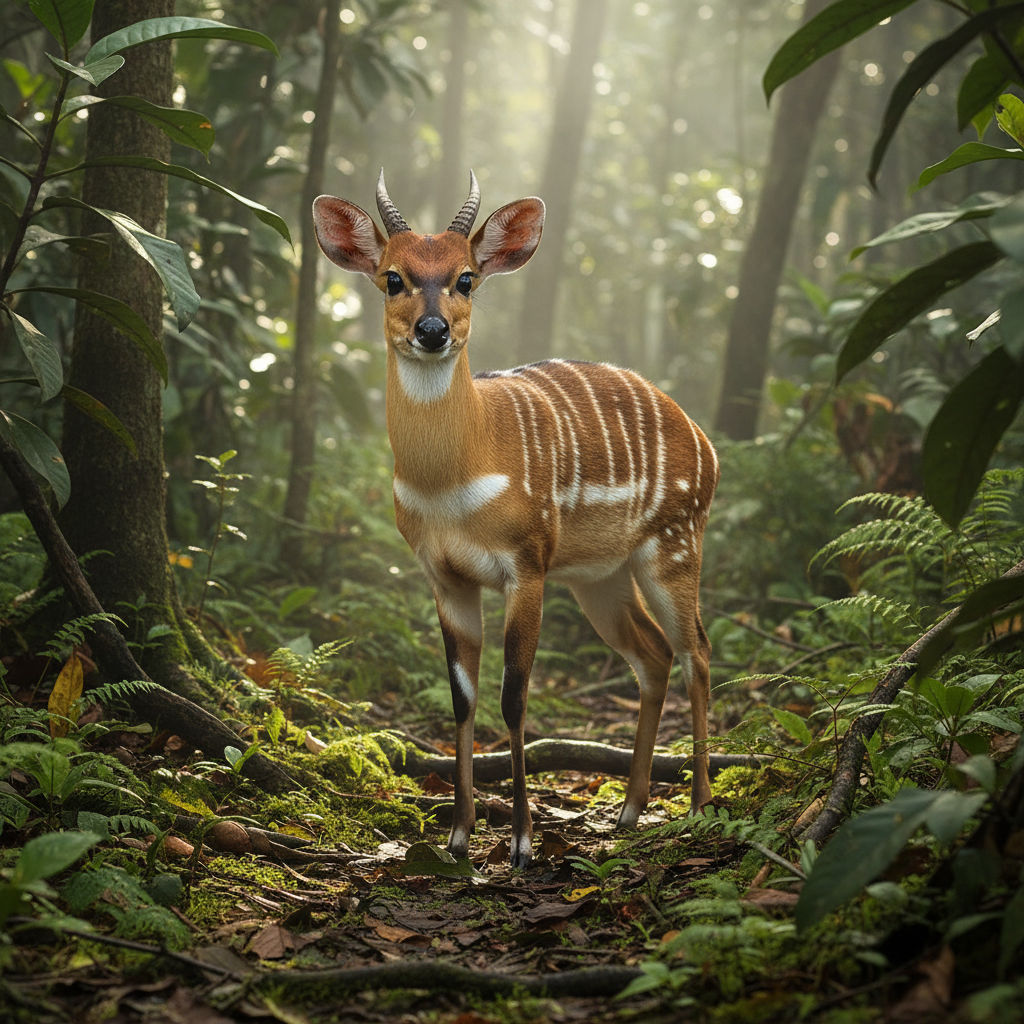
AI Generated
Zebra Duiker
Cephalophus zebra
The Zebra Duiker, or Cephalophus zebra, is a small antelope native to West and Central Africa. Recognizable by its striped coat, it thrives in dense forests.
# Zebra Duiker Overview
The Zebra Duiker (scientific name: Cephalophus zebra) is a small antelope found primarily in the dense rainforests of West and Central Africa. Characterized by its distinctive striped coat, this species is often sought after by wildlife observers and researchers interested in rainforest ecology.
Description
The Zebra Duiker is a medium-sized antelope, with adults typically weighing between 25 to 50 kilograms (55 to 110 pounds). It has a compact body, long legs, and a short tail. Its most distinguishing feature is its striking striped fur, which varies in color from dark brown to reddish-brown, adorned with white stripes that run vertically along its sides. These markings not only provide camouflage among the forest underbrush but also serve as a form of communication between individuals. The Zebra Duiker has large, expressive eyes and ears that assist in detecting predators, while its hooves are adapted for navigation through its dense forest habitat.
Habitat & Range
Zebra Duikers inhabit the understory of tropical and subtropical rainforests, particularly favoring areas with dense vegetation and thickets that provide coverage from predators. Their range extends from the western coast of Africa, specifically in countries like Nigeria and Cameroon, through to the Congo Basin. The preferred altitudes for these animals are usually within 250 to 1,000 meters above sea level, where moist conditions support their habitat needs.
Behavior
Zebra Duikers are known for their elusive and solitary behavior. They are primarily crepuscular, being most active during the early morning and late afternoon. This activity pattern helps them avoid the heat of the day and evade predators such as leopards and pythons. When moving through their habitat, they often exhibit a distinctive bounding gait, which aids them in navigating the challenging forest floor. Social interactions generally occur between individuals, especially during mating seasons, when temporary pair bonds are formed.
Diet
The diet of the Zebra Duiker mainly consists of a variety of plant matter including leaves, fruits, and flowers. They are browsers and have been observed feeding on the undergrowth and lower tree branches, utilizing their sharp incisors to strip leaves and gather soft fruits. Fruit availability is crucial for their diet, particularly in the wet season when a greater abundance of fruit-bearing plants is present. Their digestive system is well-adapted to process fibrous plant material, allowing them to efficiently extract nutrients from their food sources.
Hunting & Identification Notes
For hunters and wildlife enthusiasts, identifying the Zebra Duiker can be both an exciting and challenging endeavor due to its elusive nature and the dense environments it inhabits. Key identification features include its unique striped coat and average size, which is smaller than many other antelope species. When spotted in the wild, careful observation is essential, as they tend to freeze when they sense danger, relying on their camouflage to avoid detection. Techniques like understanding their feeding habits during certain times of day can improve observation chances. Hunters should also be cognizant of local regulations and conservation efforts when pursuing this species.
Conservation Status
The Zebra Duiker is currently listed as Near Threatened on the IUCN Red List. Threats to its population include habitat destruction due to logging, agricultural expansion, and poaching. Conservation efforts focus on habitat protection and the enforcement of wildlife protection laws in their native regions to prevent overexploitation. Some protected areas are vital for the survival of populations, supporting ongoing research and monitoring to ensure their continued presence in the ecosystems they inhabit. Collaborative efforts involving local communities, conservation organizations, and governments are essential to safeguard the future of the Zebra Duiker.