
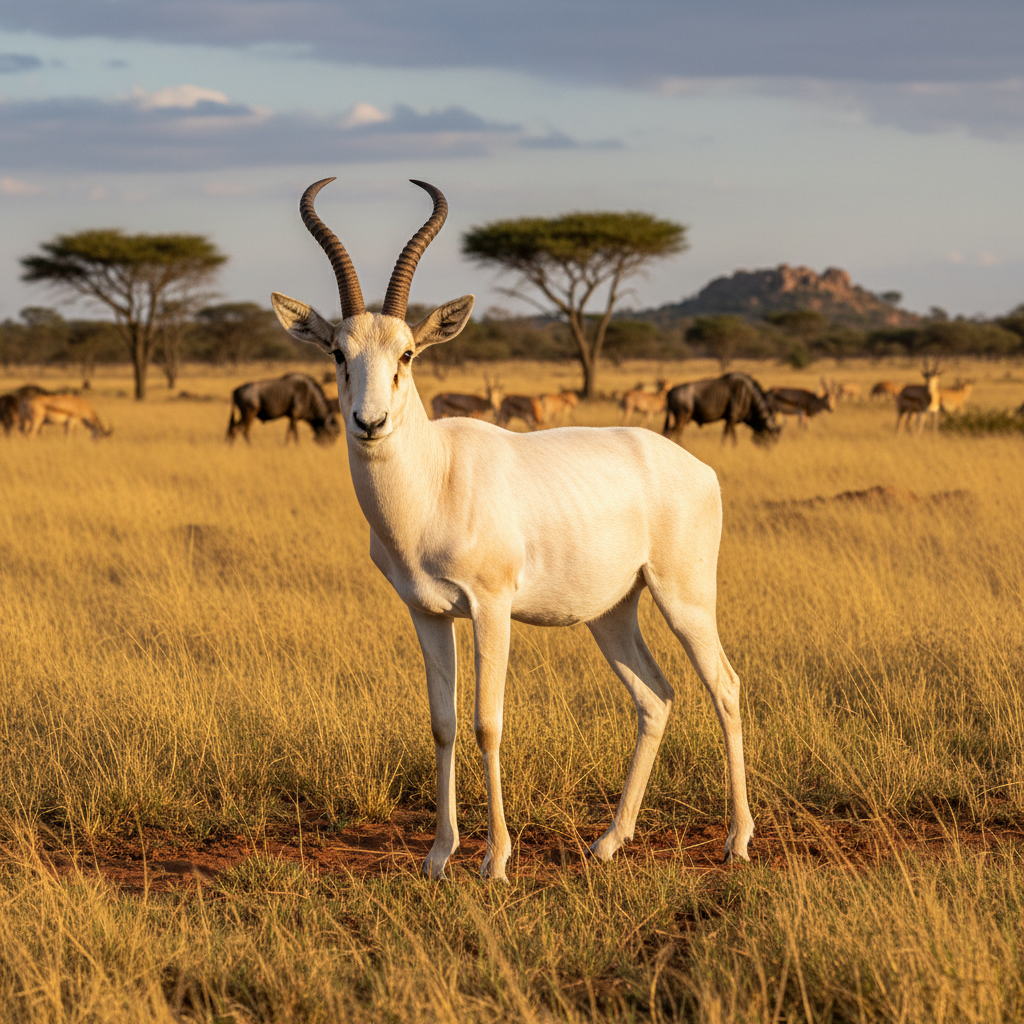
AI Generated
White Blesbok
Damaliscus pygargus phillipsi
The White Blesbok is a striking color variant of the South African Blesbok. Known for its mottled white coat and social nature, it is a prized sight on the open grasslands and private reserves.
Description
The White Blesbok (Damaliscus pygargus phillipsi) is a distinct color morph of the common Blesbok, a medium-sized antelope endemic to Southern Africa. Unlike the common Blesbok, which features a rich reddish-brown coat with a white face and belly, the White Blesbok is characterized by a predominantly white or creamy-mottled coat. This coloration is the result of a recessive gene and selective breeding, particularly on private game ranches. Despite the overall white appearance, they often retain a faint, faded version of the characteristic white facial blaze (the 'bles') from which the species gets its name. Both males (rams) and females (ewes) possess S-shaped, ringed horns that are typically dark or straw-colored, though they can appear lighter in this morph. Adult White Blesbok stand approximately 90 to 95 cm (35 to 37 inches) at the shoulder. Rams are slightly heavier, weighing between 70-80 kg (154-176 lbs), while ewes weigh around 60-70 kg (132-154 lbs).
Habitat & Range
White Blesbok are primarily found on the open grasslands and highveld plateaus of South Africa, Eswatini, and parts of Namibia. They prefer open plains with easy access to water, as they are not as drought-tolerant as some other African antelope. Their natural range was historically restricted to the central and eastern parts of South Africa, but due to their popularity in game farming and conservation efforts, they have been introduced to various private reserves and parks across the region. They thrive in areas with short to medium-length grasses and are often seen in the same habitats as Black Wildebeest and Springbok.
Behavior
White Blesbok are highly social and diurnal animals. They are most active during the cooler morning and late afternoon hours, often resting in the shade during the heat of the day. Their social structure typically consists of three distinct groups: territorial males, female herds with their young, and bachelor groups of younger or non-territorial males. Territorial rams are known for their defensive displays, which include snorting, pawing the ground, and standing in a proud, alert posture to mark their domain. One unique behavior observed in Blesbok is 'nodding' or shaking their heads, which is often a reaction to nasal botflies. They are wary animals with keen eyesight and will often flee in single-file lines when threatened, usually running upwind.
Diet
As dedicated grazers, White Blesbok feed almost exclusively on grasses. They have a strong preference for short, green grass and are known to be attracted to recently burnt areas where fresh growth is abundant. They are selective feeders, choosing the most nutritious parts of the plants. Access to a permanent water source is essential, as they typically drink daily, especially during the dry winter months when the moisture content of the grass is low.
Hunting & Identification Notes
For researchers and hunters, the White Blesbok is easily identified by its unique mottled white or cream-colored coat, which stands out starkly against the green or gold of the savanna. When distinguishing them from the common Blesbok, the lack of the dark brown body pigment is the primary indicator. However, they share the same physical build and horn structure. Trophy identification focuses on the thickness and length of the horns, which should be well-ridged. Because they are often found in open terrain, they rely on herd vigilance, making a stealthy approach challenging. Distinguishing between rams and ewes can be difficult at a distance since both carry horns, but rams typically have thicker bases and more aggressive territorial behaviors.
Conservation Status
The Blesbok species, including the white morph, is currently classified as 'Least Concern' by the IUCN. Historically, the species was hunted nearly to extinction in the late 19th century, but dedicated conservation efforts and the rise of the private game ranching industry in South Africa have led to a massive recovery. Today, they are among the most abundant antelope in the region. The White Blesbok exists primarily within the framework of managed populations on private land, which ensures their numbers remain stable and their habitat protected. Sustainable management through ecotourism and regulated hunting continues to provide the economic incentive necessary for their continued presence on the landscape.