
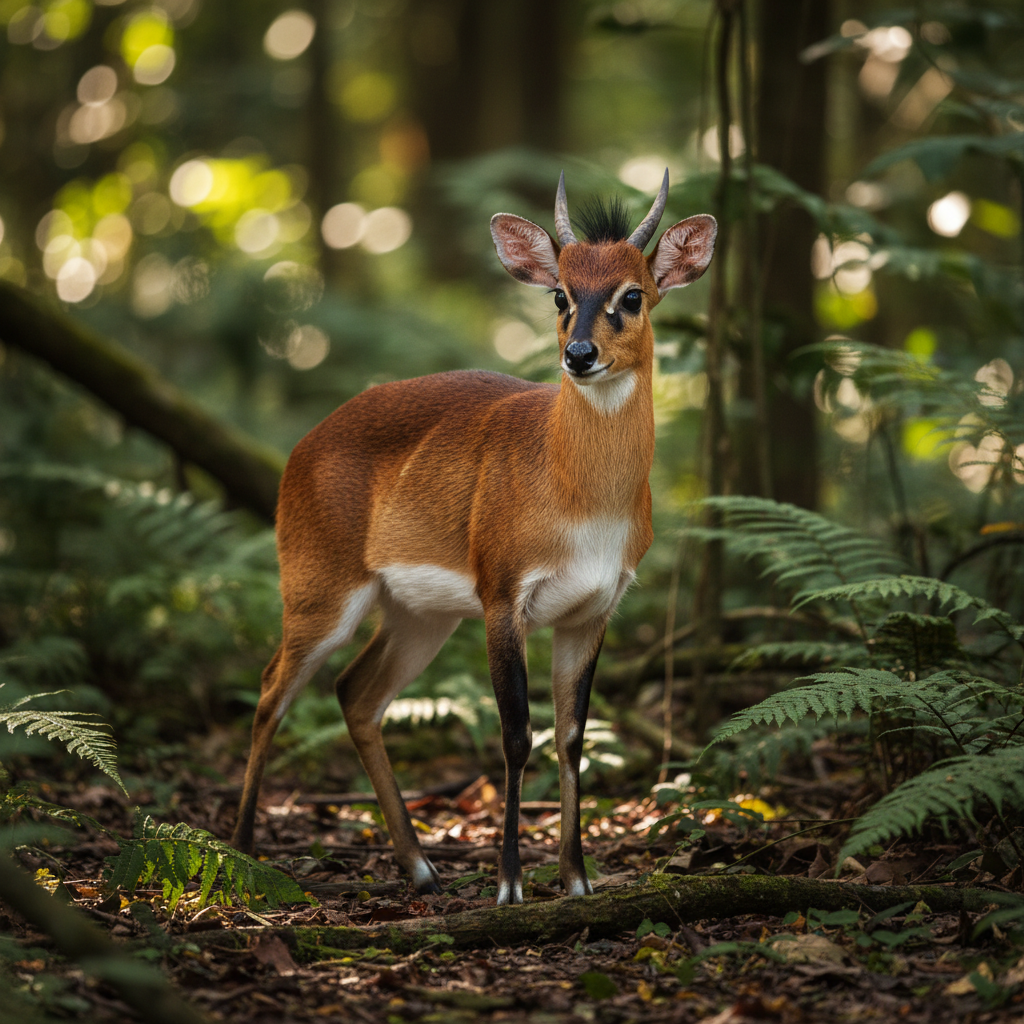
AI Generated
White-bellied Duiker
Cephalophus leucogaster
The White-bellied Duiker (Cephalophus leucogaster) is a small forest antelope native to Central and West Africa, noted for its distinctive coloration and elusive nature.
Introduction
The White-bellied Duiker (Cephalophus leucogaster) is a small-sized forest antelope primarily found in Central and West Africa, notably in dense rainforests and neighboring habitats. Characterized by its striking white underbelly and overall sleek coat, this species is both elusive and fascinating, making it a subject of interest for researchers, hunters, and wildlife enthusiasts.
Description
The White-bellied Duiker is relatively small compared to other antelopes, with adults typically weighing between 30 to 50 kilograms (66 to 110 pounds) and standing about 75 to 90 centimeters (30 to 35 inches) at the shoulder. Males are usually larger than females and possess short, straight horns that can reach lengths of 15 to 25 centimeters (6 to 10 inches).
The pelage of the White-bellied Duiker is predominantly chocolate brown or gray, but the distinguishing feature is its white underbelly, which contrasts sharply with the rest of the coat. This coloration not only aids in identification but also serves as camouflage in the dappled light of their forest environment. Their eyes are framed with a distinctive white patch, enhancing their expressive features, while their long legs and slender body shape contribute to their agility in navigating dense foliage.
Habitat & Range
The White-bellied Duiker resides primarily in lowland tropical rainforests, often found in dense undergrowth near water sources such as rivers or streams. Its range extends across various countries in Central and West Africa, including but not limited to: Gabon, Cameroon, the Republic of the Congo, and parts of Nigeria.
Within these regions, the duiker prefers areas that offer plenty of cover, allowing it to evade predators. The species is typically found at elevations below 1,500 meters (4,900 feet). Their habitat choice is crucial for their survival, enabling them to access the necessary food resources while remaining stealthy in a predator-rich environment.
Behavior
The White-bellied Duiker is predominantly solitary or found in small groups, often consisting of a mother and her offspring. Males are more territorial and will mark their territory using scent glands located on their hooves and face. These markings are crucial for communication among individuals in their dense forest habitat.
They are crepuscular, displaying most active behavior during dawn and dusk, which reduces the risk of predation. Their elusive nature and ability to remain motionless help them avoid detection, making them difficult to observe in the wild. When startled, they may bolt into the undergrowth with remarkable speed, showcasing their agility.
Diet
The White-bellied Duiker is primarily herbivorous, favoring a diet composed of leaves, fruits, and flowers found within their forest ecosystem. They are known to browse on a variety of vegetation, including shrubs and young trees. This adaptability in diet allows them to thrive in their specific habitat, particularly where food sources vary seasonally.
Their role as browsers also contributes to the health of their ecosystem, as they help disperse seeds through their feces. This behavior plays an important role in the regeneration of plant species within their habitat.
Hunting & Identification Notes
For hunters and wildlife enthusiasts, identifying the White-bellied Duiker requires observing its unique physical characteristics and understanding its behavior. The white underbelly and the contrasting dark coloration make it identifiable even in dappled light.
When stalking or observing, pay attention to their estimated size, which can be confused with similar species like the Blue Duiker. The White-bellied Duiker's straight horns in males, the characteristic white facial markings, and the overall slender build are essential identifiers. Hunters are advised to respect local regulations pertaining to game as this species may be subject to conservation measures in certain areas.
Conservation Status
The White-bellied Duiker is currently listed as Least Concern on the IUCN Red List. However, habitat loss due to logging and agricultural expansion poses significant threats to its populations in certain regions. Poaching for bushmeat and hunting also impact their numbers, particularly in areas with weak enforcement of wildlife protection laws.
Conservation efforts focused on preserving their natural habitats and enforcing anti-poaching measures are essential for ensuring the stability of the White-bellied Duiker populations. Participating in sustainable tourism and educating local communities about the ecological importance of these animals can also contribute to their ongoing survival in the wild.
In conclusion, the White-bellied Duiker is a remarkable species deserving of attention from researchers, conservationists, and safari guides alike. Their unique adaptations and elusive nature represent the delicate balance of life in the African rainforest.