
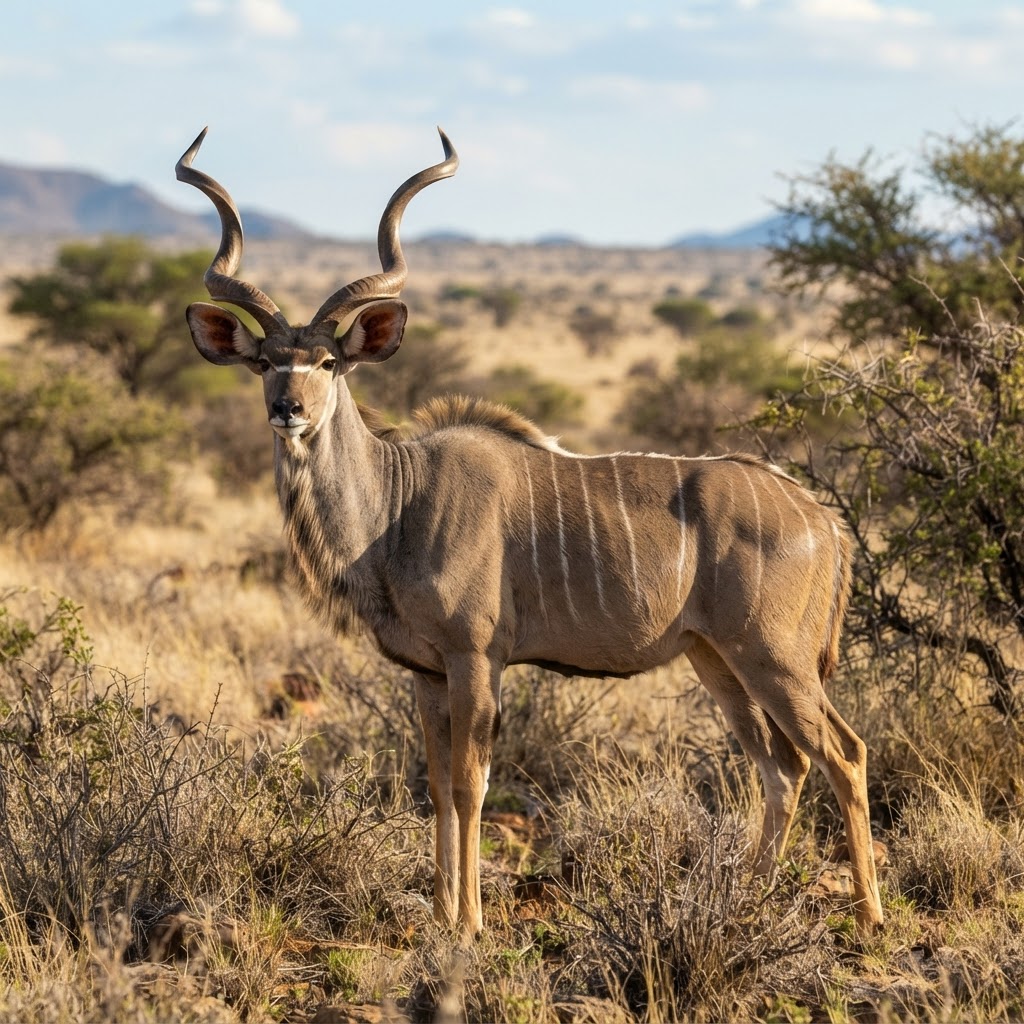
AI Generated
Western Greater Kudu
Tragelaphus strepsiceros
The Western Greater Kudu is a large, stunning antelope native to Africa, recognized by its impressive spiraled horns and striking coloration, predominantly found in wooded savannas.
Introduction
The Western Greater Kudu (scientific name: Tragelaphus strepsiceros) is a large antelope found primarily in the western regions of Africa. This species is characterized by its impressive twisted horns and elegant physique, making it a sought-after sight for wildlife enthusiasts and hunters alike. The Western Greater Kudu's habitat is generally defined by its association with dense woodlands and grassy savannas, enhancing its camouflage and survival strategies in the wild.
Description
The Western Greater Kudu is notable for its size; males typically weigh between 200 to 300 pounds (90 to 140 kg) and stand around 4 to 5.5 feet (1.2 to 1.7 meters) at the shoulder. Females are generally smaller, weighing about 90 to 200 pounds (40 to 90 kg). One of the most striking features of the male Western Greater Kudu is its long, spiraled horns, which can reach lengths of up to 59 inches (around 150 cm). Both sexes exhibit a medium to large body size, with males sporting a dark gray or reddish-brown coat adorned with white vertical stripes, while females usually display a lighter color.
Western Greater Kudus have large, rounded ears, aiding in their acute sense of hearing, as well as a long face and a distinctive dewlap—a fold of skin around their throat—adding to their robust appearance. Their keen eyesight and camouflaged fur help them remain unseen in their natural habitats.
Habitat & Range
The Western Greater Kudu mainly inhabits the open savannas and woodlands of Western Africa, particularly in countries like Mali, Senegal, Gambia, and Guinea. They prefer areas with dense shrubbery and trees, which provide cover from predators and an abundance of browsing material. Their habitat often includes patches of grassland mixed with acacia and other tree species.
These antelopes are typically found at elevations up to 1,800 meters (5,900 feet) and tend to live in areas with seasonal rainfall, which affects the availability of their food resources throughout the year.
Behavior
Western Greater Kudus are predominantly solitary creatures, though they are known to gather in small groups, especially females and their young. Males are more solitary, often seen wandering alone or in small bachelor groups. They exhibit crepuscular behavior, being most active during the early morning and late afternoon hours.
These animals are excellent at hiding from threats, often standing still and relying on their coloration to blend into their surroundings. When alerted, they may exhibit a behavior known as 'foot stamping' to warn other herd members of potential danger before fleeing to cover.
Diet
The diet of the Western Greater Kudu is primarily composed of leaves, twigs, and fruits. They are browsers, using their long tongues and prehensile lips to reach high branches and foliage that many other herbivores cannot access. Their selective feeding behavior allows them to thrive in environments with strong competition for food. During times of drought, they may adapt their diet by consuming more grass and available shrubs.
Kudus require a regular water source and will often visit waterholes or rivers, especially during the hot months, demonstrating their dependence on hydration for survival.
Hunting & Identification Notes
Hunters interested in pursuing the Western Greater Kudu should be aware of their elusive nature and keen senses. Observing their behaviors from a distance is crucial, as an abrupt movement can alert them to potential danger. Cedar and dry riverbeds are common locations for tracking them during the late afternoon when they are more active.
To identify a Western Greater Kudu, look for their distinct coloration and the impressive spiral horns of mature males. The white stripes along their sides serve as key identification marks, and the size difference between males and females can also assist in distinguishing between the sexes.
Conservation Status
The Western Greater Kudu is currently classified as Least Concern by the International Union for Conservation of Nature (IUCN). However, their populations face threats from habitat loss due to agricultural expansion, poaching, and competition with livestock for resources. Conservation efforts are essential to ensure that these majestic antelopes continue to thrive in their natural habitats. Efforts include habitat preservation and regulations against poaching, aiming to maintain sustainable populations for future generations.
In summary, the Western Greater Kudu represents a crucial part of the biodiversity within its range. Maintaining awareness and implementing effective conservation strategies will support the survival of this remarkable species and the ecosystems in which they reside.