
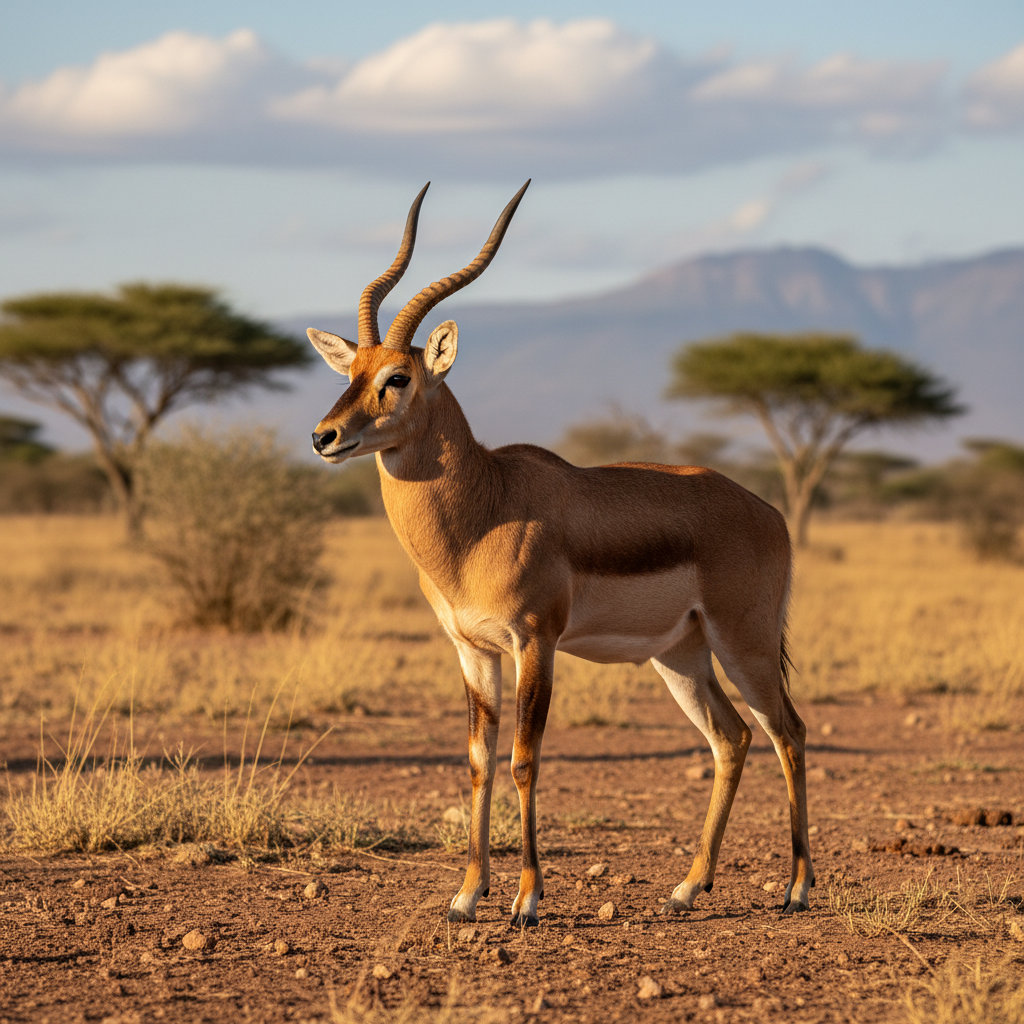
AI Generated
West African Kob
Kobus kob kob
The West African Kob (Kobus kob kob) is a medium-sized antelope found across the wetlands and grasslands of West Africa, notable for its agility and distinctive appearance.
The West African Kob (Kobus kob kob) is a medium-sized antelope recognized for its remarkable agility and distinctive features. Native to the wetlands and savannas of West Africa, this species is mostly found in countries like Senegal, Mali, Burkina Faso, and Nigeria. Its preference for open savanna areas with nearby water sources makes it an important species for the ecosystem in which it inhabits.
Description
The West African Kob displays sexual dimorphism, with males generally larger and more robust than females. Males can weigh between 100 to 120 pounds, while females tend to range from 80 to 100 pounds. The coat is typically a rich golden-brown color, with a lighter underbelly. Males possess elongated, curved horns that can reach lengths of about 30 inches, making them easily distinguishable. Additionally, both sexes display white markings on their face, legs, and tail, contributing to their striking appearance.
Habitat & Range
The West African Kob thrives in a variety of habitats, including savannas, grasslands, and wetlands. They are particularly fond of areas with abundant water sources, as they rely on these for drinking and grazing. Their geographical range extends from the eastern region of Senegal through Mali and down to Nigeria, where they inhabit both protected wildlife reserves and unprotected areas. Seasonal migrations may occur in response to the availability of water and grazing resources, showcasing their adaptation to changing environmental conditions.
Behavior
West African Kobs are generally social animals, forming herds that vary in size depending on the season and the availability of resources. Herds typically consist of females and their young, while adult males may form smaller bachelor groups or remain solitary. These animals are quite agile and can reach impressive speeds to escape predators such as lions and hyenas. They communicate through a variety of vocalizations and body language, helping to maintain social structure and alert the herd to potential threats.
Diet
The primary diet of the West African Kob consists of grasses and aquatic plants. They are grazers by nature, using their keen sense of smell to locate nutritious vegetation. During the rainy season, they shift their feeding habits to exploit the fresh green growth, which is abundant in their habitat. These antelopes are diurnal, generally foraging in the early morning and late afternoon when temperatures are cooler, minimizing their exposure to daytime heat.
Hunting & Identification Notes
For hunters and wildlife enthusiasts, identifying the West African Kob is relatively straightforward due to its distinctive physical features. Look for the characteristic light markings and the curved horns of males. They are most active during dawn and dusk, making these times ideal for spotting. It is important to note that hunting regulations vary by region, and conservation guidelines should always be followed to ensure sustainable practices.
Conservation Status
The West African Kob's conservation status is currently listed as "Near Threatened" by the International Union for Conservation of Nature (IUCN). Habitat loss due to agricultural expansion, poaching, and human encroachment poses significant threats to their populations. Conservation efforts are underway in various national parks and reserves aimed at protecting their habitats and ensuring the long-term viability of the species. Ensuring the preservation of the West African Kob is vital not only for ecological balance but also for the cultural heritage of the regions they inhabit.