
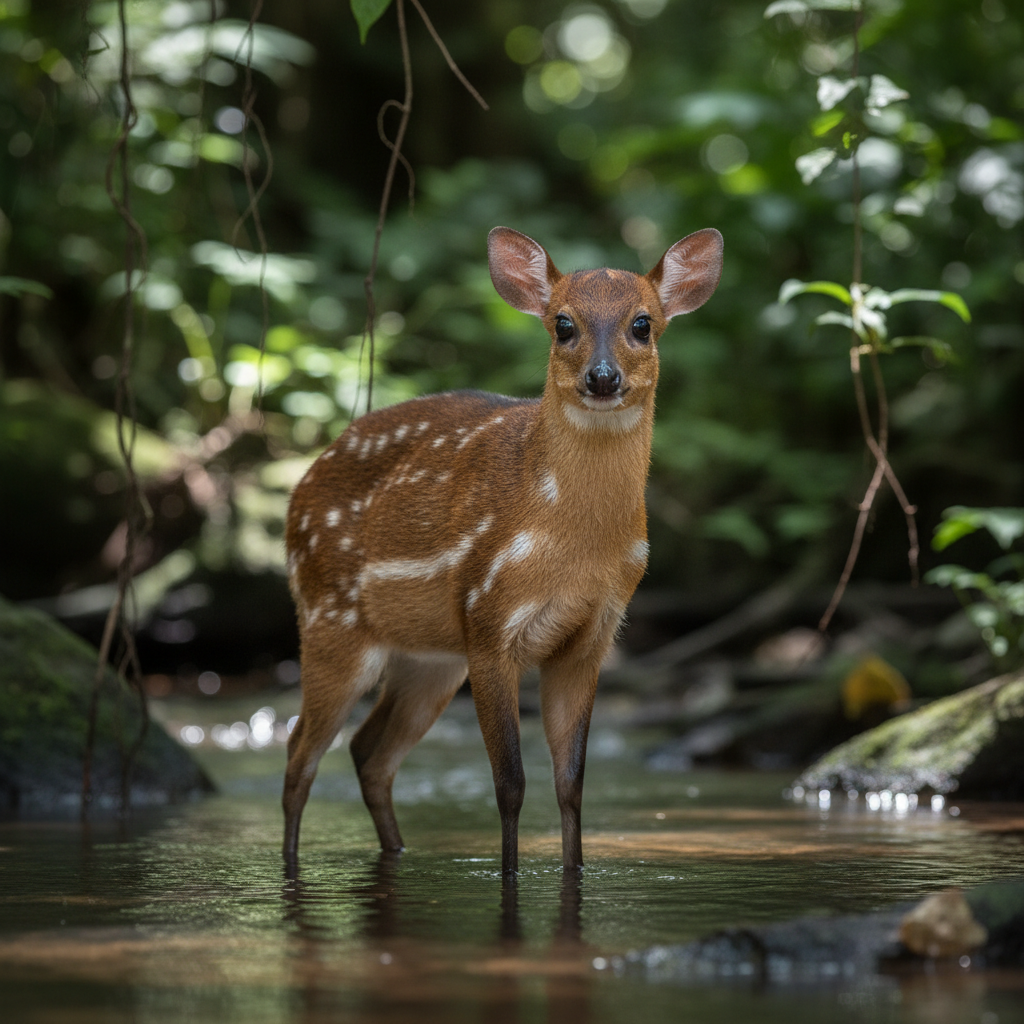
AI Generated
Water Chevrotain
Hyemoschus aquaticus
The Water Chevrotain, scientifically known as Hyemoschus aquaticus, is a small herbivore found in the humid tropical forests of West and Central Africa. Adapted to wet environments, this elusive mammal inhabits swampy regions and forest edges, making it a unique subject for wildlife study.
Introduction
The Water Chevrotain, scientifically known as Hyemoschus aquaticus, is a small, semi-aquatic herbivore native to the humid tropical forests of West and Central Africa. This unique species thrives in wetland environments, showcasing adaptations suited to a life near water, which makes it a fascinating subject for wildlife enthusiasts and researchers alike.
Description
The Water Chevrotain is one of the smallest hoofed mammals, with adults typically weighing between 10 to 25 kilograms (22 to 55 pounds). They have a distinct appearance characterized by a robust body, short legs, and a long, slender neck. The fur is coarse and a reddish-brown color with darker spots and stripes, providing camouflage against the dappled sunlight of their forested habitat. Notably, they possess elongated snouts and large, forward-facing eyes, enhancing their visibility in low-light conditions.
Unique among their genus, Water Chevrotains are equipped with webbed hooves, which help them navigate through muddy terrain and shallow water. Their size and coloration further allow them to blend into the tall grasses and dense underbrush that line riverbanks and swamps.
Habitat & Range
Water Chevrotains inhabit the dense, humid tropical forests and swamps of West and Central Africa. Their range extends from southeastern Senegal, through Guinea, Liberia, Ivory Coast, and into the central regions of the Democratic Republic of the Congo and Uganda. They are predominantly found in areas near water bodies, including lakes, rivers, and marshes where dense vegetation is available for cover.
Typically, these animals thrive in lower elevations, often favoring habitats with abundant water sources and dense undergrowth, which provides both feeding and protective cover against predators. The presence of humid environments is crucial for their survival, as they dehydrate more easily than other similar herbivores.
Behavior
Water Chevrotains are primarily nocturnal, venturing out to feed during the night to avoid predators such as leopards and crocodiles. During the day, they take refuge in dense vegetation or submerged grasses, remaining hidden from view. Their movement patterns are solitary or based on small family groups, with females and their young often seen together.
These animals are known for their agility and swimming capabilities. They can navigate through swampy water with ease, using their buoyancy to escape threats. When startled, Water Chevrotains often retreat into the water, where they can submerge and remain hidden for extended periods.
Diet
The diet of the Water Chevrotain primarily consists of aquatic vegetation, including grasses, leaves, and shoots found in their wetland habitats. They are herbivores, favoring green, succulent plants, which are abundant in their swampy environment. Their feeding habits are essential for the ecosystem, as they help control plant overgrowth and maintain the balance of their habitats.
In addition to foraging on land, Water Chevrotains often feed in shallow waters, taking advantage of the aquatic plants that thrive near the edges of lakes and rivers. This adaptability in their diet makes them resilient in fluctuating environmental conditions.
Hunting & Identification Notes
For those looking to observe or hunt the Water Chevrotain, several identifying features can aid in recognition. The reddish-brown coat with distinct markings is a good start, but perhaps more telling is their smaller size compared to other antelopes. They have a compact, stout build, making them look quite different from more common ungulates in the region.
When tracking them, look for signs of grazing in marshy areas, such as freshly nibbled vegetation or distinctive tracks in the mud. Their eyes are large and adapted for low light, making late evenings or early mornings optimal for observation. Additionally, their agile movements and preference for water can lead to significant disturbances in tall grasses when they are startled or moving.
Conservation Status
The Water Chevrotain is currently classified as Least Concern by the International Union for Conservation of Nature (IUCN), but local populations may be threatened due to habitat loss and hunting pressures. Deforestation, drainage of wetlands for agriculture, and the destruction of their natural habitats pose significant risks to their survival. Increased human encroachment continues to threaten their populations in certain areas.
Conservation efforts focus on habitat protection and awareness to mitigate hunting pressures. Establishing protected areas and encouraging sustainable land-use practices are vital to ensuring the long-term viability of the Water Chevrotain population. Field research and monitoring programs are crucial for understanding their ecology and population dynamics, helping to adapt conservation strategies effectively.