
AI Generated
Uganda Kob
Kobus kob thomasi
The Uganda Kob is an antelope subspecies common in East Africa, known for its territorial behavior and preference for floodplains.
Uganda Kob
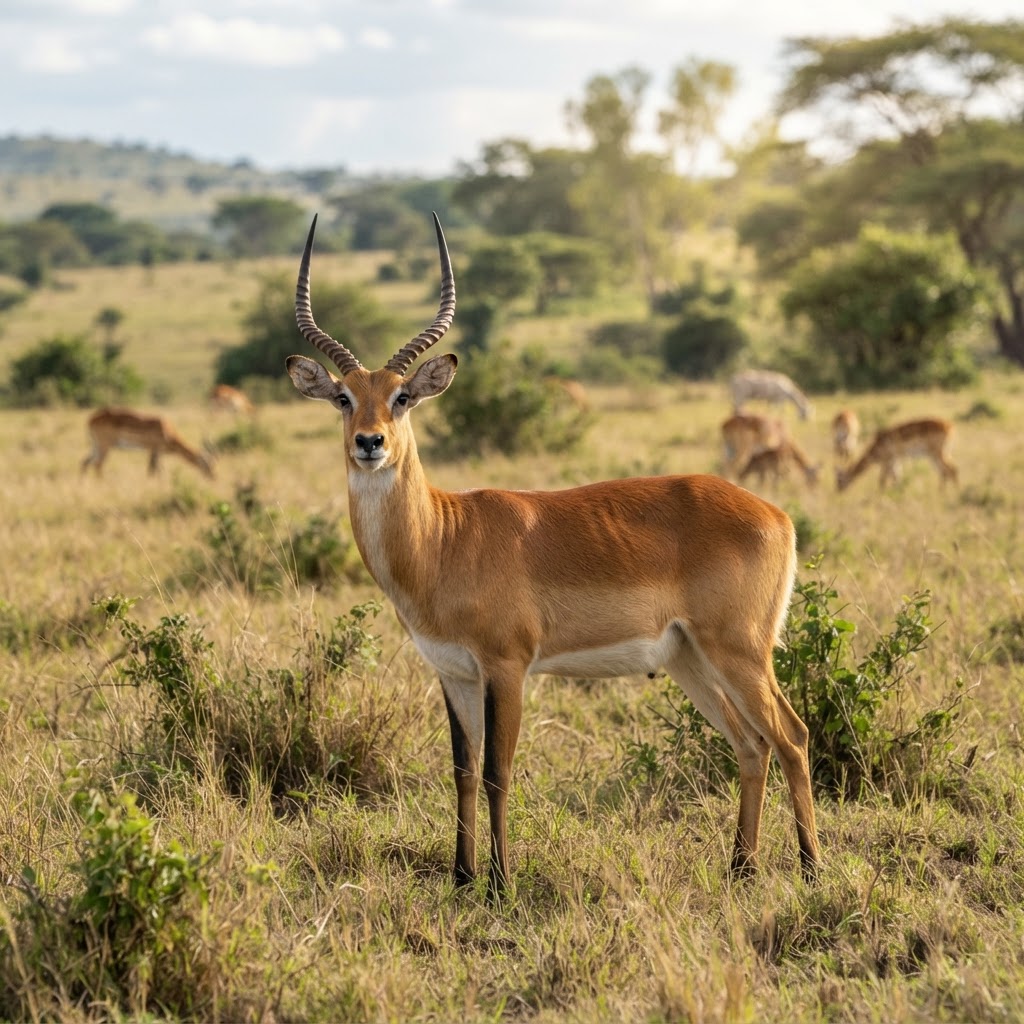
The Uganda Kob (Kobus kob thomasi) is a medium-sized antelope associated with the grasslands and floodplains of East-Central Africa. It has a rich reddish-brown to golden coat, white underparts and contrasting dark markings on the front of the legs.
Adult males are larger and more heavily built than females and carry strongly ringed, lyre-shaped horns. Females are hornless and have slimmer, lighter bodies.
Some taxonomic authorities recognize the Uganda Kob as a separate species, Kobus thomasi. The Mammal Diversity Database currently includes it within the wider Kob species, Kobus kob.
Habitat & Range
The Uganda Kob occurs principally in Uganda and northeastern parts of the Democratic Republic of the Congo, with related or intergrading populations extending into South Sudan.
Important populations occur in Uganda’s Queen Elizabeth and Murchison Falls conservation areas.
The species inhabits open grassland, lightly wooded savanna, floodplains and broad river valleys. It is strongly associated with productive grazing and generally remains within reach of dependable water.
Behavior
Uganda Kob are social and commonly gather in herds.
Females and young move between feeding areas, while mature males establish and defend small breeding territories. These territories may be concentrated into traditional display grounds known as leks.
Females visit the lek to select mates, and dominant males defend their positions through displays, scent marking and fights with rival bulls.
Activity is generally greatest during the cooler morning and late-afternoon periods. Herds rely on vigilance, speed and open visibility to detect and escape predators.
Diet
The Uganda Kob is primarily a grazer.
Its diet consists mainly of grasses, with a preference for fresh, nutritious growth. Seasonal rainfall, burning and changes in water levels influence grazing quality and local movements.
The species may gather in substantial numbers where recently burned or flooded grassland produces new vegetation.
Hunting & Identification
Where legally hunted, Uganda Kob are generally located by glassing open plains, river valleys and floodplain grassland before beginning a spot-and-stalk approach.
Only males carry horns. Mature bulls are identified by their heavier bodies, muscular necks, darker coloration and thick horn bases.
The horns rise upward and backward before curving outward and forward. Trophy evaluation focuses primarily on horn length, basal circumference, shape and symmetry.
Horn tips should be inspected for wear or breakage, particularly because territorial males may fight frequently during periods of breeding activity.
Geographical origin is important for distinguishing Uganda Kob from Western Kob and White-eared Kob. Animals from intergrade zones can display combinations of coloration and markings, making documentation especially important.
Conservation Status
The Kob (Kobus kob) is classified as Least Concern by the IUCN. The Uganda Kob does not currently have a separate global assessment under this taxonomic treatment.
Although substantial populations remain in protected areas, local declines can result from habitat conversion, livestock competition, illegal hunting, armed conflict and disruption of floodplain ecosystems.
Effective conservation depends on protecting open grasslands, maintaining access to water and preserving the traditional lekking grounds used for reproduction.
Sources
Safari Club International Record Book — species index