
AI Generated
Tana Gazelle
Gazella anselli
The Tana Gazelle, scientifically known as Gazella anselli, is a critically endangered antelope endemic to Kenya's Tana River. This profile details its description, habitat, behavior, and conservation status.
Introduction
The Tana Gazelle, scientifically known as Gazella anselli, is a critically endangered species of antelope found exclusively along the Tana River in Kenya. This species is notable for its peculiar adaptations to its habitat and its striking physical features.
Description
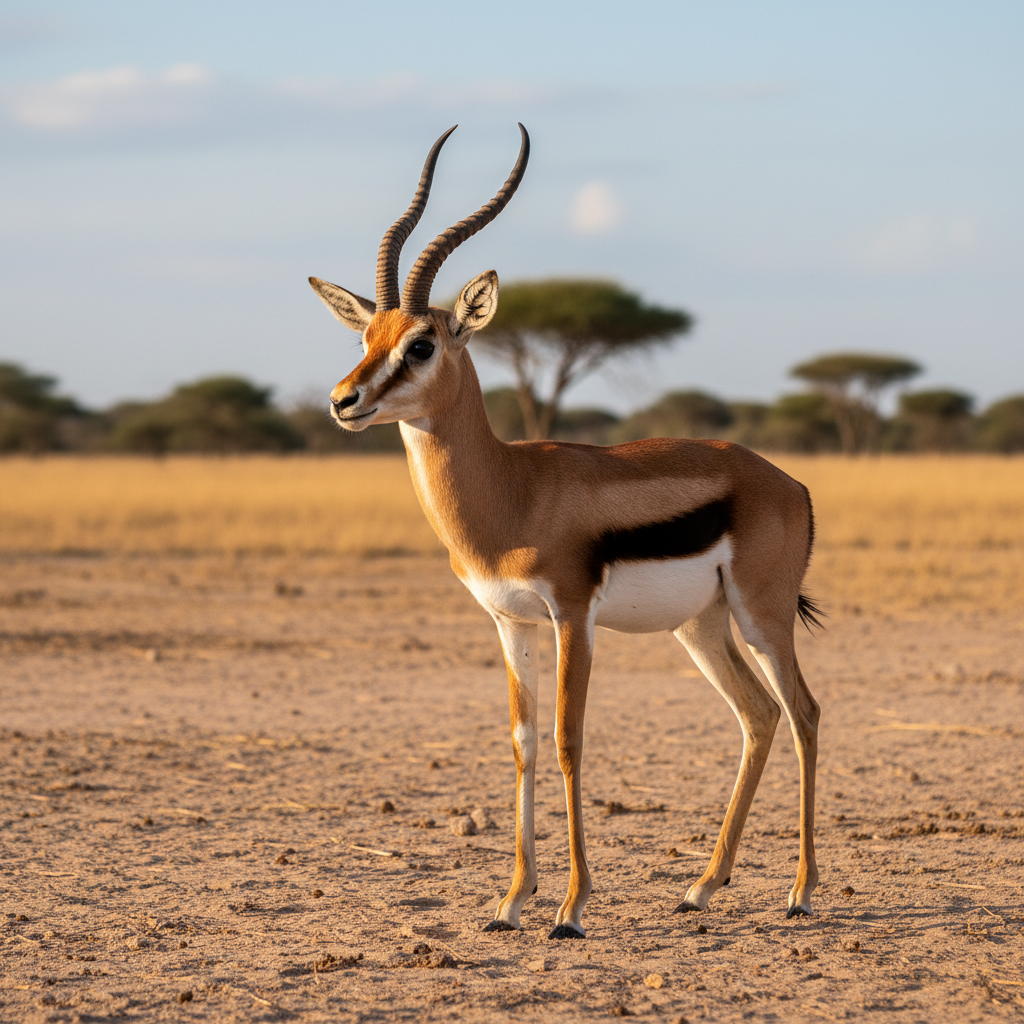
The Tana Gazelle is a medium-sized antelope, characterized by its slender body, long legs, and relatively small head. Adult males are typically larger than females, displaying a distinctive pair of long, curved horns that can grow up to 75 cm (30 inches) in length. The coat is generally a tawny color with lighter underparts and a distinctive dark stripe running along both sides of the body, which is a diagnostic feature. Males also exhibit darker coloration on their heads and necks compared to females.
The average weight of adult males ranges from 40 to 55 kg (88 to 121 lbs), while females typically weigh between 30 and 40 kg (66 to 88 lbs). Their adaptations for rapid movement through their habitat make them agile, with long, slender limbs supporting their high-speed flight from predators.
Habitat & Range
The Tana Gazelle is native to the arid and semi-arid regions of eastern Africa, specifically the Tana River region of Kenya. Their habitat includes grasslands, floodplains, and acacia woodlands, which are often subject to dynamic ecological changes influenced by seasonal flooding.
This species has historically had a broader range, but habitat loss due to agricultural expansion, urbanization, and human encroachment has drastically reduced its distribution. Today, the Tana Gazelle is primarily restricted to fragmented areas of its historical range along the Tana River, making conservation efforts critical to its survival.
Behavior
Typically a diurnal species, the Tana Gazelle is primarily active during the early morning and late afternoon when temperatures are cooler. They are known to form small herds ranging from 6 to 20 individuals, commonly females and their young, while males are more solitary or form small bachelor groups.
Vocalizations play an essential role in social interactions, with specific calls utilized during mating season and to signal danger. Their agility and speed serve as primary defense mechanisms against predators such as lions, hyenas, and leopards. They often rely on their keen sense of sight to spot threats from considerable distances.
Diet
The diet of the Tana Gazelle consists mainly of grasses and browsing on leaves and shrubs. Their dietary preferences are influenced by the seasonal availability of different vegetation types, with a focus on nutrient-rich young shoots. They primarily rely on grazing during the rainy seasons when grasses flourish, while adapting to browse on tougher vegetation during dry spells.
Hydration is essential; thus, they frequently migrate towards water sources, especially during drought conditions, which may impact their foraging strategies and group dynamics.
Hunting & Identification Notes
For hunters and researchers, identifying the Tana Gazelle is crucial when assessing populations and ensuring sustainability. Notably, the presence of adult males with long, curved horns is a clear indicator of this species. Females do not have horns, making sexual dimorphism a practical identification marker.
Additionally, observing social behavior and group structures can provide valuable insights into their population health. Color distinctions between male and female gazelles, such as the distinct dark markings on the males, are also beneficial for identification in the field.
Conservation Status
The Tana Gazelle is classified as Critically Endangered on the IUCN Red List, due to habitat loss and degradation, poaching, and competition with livestock for resources. The total population is estimated to be fewer than 1,000 individuals, and ongoing conservation efforts focus on habitat protection, monitoring, and community engagement to mitigate human-wildlife conflict.
Key initiatives include establishing protected areas along the Tana River, habitat restoration projects, and increasing awareness about the importance of conserving the Tana Gazelle among local communities. Researchers and conservationists continue to stress the urgency of protective measures to ensure the survival of this unique and refined species.