
AI Generated
Sudan Roan Antelope
Hippotragus equinus
The Sudan Roan Antelope is a striking, large antelope species found in the savannas and grasslands of Sudan and surrounding regions. Known for its impressive horns and unique color.
Introduction
The Sudan Roan Antelope (Hippotragus equinus) is a large and robust species of antelope endemic to the savannas and grasslands of Sudan, as well as some adjacent regions in Central Africa. Known for its distinctive appearance and striking horns, it plays a crucial role in its ecosystem.
Description
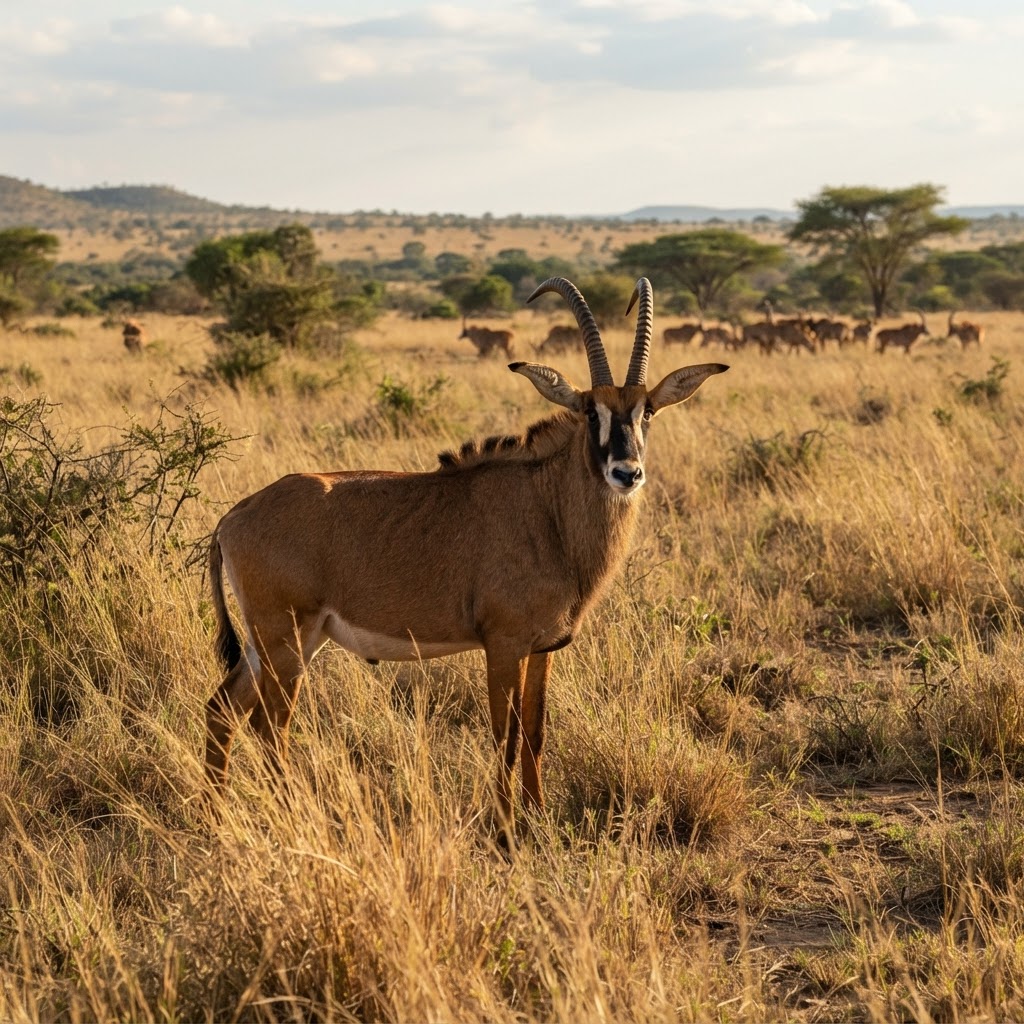
The Sudan Roan Antelope is characterized by its sturdy body, long legs, and a relatively large head. Males typically weigh between 200-260 pounds (90-120 kg) and stand about 42-49 inches (107-125 cm) at the shoulder. They possess a striking reddish-brown coat with a darker hue along the back, which sometimes shades into a more grayish tone on the lower body. Both genders have long, spiraled horns, with males ranging from 30 to 40 inches (76-102 cm) in length; females have shorter horns that rarely exceed 24 inches (61 cm).
Their face features distinct white markings around the eyes and on the muzzle, contributing to their unique appearance. The ears are large and alert, helping them detect potential predators in their environment.
Habitat & Range
The Sudan Roan Antelope thrives primarily in open savannas, grasslands, and occasionally in wooded areas where the vegetation is not too dense. This antelope is predominantly found in Sudan but has historical ranges that included parts of Chad, Niger, and the Central African Republic. Due to habitat loss and hunting pressures, their population and range have significantly decreased over the years, resulting in a more fragmented distribution.
These antelopes prefer regions with access to water sources, enabling them to stay hydrated in the arid climatic conditions typical of their habitat.
Behavior
The Sudan Roan Antelope is known for its sociable yet cautious nature. They often form small herds comprising females and young males, while dominant males may be solitary or form bachelor groups. The social structure is generally loose, allowing for some degree of flexibility in group dynamics.
During the day, these antelopes are relatively calm, grazing and ruminating. However, they are more active during the early morning and late afternoon when temperatures are cooler. Their keen eyesight and acute hearing aid in predator detection, and if threatened, they will typically run in bursts to escape danger, utilizing their muscular build and speed.
Diet
The Sudan Roan Antelope is primarily a grazer, favoring a diet consisting of grasses, leaves, and shoots. They have adaptations that allow them to thrive on less nutritious forage, making them effective at foraging in environments where other herbivores may struggle. While they prefer green, tender grasses during the wet seasons, they can adapt to drier conditions by consuming more fibrous and tougher vegetation.
Their digestive system is specialized for breaking down these tough plants, enabling them to extract maximum nutritional benefit in a resource-scarce environment.
Hunting & Identification Notes
Hunters and safari guides looking to identify the Sudan Roan Antelope should look for several key features: the size of the antelope, the distinctive coloration, and the long spiraled horns. The reddish coat with lighter underparts and the white markings on the face are also useful identifiers.
When scouting for these antelopes, it is essential to pay attention to their preferred habitats, primarily open grasslands near water sources. They can be wary of human presence, so a stealthy approach is necessary for both observation and hunting.
Conservation Status
The Sudan Roan Antelope is currently listed as Vulnerable by the International Union for Conservation of Nature (IUCN). This designation is due to their declining population numbers, which are attributed to habitat loss, poaching, and competition with domestic livestock for grazing resources. Conservation efforts are in place in some regions to protect their habitats and reduce hunting pressures, but challenges remain substantial.
Preserving the Sudan Roan Antelope requires ongoing efforts to maintain their ecosystems and raise awareness about the importance of biodiversity in the regions they inhabit. Research, conservation programs, and responsible hunting practices play a vital role in ensuring the survival of this magnificent species in the wild.