
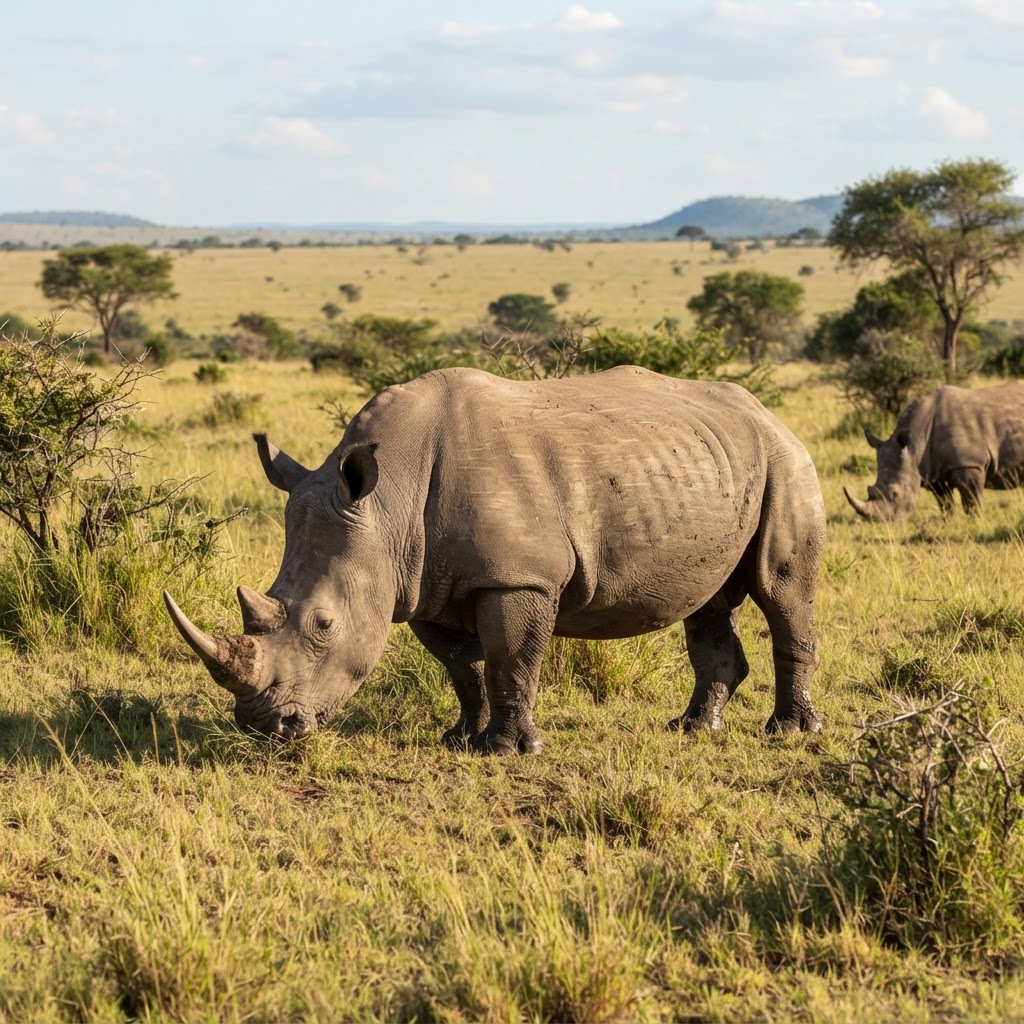
AI Generated
Southern White Rhinoceros
Ceratotherium simum simum
The Southern White Rhinoceros, or Ceratotherium simum simum, is a large herbivore native to southern Africa, notable for its size and conservation efforts.
Introduction
The Southern White Rhinoceros, scientifically known as Ceratotherium simum simum, is one of the two subspecies of the white rhinoceros and is predominantly found in southern Africa. This species, recognized for its impressive size and characteristic square lips, is an important figure in conservation efforts across the region.
Description
The Southern White Rhinoceros is the larger of the two subspecies of white rhinoceros, weighing between 1,800 and 2,700 kg (4,000 to 6,000 lbs). Adult males can reach lengths of up to 4 meters (about 13 feet) and stand around 1.5 meters (5 feet) tall at the shoulder. They are distinguished by their broad, square mouths adapted for grazing on grass, and their two horns, with the front horn being larger and averaging about 1 meter (3 feet) in length. Their skin, typically greyish in color, is thick and can appear to be brown due to mud and dust, which they often wallow in.
Habitat & Range
Southern White Rhinoceroses predominantly inhabit savannas and grasslands across southern Africa, with populations mainly found in South Africa, Namibia, Zimbabwe, and Kenya. They prefer areas with adequate water sources and open spaces where grass is plentiful. Historically, their range spanned across much of eastern and southern Africa, but habitat loss and poaching have substantially reduced their geographical presence. Today, numerous conservation areas and national parks are vital in protecting their habitats and ensuring their survival.
Behavior
Southern White Rhinoceroses tend to be social animals, often found in small groups consisting of females and their young, while males are generally solitary or may form loose associations with other males. They communicate through a variety of vocalizations, body language, and scent marking. These rhinos are mostly diurnal, feeding during the cooler parts of the day and resting during the heat. They have a relatively low metabolic rate and can survive for several days without water, although they prefer environments where waterholes are accessible.
Diet
As grazers, Southern White Rhinoceroses primarily consume grasses and leaves. Their grazing habits are crucial for maintaining the grassland ecosystem, promoting biodiversity by preventing shrub encroachment. They have a strong preference for short, succulent grasses, which they can efficiently harvest with their specialized mouths. During drought conditions or during the dry season, their diet may include browse (leaves and twigs) when grass becomes less available.
Hunting & Identification Notes
When identifying a Southern White Rhinoceros, look for its distinct square mouth, large size, and two prominent horns. They have a robust body covered with wrinkled skin that appears almost armor-like due to its thickness. They can be silently approached if one exercises caution, as their hearing is acute, although their eyesight is poor. Hunters and researchers must be particularly sensitive to their behavior, as these creatures can display a defensive posture if threatened, charging at perceived intruders. It is crucial to note that hunting of Southern White Rhinoceroses is heavily regulated, and ethical considerations must guide interactions with this endangered species.
Conservation Status
The Southern White Rhinoceros has experienced significant population recovery since the 20th century, largely due to intensive conservation efforts. However, they remain vulnerable due to threats from poaching for their horns and habitat loss. Currently, the IUCN lists the Southern White Rhinoceros as Near Threatened, with populations estimated to exceed 18,000 individuals in protected areas managed by various conservation organizations. Continued efforts in anti-poaching, habitat preservation, and community engagement are essential for their ongoing survival and restoration of their historical ranges.