
AI Generated
Southern Mountain Reedbuck
Redunca fulvorufula
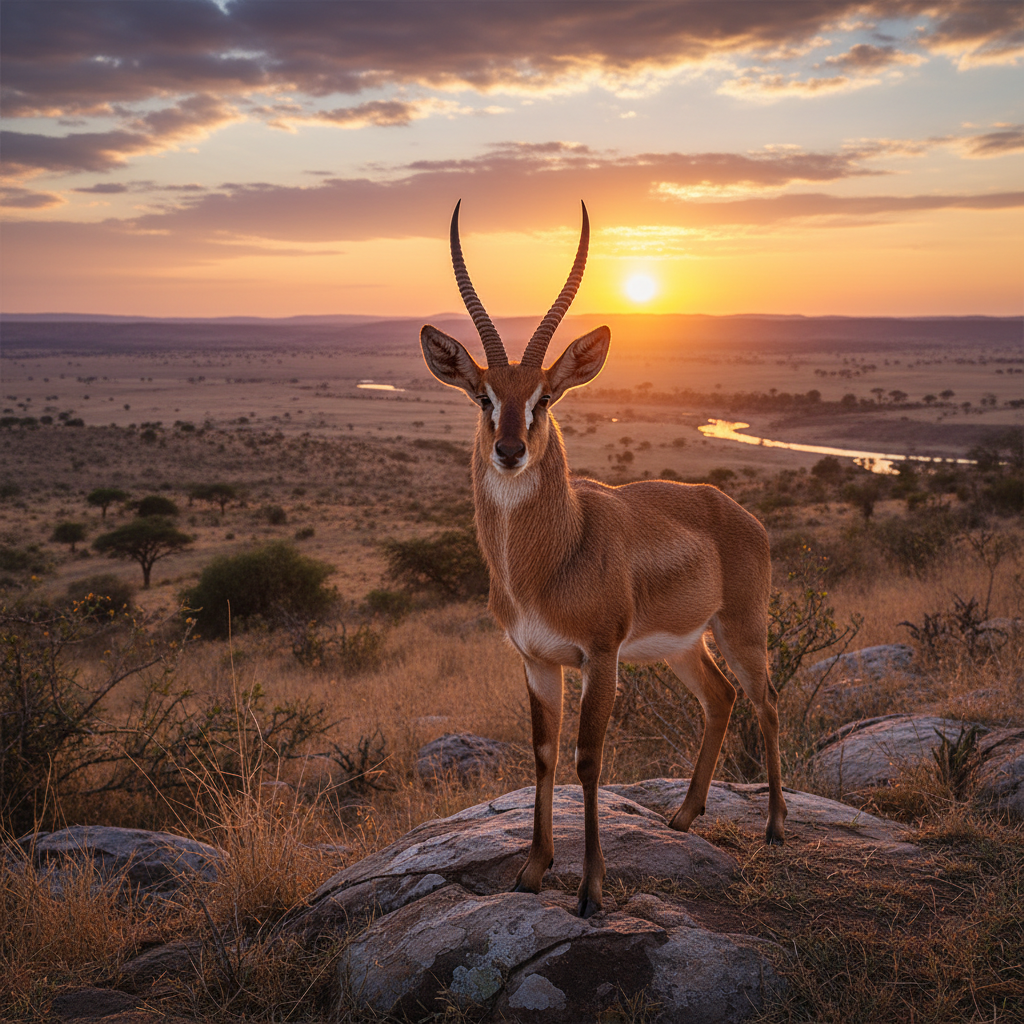
The Southern Mountain Reedbuck (Redunca fulvorufula) is a medium-sized antelope found in mountainous grasslands of southern Africa, known for its distinctive markings and behavior.
Introduction
The Southern Mountain Reedbuck (Redunca fulvorufula) is a medium-sized antelope indigenous to the mountainous regions of southern Africa. This species is recognized for its distinct physical characteristics and specific habitat preferences, making it an interesting subject for researchers, hunters, and wildlife enthusiasts alike. It thrives in individual territories within diverse ecological zones, primarily in high-altitude areas of countries like South Africa, Lesotho, and Swaziland.
Description
The Southern Mountain Reedbuck typically measures between 75 to 100 centimeters in length and stands about 70 to 90 centimeters tall at the shoulder. Males usually weigh between 60 to 85 kilograms, while females are slightly lighter, averaging around 50 to 70 kilograms. They have a short, fine coat that ranges from a reddish-brown to yellowish color, with white markings on the face, throat, and the insides of the legs. The males possess long, slender horns that can reach up to 80 centimeters in length, curling back towards the head in a graceful arc. These antelopes have a robust build and are well-adapted to their mountainous habitats, exhibiting agility and speed when navigating steep terrains.
Habitat & Range
The Southern Mountain Reedbuck primarily inhabits rocky grassland areas, open moorlands, and scrubland situated at elevations of 1,500 to 3,000 meters. They prefer steep hillsides and slopes that provide an adequate vantage point for spotting potential predators while also offering sufficient cover and forage. This antelope is often found in regions with a mix of high grass and low shrubs, where they can graze and hide from threats. The distribution of the Southern Mountain Reedbuck is concentrated primarily in the southern and eastern parts of South Africa, with significant populations also observed in Lesotho and Swaziland.
Behavior
Southern Mountain Reedbuks exhibit a solitary or small group behavior, often seen in pairs or small family units, particularly during the breeding season. Males are territorial, marking their territory with scent markings and standing guard over their domains, while females may range over larger areas. These antelopes are crepuscular, being most active during the early mornings and late afternoons, which helps them avoid the heat of the day and minimize encounters with predators. Their agility and speed, combined with their preference for rugged terrain, enable them to escape quickly when threatened.
Diet
The diet of the Southern Mountain Reedbuck primarily consists of grasses, herbs, and shrubs, with a particular preference for young, fresh shoots and leaves. They are selective feeders and often choose foraging sites based on the nutritional quality of the vegetation. This herbivore plays an essential role in its ecosystem by grazing, helping to maintain the balance of plant life in its mountainous habitat. The seasonal availability of food sources significantly influences their foraging patterns and movements.
Hunting & Identification Notes
For hunters, identifying the Southern Mountain Reedbuck can be accomplished by observing its distinct physical traits and behavioral patterns. The reddish-brown coat and white facial markings are key identifying features. During the breeding season, males can often be observed engaging in vocalizations and displays to assert their dominance. Ethical hunting practices should be adhered to, focusing on age and health criteria to ensure sustainable population management. Specialized knowledge of their habitat and behavior can enhance the chances of successful tracking and identification.
Conservation Status
The Southern Mountain Reedbuck is currently categorized as Least Concern by the International Union for Conservation of Nature (IUCN). While the species itself is not in immediate danger of extinction, habitat loss due to agricultural expansion, urban development, and climate change poses significant threats to their populations. Conservation efforts are vital to ensure their survival, emphasizing the importance of preserving their natural habitats and promoting sustainability among local communities. Effective management policies and habitat protection initiatives can help mitigate these threats and ensure that future generations can enjoy observing the Southern Mountain Reedbuck in their natural environment.
Latest Trophies
