
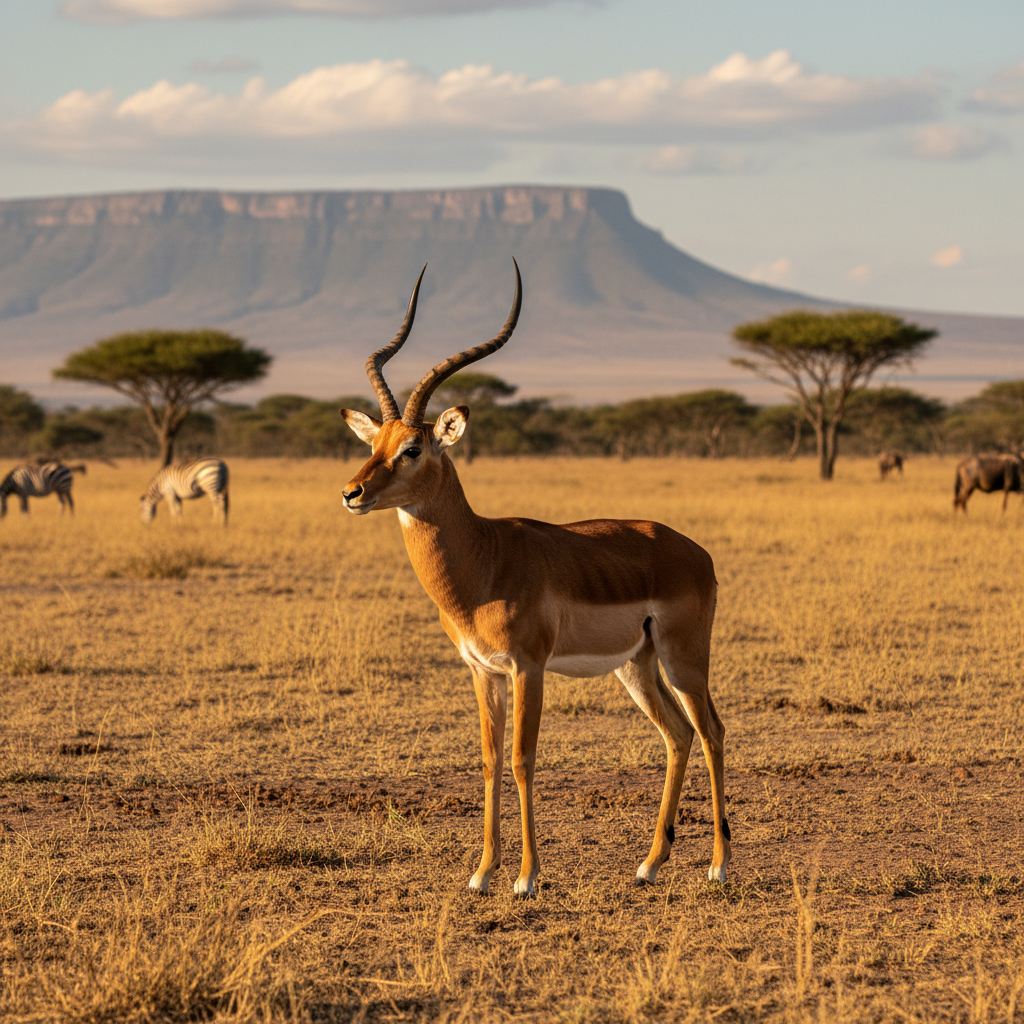
AI Generated
Southern Impala
Aepyceros melampus
The Southern Impala (Aepyceros melampus) is a medium-sized antelope found in the woodlands and savannas of southern Africa, notable for its grace and agility.
Introduction
The Southern Impala (Aepyceros melampus) is a medium-sized antelope species predominantly found across the woodlands and savannas of southern Africa. Known for its lithe body and remarkable agility, this species is a common sight on savanna plains, contributing to the rich biodiversity of their habitats.
Description
Southern Impalas are characterized by their sleek, graceful build. Adult males typically stand about 75 to 90 cm (30 to 35 inches) tall at the shoulder and weigh between 50 to 80 kg (110 to 180 lbs), while females are slightly smaller, standing around 70 to 85 cm (28 to 33 inches) and weighing 40 to 60 kg (90 to 130 lbs). Their coat is a reddish-brown color, with a white underbelly. Males exhibit a distinct pair of long, curved horns that can reach up to 90 cm (35 inches) in length.
Impalas are also known for their striking black facial markings and the white marking on their rumps, which becomes particularly visible when they are alert and running. Their large, expressive eyes and ears aid in detecting predators, contributing to their survival.
Habitat & Range
The Southern Impala inhabits various environments, primarily favoring open savannas, light woodlands, and grasslands. They thrive in regions with access to water sources, as they require frequent hydration.
Geographically, Southern Impalas are widespread across several countries in southern Africa, including South Africa, Namibia, Botswana, Zimbabwe, and parts of Mozambique and Tanzania. Their adaptability to different environments makes them a resilient species in fluctuating ecological conditions.
Behavior
Southern Impalas are social animals that live in herds typically comprising 10 to 50 individuals, although herds can sometimes be larger. They engage in numerous cooperative behaviors, such as vigilance against predators. When alarmed, they exhibit a characteristic bounding leap known as a 'stotting' behavior, which is believed to confuse predators and demonstrate their fitness.
Hierarchy in the herds is often established among males based on age and strength, with dominant individuals possessing access to mating opportunities. During the breeding season, males will exhibit territorial behaviors, including marking their territory with scent and engaging in ritualized sparring with rivals.
Diet
Southern Impalas are herbivorous and primarily graze on grasses, leaves, and tender shoots. They have a preference for green, nutritious fodder, especially during the wet season when food is abundant. Their selective feeding habits enable them to exploit various plants, allowing them to thrive in diverse habitats. They also practice opportunistic feeding, occasionally browsing on bushes and shrubs.
Hunting & Identification Notes
For those involved in hunting or wildlife research, identifying the Southern Impala is relatively straightforward due to its recognizable features and behaviors. Hunters should note the following:
- Size: Males and females differ significantly in size; males are larger with distinct horns.
- Coloration: The reddish-brown coat with white underbelly and markings is a key identification trait.
- Behavior: Their flight response involves graceful bounds, making them easy to spot when startled.
- Sound: Impalas communicate using a range of vocalizations, including barking and bleating, which can provide clues to their presence.
Legal and ethical hunting practices require knowledge of the local regulations governing Impala populations, as well as sustainable management practices to ensure their conservation.
Conservation Status
The Southern Impala is classified as Least Concern by the International Union for Conservation of Nature (IUCN). However, threats from habitat loss and poaching are ongoing concerns. Their populations are relatively stable due to their wide distribution and adaptability.
To ensure the sustained health of Southern Impala populations, it is crucial to enhance conservation efforts in areas where their habitats are encroached upon. Promoting eco-tourism can also provide economic incentives for local communities to protect these graceful antelopes while allowing safari guides and researchers to benefit from their ecological significance.
In summary, the Southern Impala represents a vital part of the African savanna ecosystem, both as a prey species and a part of the hunting culture. Understanding their biology, behavior, and conservation needs is essential for all stakeholders involved with this enchanting antelope.
Latest Trophies

