
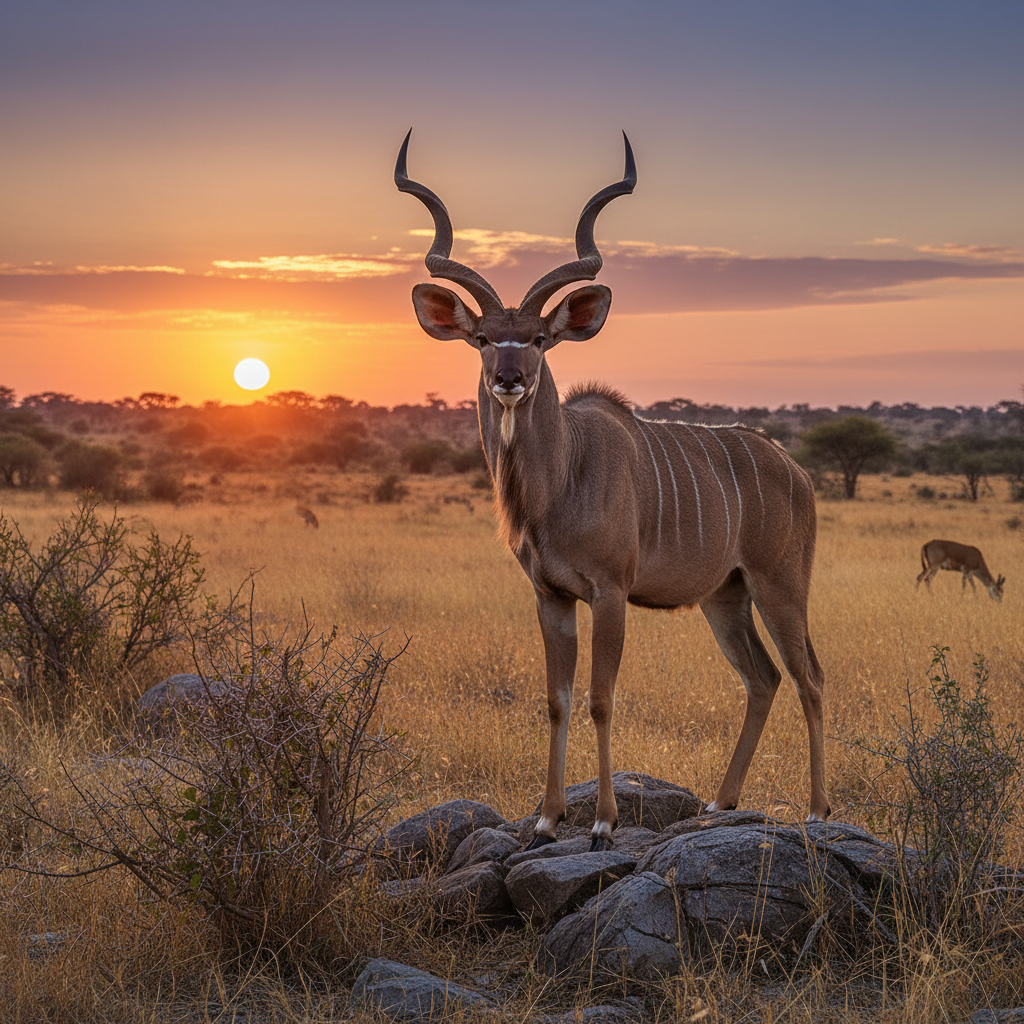
AI Generated
Southern Greater Kudu
Tragelaphus strepsiceros
The Southern Greater Kudu (Tragelaphus strepsiceros) is an impressive antelope found in southern Africa, known for its distinctive spiral horns and striking appearance.
Introduction
The Southern Greater Kudu (Tragelaphus strepsiceros) is a remarkable species of antelope native to the southern regions of Africa. Known for its striking spiral horns and graceful appearance, it can be found primarily in countries such as South Africa, Botswana, Zimbabwe, and Namibia. This species represents a significant element of the African savanna and bushland ecosystems, showcasing the rich biodiversity of its habitat.
Description
The Southern Greater Kudu is one of the largest antelopes, with males standing about 1.2 meters tall at the shoulder and weighing between 200 to 250 kg, while females are generally smaller, standing 90-100 cm tall and weighing 100-120 kg. Males are characterized by their impressive spiraled horns, which can reach lengths of up to 1.8 meters, and their striking grey-brown coats adorned with white vertical stripes. Females, on the other hand, lack horns and are typically lighter in color, making them less conspicuous in their natural habitat.
Both males and females have white facial markings, including a distinct white stripe running down the face, as well as lighter underbellies and 'frosted' ears that accentuate their facial features. These adaptations serve a dual purpose of aesthetic appeal and camouflage within their rustic surroundings.
Habitat & Range
Southern Greater Kudus are predominantly found in woodland areas, dense bush, and open savannas, which provide not only food but also cover from predators. Their range extends throughout the southern regions of the African continent, with prominent populations in South Africa’s Kruger National Park, Botswana’s Chobe National Park, and in Zimbabwe. They prefer areas with adequate water sources, which are crucial for their survival, especially in the hotter months.
Behavior
Southern Greater Kudus are mainly crepuscular, being more active during dawn and dusk. They are social animals, often found in small herds consisting of females and their young, while mature males are more solitary or form temporary bachelor groups. Males are typically more robust and assertive, especially during the mating season, which leads to displays of dominance through posturing and ritualistic displays of strength.
Their ability to remain hidden is profound; Kudus are known for their agility and are capable of jumping up to 3 meters high to escape threats. They communicate using various vocalizations and visual signals, which play essential roles during mating and establishing territory.
Diet
As browsers, Southern Greater Kudus primarily feed on a variety of leaves, shrubs, and grasses. Their dietary preferences tend to shift based on seasonal availability, often opting for higher foliage during the dry season when other resources become scarce. Their long, slender tongues allow them to select the best leaves efficiently, and their digestive systems are well adapted to break down fibrous plant materials.
Hunting & Identification Notes
For hunters and wildlife observers, identifying the Southern Greater Kudu can be an enjoyable challenge. Males can be distinguished by their long horns and larger frames, while females present a more slender appearance. When hunting, one must observe local regulations and guidelines to ensure sustainable practices are followed. The patterns on their coats provide excellent camouflage, making them difficult to spot in their natural environment, and their behaviors reveal their alert nature, retreating quickly if danger is perceived.
Conservation Status
The Southern Greater Kudu is currently listed as Least Concern on the IUCN Red List. However, habitat loss and poaching remain significant threats to their populations. Habitat destruction due to agricultural expansion and urbanization has necessitated conservation efforts to protect their natural environments and ensure their survival.
In response, various conservation initiatives, including protected areas and sustainable hunting practices, have been established to help maintain healthy populations of Southern Greater Kudu. Education and awareness programs aimed at local communities also play a critical role in the conservation efforts for this majestic species.
In summary, the Southern Greater Kudu is an iconic part of the African landscape, known for its impressive size, beauty, and adaptability. Understanding its behaviors, dietary needs, and conservation challenges is crucial not only for researchers and safari guides but also for those engaged in sustainable hunting practices.