
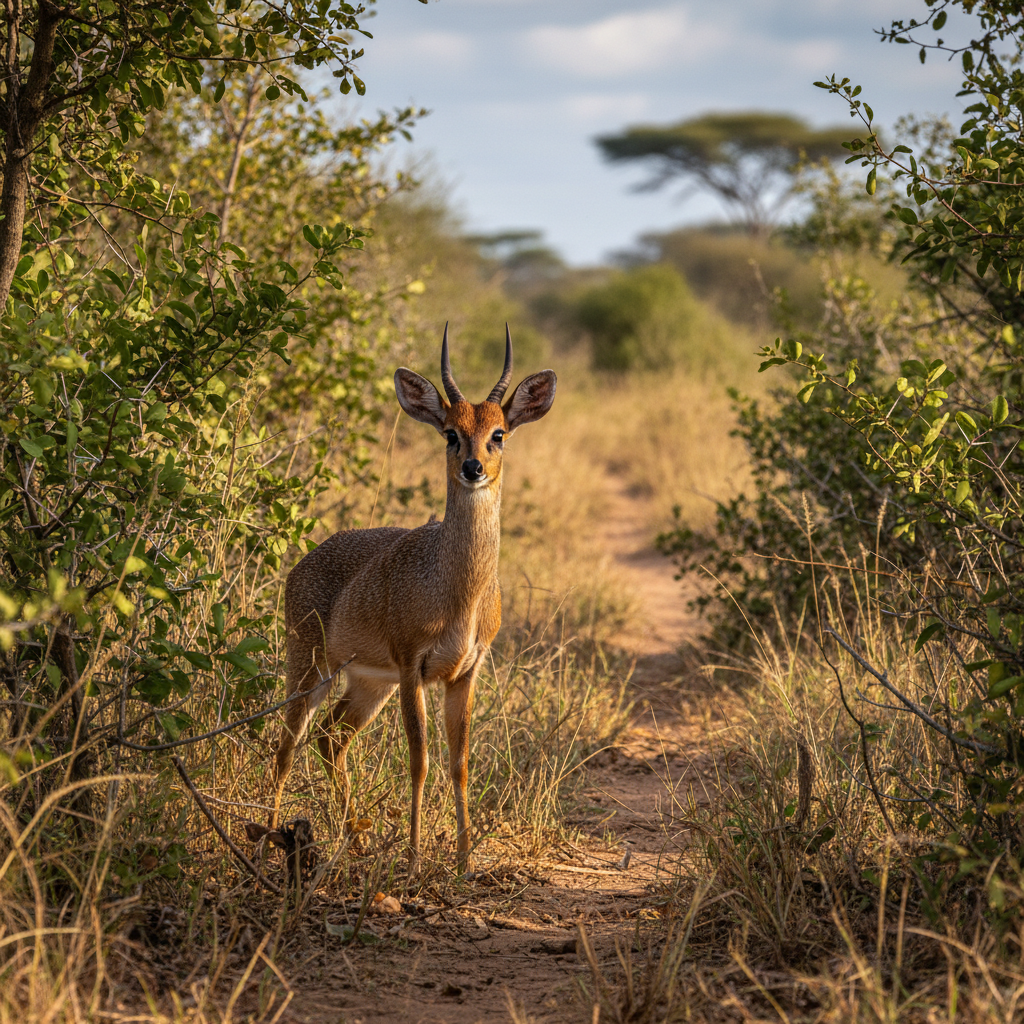
AI Generated
Southern Bush Duiker
Sylvicapra grimmia
The Southern Bush Duiker is a small antelope known for its elusive nature, found primarily in southern Africa, thriving in dense bush and forested areas.
Introduction
The Southern Bush Duiker (scientific name: Sylvicapra grimmia) is a small and elusive antelope that inhabits the bushlands and forests of southern Africa. This species is recognized for its remarkable adaptability to dense, bushy environments, which helps it evade predators and find food.
Description
The Southern Bush Duiker is characterized by its relatively small size, standing about 60-90 cm at the shoulder and weighing approximately 15-30 kg. It has a robust, compact body covered with a short, sleek coat that ranges in color from a reddish-brown to a grayish hue, often with white markings around the face, throat, and inner legs. The male Southern Bush Duiker has short, straight horns that can grow up to 20 cm in length, while the females are hornless. Its large, expressive eyes and keen sense of hearing make it highly aware of its surroundings, enhancing its survival in the wild.
Habitat & Range
Southern Bush Duikers primarily inhabit a variety of ecosystems, including wooded savannas, thicket, and scrub forests. They thrive in regions with dense underbrush that provides adequate cover for foraging and hiding from predators. Generally found in southern Africa, their range extends from Angola and Namibia down to South Africa, including notable populations in Botswana and Zimbabwe. The species displays a preference for areas with ample vegetation, helping them to remain concealed from threats.
Behavior
Southern Bush Duikers are primarily solitary or found in pairs, with the latter often comprising a mother and her young. They are crepuscular, being most active during dawn and dusk. This behavior aligns with their feeding patterns, as they forage for food when predators are less active. Their short legs and nimble bodies allow them to navigate through dense undergrowth with ease. They exhibit a unique running style by bounding gracefully through vegetation, making them difficult to spot. If threatened, they prefer to lie still and rely on their camouflage until danger passes.
Diet
As herbivores, Southern Bush Duikers have a diet primarily consisting of leaves, shoots, fruits, and flowers of various plant species. Their choice of food often varies based on the availability of resources in their habitat. They tend to favor young, tender leaves, which provide essential nutrients. This species also engages in selective feeding, choosing plants that help avoid toxic effects while maximizing energy intake.
Hunting & Identification Notes
For hunters and safari guides, spotting the Southern Bush Duiker can be a rewarding challenge. Their secretive nature and affinity for dense thickets make them discreet and hard to identify. Recognizable traits include their small size, unique coloration, and the presence of small horns in males. Notably, the Southern Bush Duiker will often remain motionless when approached, relying on their ability to blend into the environment. Knowledge of their behavior, such as their crepuscular activity, can enhance the chances of successful observation. Ethical hunting practices should be adhered to, ensuring sustainable populations.
Conservation Status
The Southern Bush Duiker is currently classified as Least Concern on the IUCN Red List, primarily due to its wide distribution and presumed large population. However, they face threats from habitat loss due to agricultural expansion, urbanization, and hunting pressures. Local conservation efforts, including protected areas and habitat restoration, play a vital role in ensuring that Southern Bush Duikers continue to thrive in their natural environments. Continuous assessment of their numbers and habitat condition is critical for the long-term conservation of this intriguing species.
Latest Trophies

