
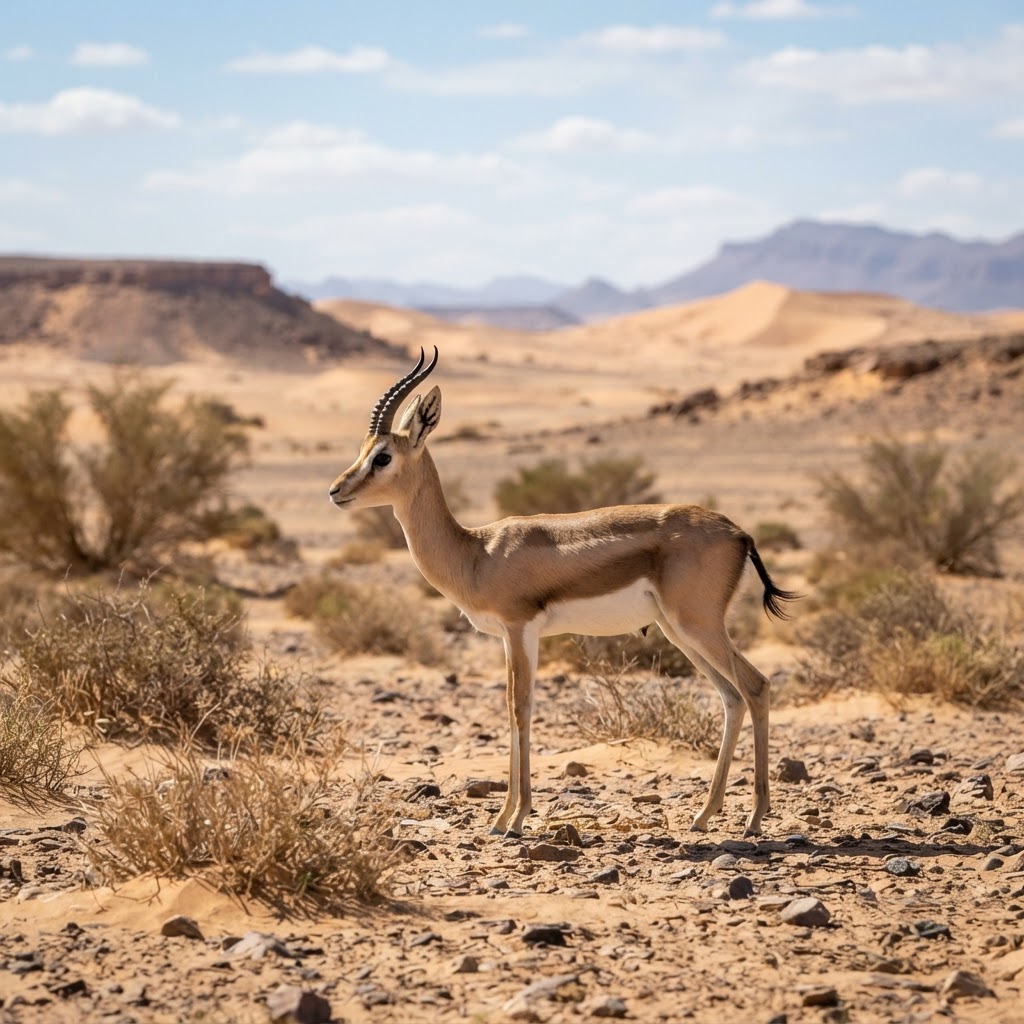
AI Generated
Sahara Dorcas Gazelle
Gazella dorcas
The Sahara Dorcas Gazelle (Gazella dorcas) is a small to medium-sized antelope found primarily in North Africa. Adapted to desert environments, these gazelles are known for their agility and speed.
Introduction
The Sahara Dorcas Gazelle (scientific name: Gazella dorcas) is a graceful antelope species that inhabits the arid regions of North Africa, particularly in the Sahara Desert. Known for its light build and agile movements, this gazelle is well adapted to desert life. With its striking appearance and elusive behavior, the Sahara Dorcas Gazelle holds significant ecological importance within its habitat.
Description
The Sahara Dorcas Gazelle typically weighs between 15-25 kg (33-55 lbs) and stands about 70-90 cm (28-35 inches) tall at the shoulder. It has a slender body with long, spindly legs which enhance its speed, allowing it to evade predators. The coat is a sandy-yellow to light brown color, providing effective camouflage against the desert landscape. Males possess long, slender horns that can reach lengths of up to 80 cm (31 inches) and typically curl in a slight spiral, while females are hornless. The gazelle's large eyes and ears are adapted to detect predators in their barren surroundings.
Habitat & Range
The Sahara Dorcas Gazelle primarily inhabits sand dunes, rocky plateaus, and dry plains across the Sahara Desert region. Its range extends from Morocco to Egypt, including parts of Algeria and Libya. These gazelles thrive in areas where vegetation is sparse, relying on their keen senses to find food and water. The desert environment presents challenges, including extreme temperatures and limited resources, making their adaptations critical for survival.
Behavior
Sahara Dorcas Gazelles are social animals, often found in small herds of up to 20 individuals. These herds usually consist of females and their young, while males tend to be more solitary or may form bachelor groups. The gazelle is primarily diurnal, being most active during the cooler parts of the day. They exhibit fascinating behaviors such as bounding leaps and quick turns to evade threats from predators. Vocalizations are limited, but they use body language and scent marking to communicate within their social structure.
Diet
As herbivores, Sahara Dorcas Gazelles mainly feed on grasses, herbs, and shrubs native to their desert habitat. They have the remarkable ability to extract moisture from their food, allowing them to survive in environments where water is scarce. During the dry season, they can subsist on dried vegetation, showcasing their adaptability to harsh conditions. Gazelles are also known to migrate slightly during seasonal changes in search of food resources, demonstrating their resourcefulness in a challenging environment.
Hunting & Identification Notes
For those interested in identifying the Sahara Dorcas Gazelle, look for the characteristic sandy coloration and the distinctively slender build. Males will display their horns prominently, often engaging in displays of dominance during mating seasons. Their habitat choice often includes rocky plains and sandy substrates, making their tracks an essential identification clue. Look for their tiny hooves that leave a delicate imprint in soft sand. Hunters should be aware that pursuing this species requires a deep understanding of their habitat and behavior, respecting conservation laws and practices.
Conservation Status
The conservation status of Sahara Dorcas Gazelle is currently classified as "Near Threatened" on the IUCN Red List. Although they historically roamed extensive areas of the Sahara, habitat loss, poaching, and competition with livestock have severely impacted their populations. Local conservation efforts are in place to protect remaining populations, including habitat protection and anti-poaching measures. It is crucial to work towards sustainable cohabitation with local human populations to ensure the long-term survival of this iconic desert antelope.
In summary, the Sahara Dorcas Gazelle represents an astonishing example of adaptation to the harsh desert environment of North Africa. Understanding its characteristics, habitat, and conservation issues is vital for hunters, researchers, and safari guides who wish to appreciate and protect this unique species.