
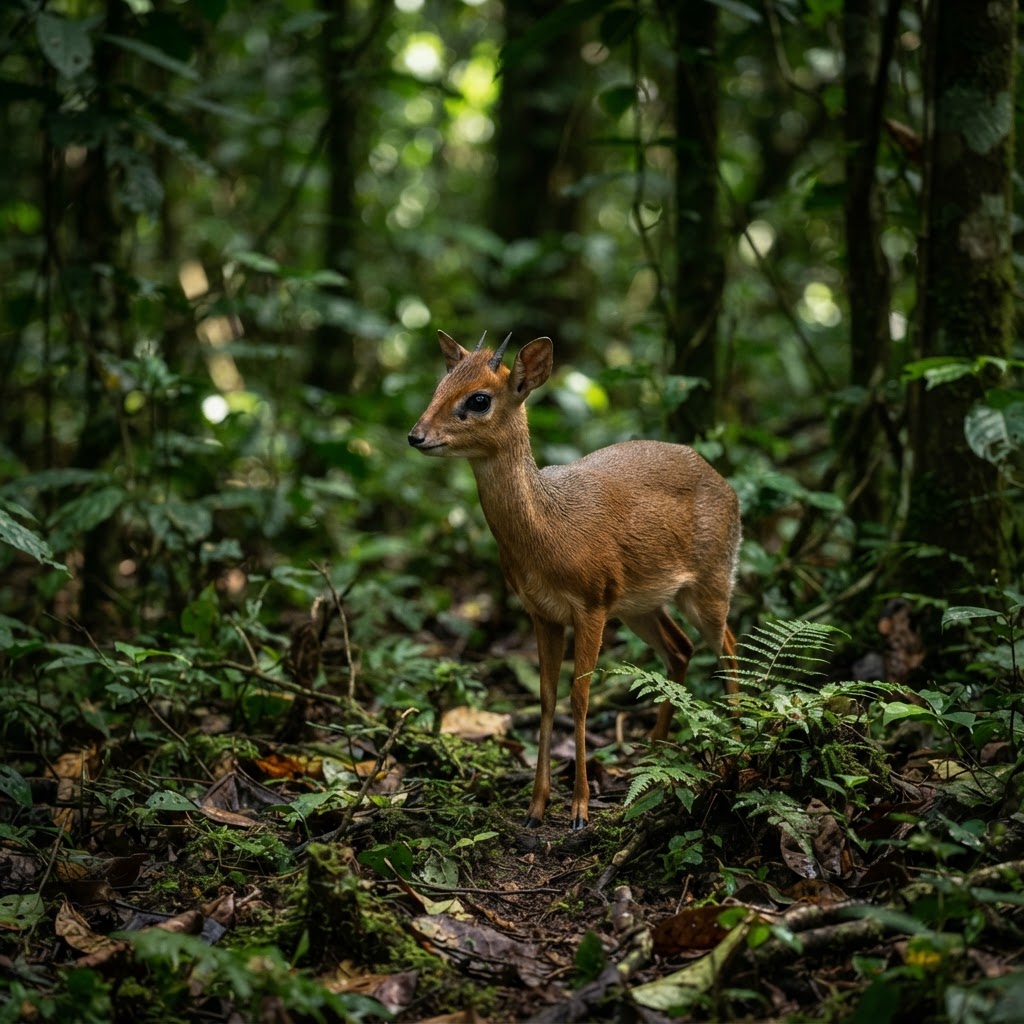
AI Generated
Royal Antelope
Neotragus pygmaeus
The Royal Antelope is the smallest species of antelope, native to West Africa. Known for its remarkable agility and elusive nature, it inhabits dense forests and undergrowth.
# Royal Antelope (Neotragus pygmaeus)
The Royal Antelope is recognized as the smallest species of antelope, distinguished by its diminutive size and elegant features. These animals are primarily found in the dense forests of West Africa, specifically in countries such as Ghana, Liberia, and Côte d'Ivoire. Its scientific name, Neotragus pygmaeus, reflects its status among the smallest ungulates.
Description
The Royal Antelope stands about 25-30 cm (10-12 inches) at the shoulder, with a weight ranging from 2.5 to 3.5 kg (6-8 lbs). Its coat is short and coarse, typically exhibiting a reddish-brown coloration that provides excellent camouflage in its natural habitat. Males possess small, spiky horns that average around 5-10 cm (2-4 inches) in length, while females are hornless. The eyes are large, and the ears are elongated, enhancing their senses and ability to detect predators in the wild.
Habitat & Range
Royal Antelopes are primarily found in the humid rainforests and dense thickets of West Africa. Their range includes the tropical forests from southern Senegal and Burkina Faso to the western parts of Nigeria. They thrive in regions with dense underbrush, which offers protection from predators and a rich source of food. These animals are primarily nocturnal, spending the daylight hours hidden in dense vegetation, making them challenging to observe in the wild.
Behavior
Royal Antelopes are shy and elusive creatures. They are generally solitary or can be found in small groups, often composed of a mother and her young. They are known for their remarkable agility, able to navigate through thick undergrowth and climb steep terrains swiftly. Their vocalizations include a series of barks and snorts that serve as communication among individuals. Due to their elusive nature, direct observations are rare, and much of what we know about them comes from indirect evidence, like tracks and droppings.
Diet
The diet of the Royal Antelope consists mainly of tender leaves, fruits, and shoots found in its forest habitat. They are selective feeders, often choosing young shoots and fruits that are easier to digest. This specialized diet aids in their survival in dense forests where food sources may vary seasonally. The Royal Antelope's foraging habits contribute to the ecological balance of their environment, as they can help in seed dispersal through their feeding activities.
Hunting & Identification Notes
For hunters and wildlife observers, identifying the Royal Antelope can be quite challenging due to its size and secretive behavior. When tracking these animals, look for small tracks and signs of feeding in dense undergrowth, as these are telltale indicators of their presence. Their unique reddish-brown coat helps them blend into the forest environment, making them difficult to spot. Hunters should also be aware that they are primarily active during the cooler hours of dawn and dusk, so focusing efforts during these times may yield better results. However, ethical considerations and local regulations regarding hunting are paramount due to their conservation status.
Conservation Status
The Royal Antelope is currently classified as Least Concern by the International Union for Conservation of Nature (IUCN). However, this status does not negate the threats they face from habitat loss due to deforestation, agricultural expansion, and hunting pressures. Conservation efforts are critical to maintaining the biodiversity of their habitats and ensuring the survival of this unique antelope species. Continued research and monitoring of their populations are necessary to facilitate effective conservation strategies and educate local communities about the importance of preserving this small but ecologically significant antelope.