
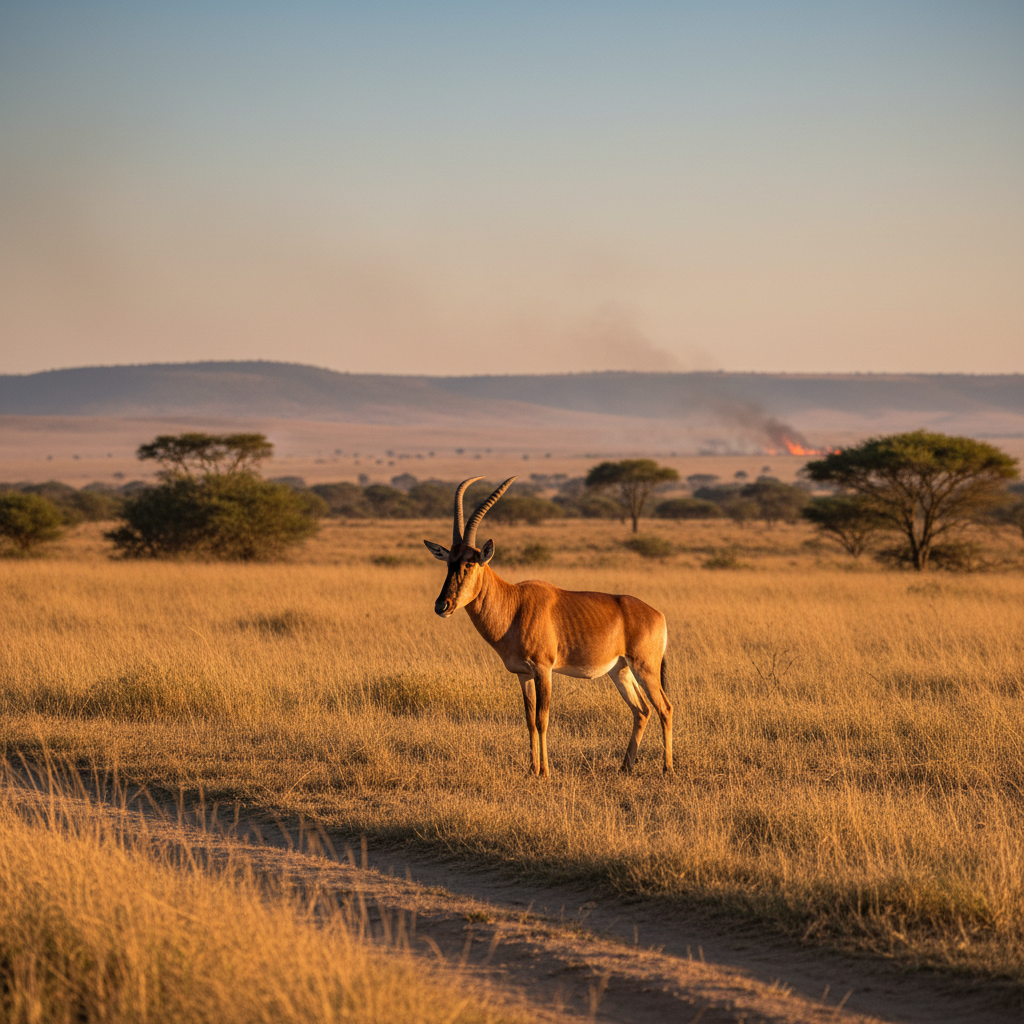
AI Generated
Red Hartebeest
Alcelaphus buselaphus caama
The Red Hartebeest is a distinctive antelope found in the savannas and grasslands of Southern Africa. Known for its unique appearance and behaviors, it plays a vital role in its ecosystem.
Introduction
The Red Hartebeest (Alcelaphus buselaphus caama) is a distinct species of antelope known for its unique appearance and behavior. Found primarily in the savannas and grasslands of Southern Africa, this species is recognized for its long, elongated face and remarkable coloration that make it easily identifiable in the wild.
Description
The Red Hartebeest exhibits a striking phenotype characterized by its elongated limbs, lean body, and long, narrow face. Males can weigh between 100 to 120 kg (220 to 265 lbs), while females are slightly smaller, averaging around 60 to 90 kg (132 to 198 lbs). The coat is a rich reddish-brown with darker patches on the face, underbelly, and legs. Both males and females have long, curved horns — they can measure up to 70 cm (27 in) for males, which are used both for display and combat within the species.
One of the defining features of the Red Hartebeest is its unique stance. They often appear to be standing on their toes, giving them an agile appearance suited for their environment.
Habitat & Range
The Red Hartebeest primarily inhabits the arid plains, grasslands, and savannas of Southern Africa, including countries like Namibia, Botswana, South Africa, and Zimbabwe. They prefer areas with sparse vegetation, which allows them to remain vigilant against predators. Within these savannas, they often congregate near water sources to stay hydrated, especially in the dry season.
Behavior
Red Hartebeests are social animals that usually form herds consisting of females, their young, and a small number of adult males. Males establish territories during the breeding season, defending their space against other males through displays of aggression and combat. They are also known for their alertness, often standing erect and scanning their surroundings for potential threats, which include predators such as lions, hyenas, and leopards.
Unlike some other antelope species, Red Hartebeests do not migrate based on seasonal changes. Instead, they adapt their movements to the availability of food and water resources within their territory.
Diet
As herbivores, Red Hartebeests primarily consume a diet of grasses, particularly favoring short grass species and occasional shrubs when available. They have adapted to thrive on the dry, fibrous vegetation typical of their savanna habitat. Their grazing habits play a crucial role in maintaining the ecosystem, as they help in the dispersion of seeds and the regulation of plant growth.
Hunting & Identification Notes
For those interested in hunting, identifying a Red Hartebeest from a distance can be relatively straightforward due to its unique body shape and coloration. When tracking them, look for their distinctive stance, which is different from other antelope species. The males, with their larger size and prominent horns, are generally the sought-after targets for hunters.
When preparing for a hunt, it's essential to study their movements, noting that they are most active during the early morning and late afternoon when they graze. Hunters are advised to approach slowly and to remain downwind to avoid detection by their keen sense of smell.
Conservation Status
The Red Hartebeest is currently classified as Least Concern by the International Union for Conservation of Nature (IUCN). While populations have stabilized in some regions due to conservation efforts and wildlife management practices, habitat fragmentation and poaching pose ongoing threats. Conservation initiatives aimed at preserving their natural habitat and regulating hunting are essential for the long-term survival of the species.
Effective management of their populations also requires cooperation among local communities, wildlife authorities, and conservation organizations, underscoring the need for ongoing awareness and educational programs about the importance of this unique antelope.
In conclusion, the Red Hartebeest serves as a vital component of the ecosystems it inhabits. With its remarkable adaptations and interesting behaviors, this antelope continues to captivate the interest of researchers, hunters, and safari guides alike.