
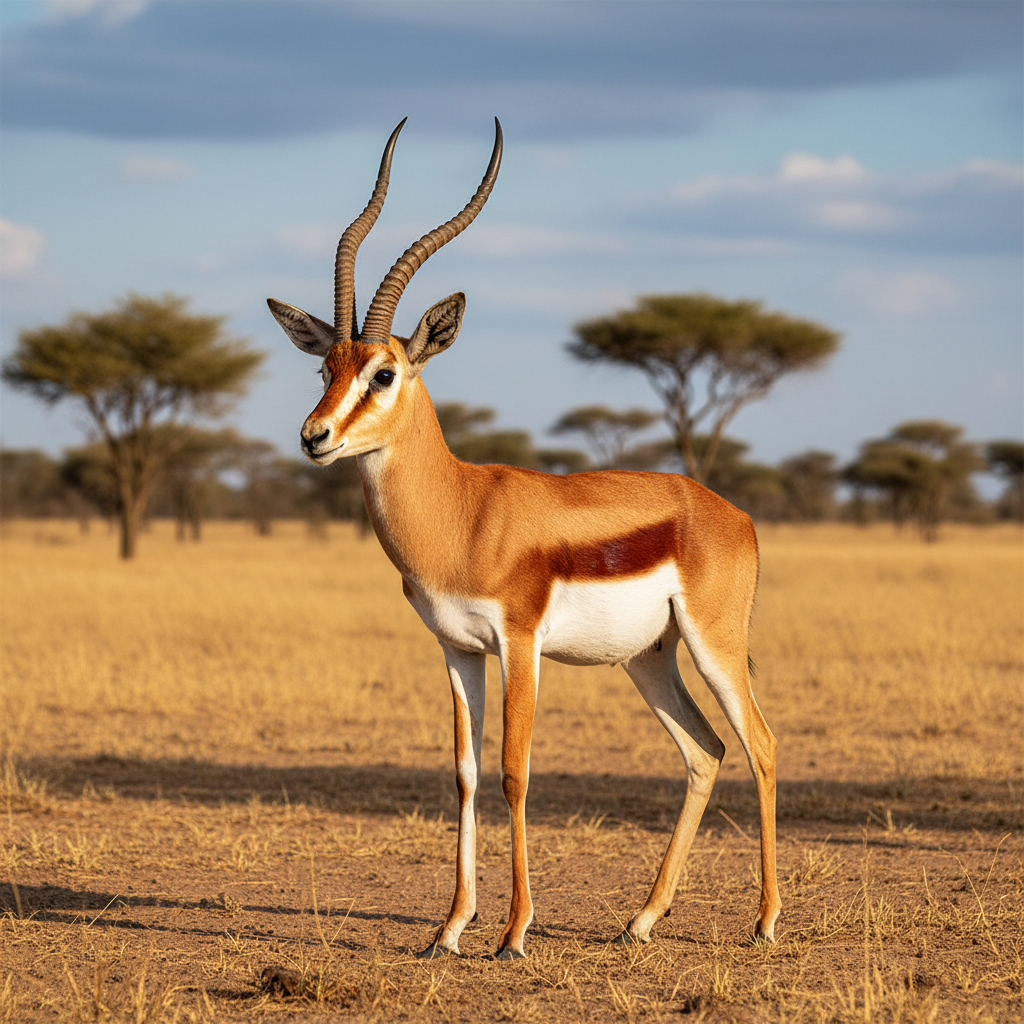
AI Generated
Red-fronted Gazelle
Eudorcas rufifrons
The Red-fronted Gazelle is a graceful antelope species native to parts of Africa, known for its distinct coloration and social behavior. This profile covers its habitat, diet, and conservation status.
Introduction
The Red-fronted Gazelle, scientifically known as Eudorcas rufifrons, is a striking species of antelope predominantly found in the savannas and grasslands of Africa. This gazelle is distinguished by its vibrant reddish-brown coat and unique facial markings, making it an object of interest for researchers and wildlife enthusiasts alike.
Description
The Red-fronted Gazelle averages around 80-100 cm in height at the shoulder and weighs between 30-60 kg. Males are typically larger and possess slender, elongated bodies with a lightweight build adapted for speed and agility. One of the most striking features of this species is its facial markings—males exhibit a characteristic red patch on the forehead, while females often have a lighter brown coloration. Both sexes have long, slender legs that facilitate swift movements across open terrains. The tail is short with a tuft of black hair at the end, and their large, expressive eyes are framed by long lashes, enhancing their alert appearance.
Habitat & Range
The Red-fronted Gazelle primarily inhabits the arid to semi-arid regions of Central and East Africa. They are often associated with savannas, bushlands, and areas with sparse vegetation that support their grazing habits. Their range includes parts of Sudan, the northern regions of Kenya, and into neighboring countries such as Uganda and Tanzania. These gazelles are known to migrate seasonally in search of better grazing conditions, often adapting to local climatic variations.
Behavior
Red-fronted Gazelles are social animals, typically found in small herds consisting of up to 20 individuals. They engage in a variety of social behaviors, including grooming and playful antics, which reinforce social bonds within the group. Males are known to establish dominance hierarchies during the breeding season, marked by displays of strength and agility. They are diurnal creatures, primarily active during the early morning and late afternoon when temperatures are cooler.
Their alertness and agility are key to avoiding predators, which include lions, leopards, and hyenas. In the face of danger, they can reach speeds of up to 80 km/h, employing zigzag running patterns to evade capture.
Diet
As herbivores, Red-fronted Gazelles primarily feed on grasses, leaves, and young shoots. Their diet is largely dependent on the seasonal availability of these food sources, often shifting from grass grazing in the open plains to browsing on shrubs or bushes during dry months. Their ability to adapt their diet to the natural seasonal changes contributes to their survival in harsh environments.
Hunting & Identification Notes
For hunters and wildlife enthusiasts, identifying the Red-fronted Gazelle can be accomplished by noting several distinctive features. Key identification markers include:
- The red patch on the forehead of males, contrasting with the lighter shade of the face.
- The overall slender body shape and long legs that are characteristic of this gazelle species.
- Their agile movements and rapid speed when startled.
- Location and habitat—observing the gazelles in their natural setting (savannas and grasslands) aids in successful identification.
Hunters should be aware of local regulations regarding hunting this species, as sustainable practices are crucial for conservation efforts.
Conservation Status
The conservation status of the Red-fronted Gazelle is currently classified as Least Concern according to the International Union for Conservation of Nature (IUCN). However, their populations face threats from habitat loss, poaching, and competition with livestock for grazing resources. Conservation initiatives and protected areas are vital in maintaining healthy populations, ensuring that this beautiful species continues to thrive in its natural habitat.
In conclusion, while the Red-fronted Gazelle remains relatively stable in its numbers, ongoing conservation efforts are essential to safeguard its future against the growing pressures of human activity and environmental change. Researchers and guides working with this species must remain vigilant to encourage sustainable interaction and preservation.