
AI Generated
Maxwell Duiker
Philantomba maxwelli
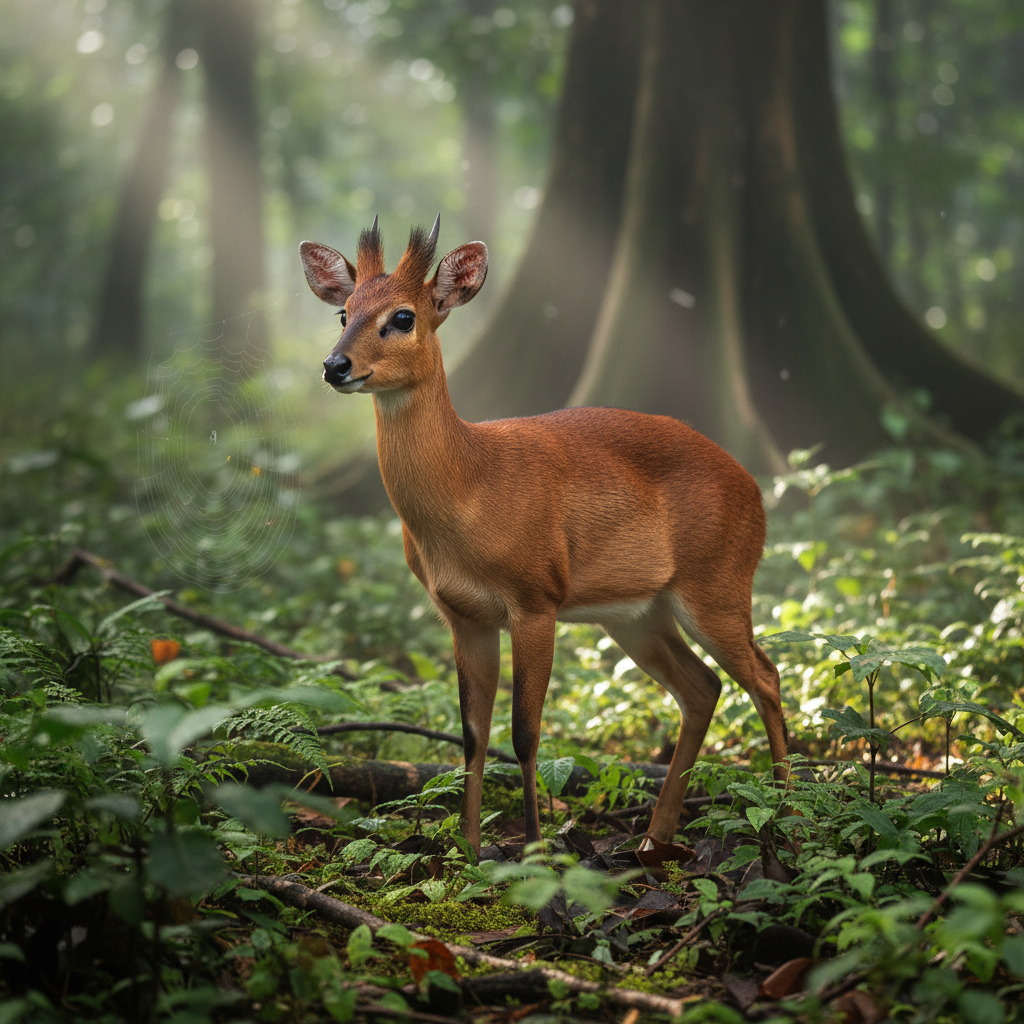
The Maxwell duiker is a small, forest-dwelling antelope species inhabiting the dense forests of West and Central Africa, known for its elusive nature.
Description
The Maxwell duiker (Philantomba maxwelli) is a small antelope species known for its shy disposition and elusive behavior. This duiker, smaller than its relatives, exhibits a distinctive coat that is primarily a dark slate or bluish-gray, with a white facial marking and white spots on its legs that help it blend into its forested environment. Adult Maxwell duikers typically weigh between 10 to 15 kilograms (22 to 33 pounds) and have a shoulder height of about 60 to 80 centimeters (23 to 31 inches).
Habitat & Range
Maxwell duikers are primarily found in the dense tropical rainforests of West and Central Africa. Their range extends from Guinea in the west to Cameroon in the east, with populations also observed in regions of Gabon, the Republic of the Congo, and the Democratic Republic of the Congo. They prefer habitats that provide thick underbrush, which offers cover from predators and serves as a rich source of food. The deep forest floor, rich in moisture and plant diversity, is vital for their survival, making it essential to protect these ecosystems from deforestation and human encroachment.
Behavior
Maxwell duikers are predominantly solitary animals, although they may occasionally be seen in pairs, especially during mating season or when a mother is with her fawn. They are primarily crepuscular, meaning they are most active at dawn and dusk to avoid the heat of the day and maximize their camouflage. Their elusive nature makes them hard to observe; they often freeze in place when they sense danger, relying on their excellent hearing and sense of smell to detect predators.
Diet
As browsers, Maxwell duikers feed on a variety of vegetation that thrives in their forest habitat. Their diet consists of leaves, young shoots, berries, and fruits found on the forest floor. They have specialized adaptations that allow them to extract moisture from their food, enabling them to thrive in their humid environment. During seasons when food is scarce, they may rely on more fibrous plant material, showcasing their adaptability to changing conditions.
Hunting & Identification Notes
Hunters and researchers interested in identifying the Maxwell duiker should look for features such as its small stature, slate or bluish-gray coat, and specific white markings on the face and legs. Unlike other duikers, the Maxwell duiker has a more elongated body and shorter legs. As a precaution, it's important to note that hunting this species requires strict adherence to conservation regulations due to its vulnerable status. Using calls or tracking in the early morning or late afternoon can increase chances of encounters with this species in the field.
Conservation Status
The Maxwell duiker is currently classified as Vulnerable on the IUCN Red List. The primary threats facing this species include habitat loss due to logging, agricultural expansion, and hunting pressures from bushmeat trade. Conservation efforts are critical in protecting their habitat and ensuring sustainable management practices. Effective wildlife protection policies, habitat restoration, and anti-poaching initiatives are key to securing the future of the Maxwell duiker in its natural environment. Collaboration between governments, NGOs, and local communities is essential to ensure the continued survival of this secretive forest antelope.