
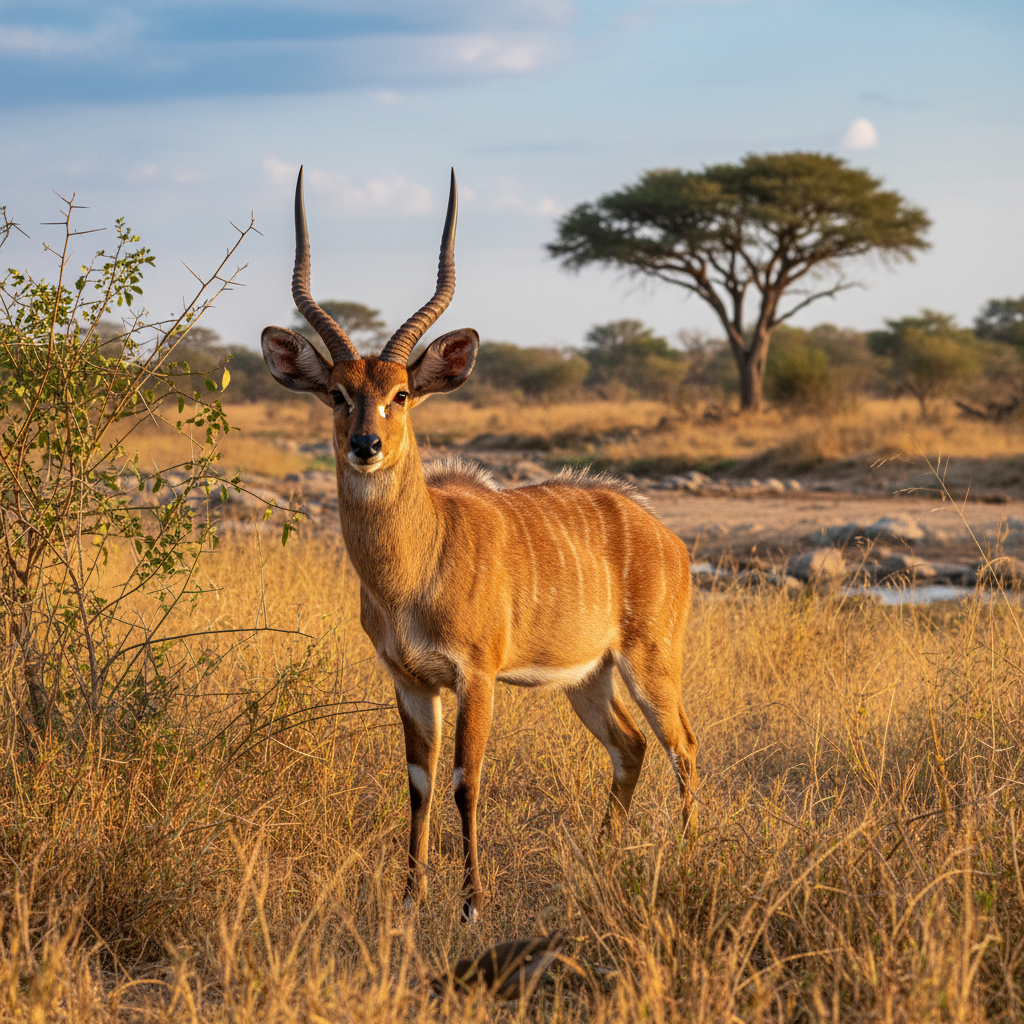
AI Generated
Limpopo Bushbuck
Tragelaphus scriptus roualeyni
Discover the Limpopo Bushbuck, a secretive medium-sized antelope thriving in dense riverine habitats of Southern Africa. Known for its distinct coat patterns and elusive nature.
Description
The Limpopo Bushbuck (Tragelaphus scriptus roualeyni) is a distinct subspecies of the common bushbuck, a medium-sized antelope endemic to sub-Saharan Africa. Characterized by its relatively slender build and striking coat patterns, the Limpopo Bushbuck typically exhibits a reddish-brown to dark brown coloration. Males often have a darker, richer hue than females. What sets this subspecies apart are the white spots and vertical stripes adorning its flanks, which can vary in prominence but are generally quite visible. White markings also appear on the ears, chin, legs, and throat, adding to its distinctive appearance. Adult males typically stand between 70-90 cm (28-35 inches) at the shoulder and weigh 40-77 kg (88-170 lbs), with females being slightly smaller. Only the males grow horns, which are short, straight, and spiraled once, usually reaching lengths of 25-35 cm (10-14 inches) and tapering to sharp tips.
Habitat & Range
The Limpopo Bushbuck is found in the bushlands and forests of Southern Africa, primarily within the Limpopo Province of South Africa, south-eastern Botswana, and southern Zimbabwe. Its preferred habitat includes dense riverine vegetation, thickets, and woodland edges, especially areas close to permanent water sources such as rivers, pans, and dams. These dense environments provide crucial cover from predators and offer a plentiful supply of browse. They are highly adapted to these environments, rarely venturing into open country, which contributes to their elusive nature.
Behavior
Limpopo Bushbucks are largely solitary and secretive animals, with a reputation for being exceptionally shy and wary. They are primarily crepuscular and nocturnal, spending the daylight hours concealed within dense thickets, emerging at dawn, dusk, and throughout the night to feed. Males are territorial and will defend their small home ranges, often marking them with urine, feces, and secretions from their pre-orbital glands. They are known for their distinctive, dog-like bark, which serves as an alarm call when they detect danger. When threatened, a bushbuck will typically freeze or crash into the thickest vegetation nearby, relying on its camouflage and agility to evade predators. They are also adept swimmers, capable of crossing water bodies when necessary.
Diet
As browsers, the Limpopo Bushbuck has a varied and adaptable diet, consisting mainly of leaves, shoots, buds, flowers, and fruits from a wide range of trees, shrubs, and herbaceous plants. They are selective feeders, choosing the most palatable and nutritious parts of the vegetation available in their dense habitats. While they primarily browse, they may occasionally consume some grasses, particularly fresh shoots. Their diet provides them with sufficient moisture, enabling them to survive in areas where standing water may not be immediately available, although they prefer to drink regularly when possible.
Hunting & Identification Notes
The Limpopo Bushbuck is identified by its reddish-brown to dark brown coat with white spots and stripes, along with the short, spiraled horns of the male. The white patches on its ears, chin, and legs are also key identifiers. Due to their secretive nature and preference for dense cover, hunting the Limpopo Bushbuck is considered one of the most challenging plains game hunts. Success requires extreme patience, stealth, and often involves still-hunting or tracking them within their thick habitats. Accurate shot placement is crucial due to their size and the difficulty of a follow-up shot in dense bush. Trophy quality is assessed by the length and circumference of the horns, with mature males presenting a significant challenge and a rewarding trophy for experienced hunters.
Conservation Status
The Limpopo Bushbuck subspecies, along with the broader bushbuck species (Tragelaphus scriptus), is generally classified as 'Least Concern' by the IUCN Red List of Threatened Species. This is largely due to the species' wide distribution, adaptable nature, and its ability to coexist with human activities in fragmented landscapes, provided sufficient dense cover remains. While local populations can be affected by habitat loss and degradation, particularly the clearing of riverine vegetation for agriculture or development, the overall population trend for the bushbuck is stable. They are present in numerous protected areas, national parks, and private game reserves within their range, which contribute significantly to their ongoing conservation efforts and ensure the long-term viability of the subspecies.