
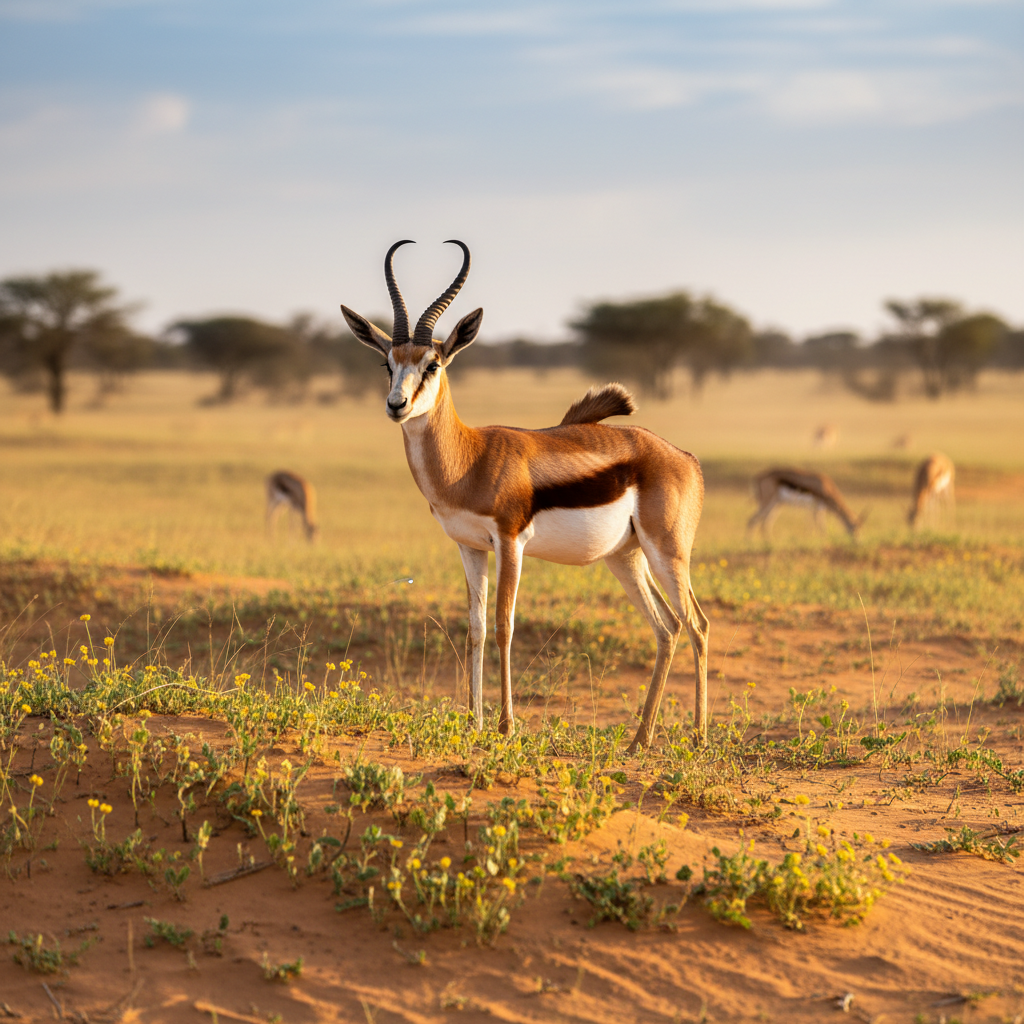
AI Generated
Kalahari Springbok
Antidorcas marsupialis
The Kalahari Springbok, Antidorcas marsupialis, is a graceful antelope found primarily in the Kalahari Desert region, known for its remarkable adaptations and striking appearance.
Introduction
The Kalahari Springbok, scientifically known as Antidorcas marsupialis, is a small yet elegant antelope predominantly found in the arid regions of the Kalahari Desert in southern Africa. Renowned for their agility and distinctive appearance, these animals thrive in the harsh conditions of their habitat, showcasing remarkable adaptations that allow them to cope with the desert climate.
Description
Kalahari Springboks are medium-sized antelopes characterized by their slender bodies, long legs, and distinctive coloration. They have a reddish-brown coat with a white belly and face markings, along with prominent white stripes extending from their eyes to the mouth. Males typically weigh between 40-50 kg (88-110 lbs) and can reach a shoulder height of 75-90 cm (30-35 in). Females are slightly smaller but share similar features, including the iconic curved horns found only in males. Their striking appearance is complemented by long, tufted tails and a unique leaping ability, often referred to as "pronking," which serves to confuse predators.
Habitat & Range
Kalahari Springboks are primarily distributed across the Kalahari Desert, which spans Botswana, Namibia, and South Africa. This arid expanse comprises scrubland, grasslands, and seasonal floodplains, providing a varied landscape for these antelopes. They prefer open, dry areas that allow for easy spotting of predators and adequate foraging opportunities. Their range may vary, depending on seasonal rainfall and the availability of food, with some populations migrating short distances to find more favorable conditions.
Behavior
Kalahari Springboks are known for their social behavior, commonly forming herds that can consist of several females and their young, while males tend to be more solitary or form small bachelor groups. These antelopes are crepuscular, being most active during dawn and dusk, which helps them avoid the midday heat of the desert. Their keen eyesight and acute sense of smell are vital for detecting predators such as cheetahs and leopards. In the face of danger, Kalahari Springboks exhibit a fascinating defense mechanism by pronking, where they leap into the air with stiff legs, showcasing their fitness to potential threats.
Diet
The diet of the Kalahari Springbok primarily consists of a range of grasses, leaves, and shrubs. They have adapted to their harsh environment by being selective foragers, targeting succulent plants during dry periods. As part of their feeding strategy, they can go for extended periods without water, deriving moisture from their food. Their ability to consume tough, fibrous vegetation demonstrates their resilience and adaptability within the Kalahari ecosystem.
Hunting & Identification Notes
Hunters and wildlife enthusiasts can identify Kalahari Springboks by their distinctive physical traits and behavior. Look for their slender build, characteristic markings on the face, and the flocking nature of herds. When pursuing them, patience and stealth are crucial, as these animals are highly alert and sensitive to disturbances. The best time to observe or hunt Kalahari Springboks is during early mornings or late afternoons when they are most active. Using binoculars can enhance observational efforts, helping identify males from females based on horn presence and body size.
Conservation Status
According to the IUCN Red List, Kalahari Springboks are currently classified as Least Concern, thanks to their relatively stable populations across various regions within their range. However, they face threats from habitat loss and fragmentation due to agricultural expansion and changes in land use. Conservation efforts are focused on preserving their habitat and maintaining sustainable populations, ensuring that these graceful antelopes continue to inhabit the Kalahari Desert for generations to come.
In summary, the Kalahari Springbok is not only an iconic representative of the Kalahari Desert ecosystem but also a subject of interest for both researchers and hunters alike, owing to their remarkable adaptations and social behavior in one of the world's most challenging environments.