
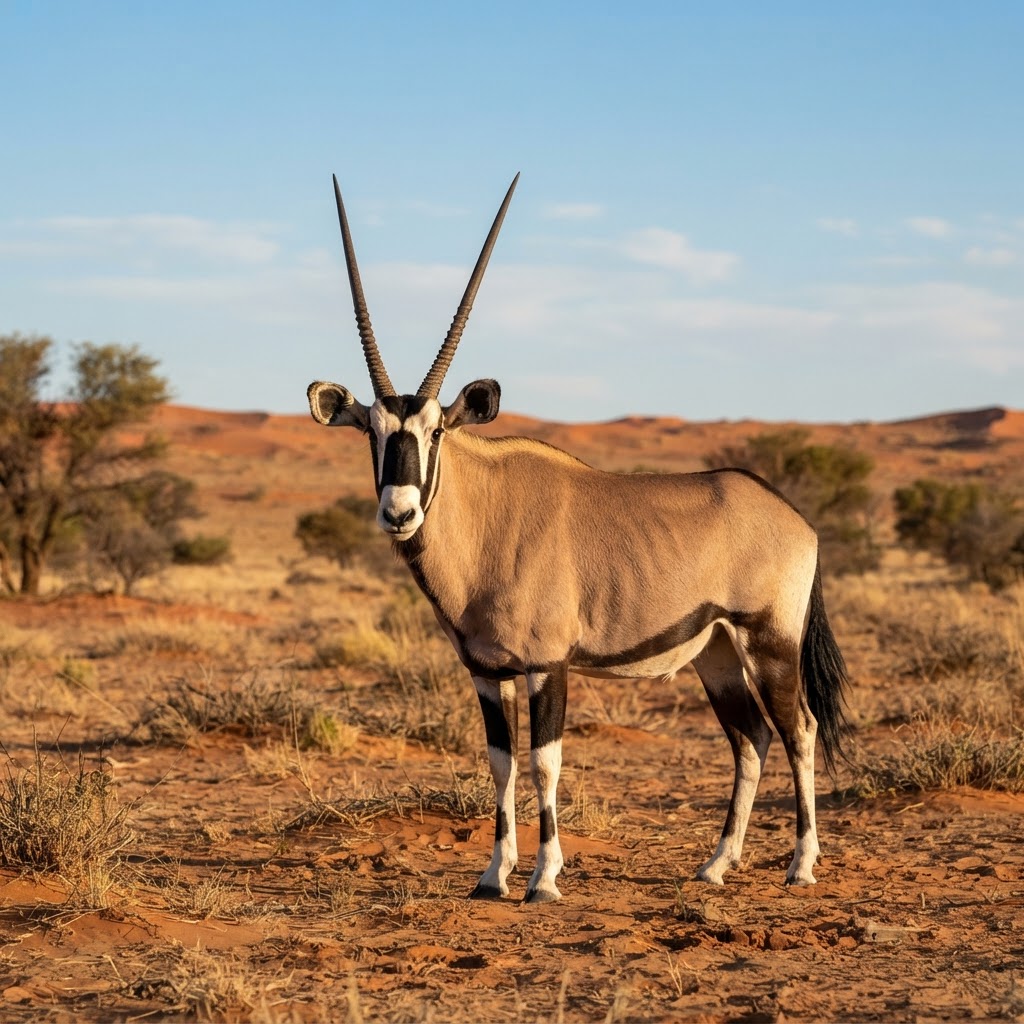
AI Generated
Kalahari Gemsbok (R.S.A., Botswana, Zimbabwe)
Oryx gazella
The Kalahari Gemsbok (Oryx gazella) is a striking antelope found in the arid regions of southern Africa, specifically in R.S.A., Botswana, and Zimbabwe.
Introduction
The Kalahari Gemsbok (Oryx gazella) is a striking antelope that thrives in the dry, arid regions of southern Africa, particularly within the Kalahari Desert, which spans across R.S.A., Botswana, and Zimbabwe. Known for its impressive size and distinct appearance, this species plays a critical role in the ecosystems it inhabits.
Description
The Kalahari Gemsbok is a large antelope characterized by its long, straight horns which can reach lengths of up to 1 meter (3.3 feet) in males, with females having slightly shorter horns. It exhibits a striking coloration of tan to grayish coats adorned with white and black facial markings, which help in camouflage against the landscape. Males typically weigh between 75 and 90 kg (165-198 lbs), while females are somewhat lighter, ranging from 50 to 70 kg (110-154 lbs). The Kalahari Gemsbok's distinctive build and coloration make it one of the more recognizable species of the African antelope family.
Habitat & Range
The Kalahari Gemsbok is primarily found in the arid and semi-arid regions of southern Africa, particularly thriving in the Kalahari Desert across R.S.A. (Republic of South Africa), Botswana, and Zimbabwe. This antelope species is well-adapted to extreme conditions, favoring open grasslands, savannas, and scrublands where vegetation is sparse. The ability to travel long distances in search of water and food makes it an exceptional survivor in this challenging environment.
Behavior
Kalahari Gemsboks are known for their strong social structure, typically forming herds consisting of females and their young, while males may be solitary or form small bachelor groups. The social dynamics within herds can fluctuate, especially during mating season when males compete for access to females. These animals are primarily diurnal, engaging in most of their activities during the cooler parts of the day, such as early morning and late afternoon, to avoid the intense midday heat. Moreover, they have developed remarkable adaptations to conserve water, often deriving moisture from the vegetation they consume.
Diet
Kalahari Gemsboks are herbivores, primarily feeding on a variety of grasses, leaves, and succulent plants that are available in their arid habitat. Their diet is highly adaptable, allowing them to take advantage of seasonal vegetation fluctuations. During dry periods, they may dig into the ground to access roots and tubers, showcasing their resourcefulness in food procurement. This species has evolved to require little water, being able to withstand long periods without direct drinking, relying instead on moisture from their food source.
Hunting & Identification Notes
For hunters and wildlife enthusiasts, identifying the Kalahari Gemsbok can be achieved by observing its most distinctive features: the long horns and the contrasting facial markings. Males typically have robust builds and darker coloration, while females tend to have a more slender appearance. When hunting in the Kalahari landscapes, recognizing their habitat and movement patterns can aid in tracking these elusive antelopes. Ethical hunting practices should include understanding local regulations and practicing sustainable methods to ensure the continued survival of this species.
Conservation Status
The Kalahari Gemsbok is currently listed as Least Concern on the IUCN Red List, but local populations may vary in status due to factors such as habitat loss and hunting pressure. Conservation efforts in Southern Africa focus on habitat preservation and the establishment of protected areas to secure their future. Ongoing research and monitoring are essential to ensure that this majestic antelope remains a thriving part of the Kalahari ecosystem. As wildlife habitat changes due to human activity and climate change, continued public awareness and conservation initiatives will be vital to support the Kalahari Gemsbok’s survival.