
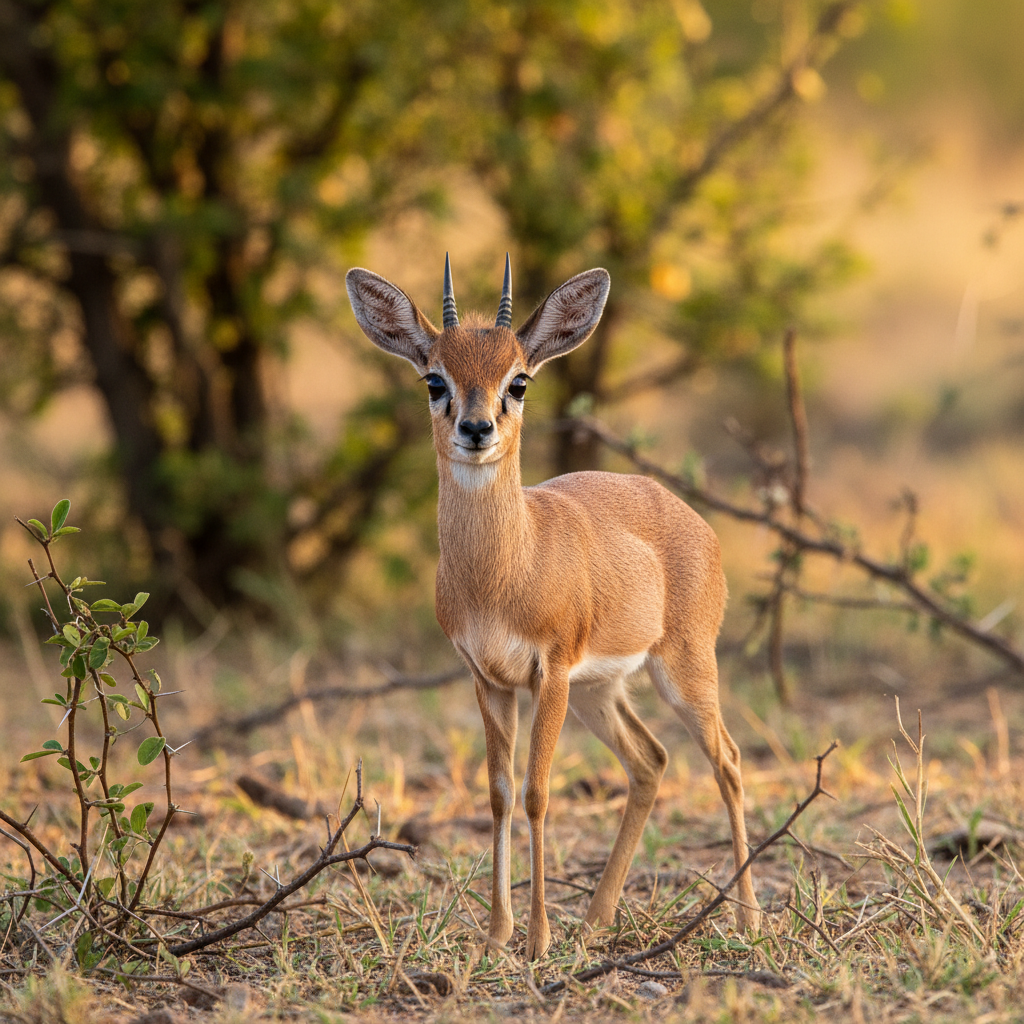
AI Generated
Harar Dik-dik
Madoqua kirkii
The Harar Dik-dik (Madoqua kirkii) is a small antelope native to the eastern regions of Africa, particularly Ethiopia. Known for its distinctive size and behavior.
Introduction
The Harar Dik-dik (Madoqua kirkii) is a diminutive species of antelope indigenous to the eastern regions of Africa, most notably in Ethiopia. Known for its petite size, distinct appearance, and unique behavioral traits, the Harar Dik-dik has garnered attention from researchers, safari guides, and wildlife enthusiasts alike.
Description
The Harar Dik-dik is one of the smallest antelope species, with adults measuring about 30-42 cm (12-17 inches) at the shoulder and weighing between 3-7 kg (6.6-15.4 lbs). Males are generally larger than females. They possess a slender body, long legs, and a characteristic elongated nose that aids in moisture conservation and feeding.
Their coats are typically a sandy or brownish color, which helps them blend seamlessly into their dry, bushy habitat. Males have distinct, pointed horns that grow to about 10-15 cm (4-6 inches) long. Their large, expressive eyes and small ears add to their distinctive charm, making them a favorite among wildlife observers.
Habitat & Range
The Harar Dik-dik predominantly inhabits the arid and semi-arid regions of the Harar highlands in eastern Ethiopia. They prefer environments with dense bush and shrubs interspersed with grasslands, which offer shelter from predators and provide ample feeding opportunities.
This species displays a preference for altitudes ranging between 1,500 to 2,400 meters above sea level, where temperatures can fluctuate but generally remain mild. They are well-adapted to the dry conditions of their habitat, utilizing their surroundings to avoid heat and predators.
Behavior
The Harar Dik-dik is known for its shy and elusive nature. They are primarily crepuscular, meaning they are most active during the dawn and dusk hours. This behavior helps them avoid the peak heat of the day and minimizes their visibility to predators.
Typically, Harar Dik-diks are monogamous and form pairs, marking their territory with scent markings that they deposit from their glands. They also produce a range of vocalizations, often utilizing a series of alarm calls to alert their mate or offspring to potential dangers.
When threatened, these dik-diks may employ a unique tactic of freezing in place before making quick, agile bounds to escape predators, such as leopards and various large birds of prey.
Diet
The Harar Dik-dik is a herbivore, primarily feeding on a diet of leaves, shoots, fruits, and flowers. They mainly graze on various shrubs and forbs available in their habitat, showcasing a preference for tender, young plant material.
Their diet may vary seasonally according to food availability, reflecting the adaptability of this species. The long snout of the Harar Dik-dik aids in the efficient foraging of the available flora, while their unique adaptations allow them to extract moisture from their food, reducing their need for direct water sources.
Hunting & Identification Notes
For hunters and wildlife observers, identifying the Harar Dik-dik requires attentiveness to its unique characteristics. The small stature, long legs, and pointed horns of males differentiate them from other antelope species in the region. Additionally, their shy behavior and preference for bushy cover can make spotting them a challenge.
Potential hunting regulations and conservation laws in Ethiopia are vital for those considering sport hunting. It is recommended to consult local wildlife authorities to understand the legalities and ethical considerations surrounding the hunting of such species.
Conservation Status
The Harar Dik-dik is currently classified as Least Concern on the IUCN Red List. Despite facing habitat loss due to agricultural expansion and human conflicts, their populations remain relatively stable in some regions, particularly within protected areas.
Ongoing conservation efforts are essential to maintain their habitats and ensure sustainable coexistence between local human populations and wildlife. Conservation programs that promote awareness and responsible wildlife management are critical for the future of the Harar Dik-dik.
In conclusion, the Harar Dik-dik stands as a remarkable embodiment of the biodiversity found in Ethiopia. Its unique adaptations and behaviors not only contribute to the ecological balance of its environment but also offer insight into the resilience and vulnerability of wildlife in changing landscapes.