
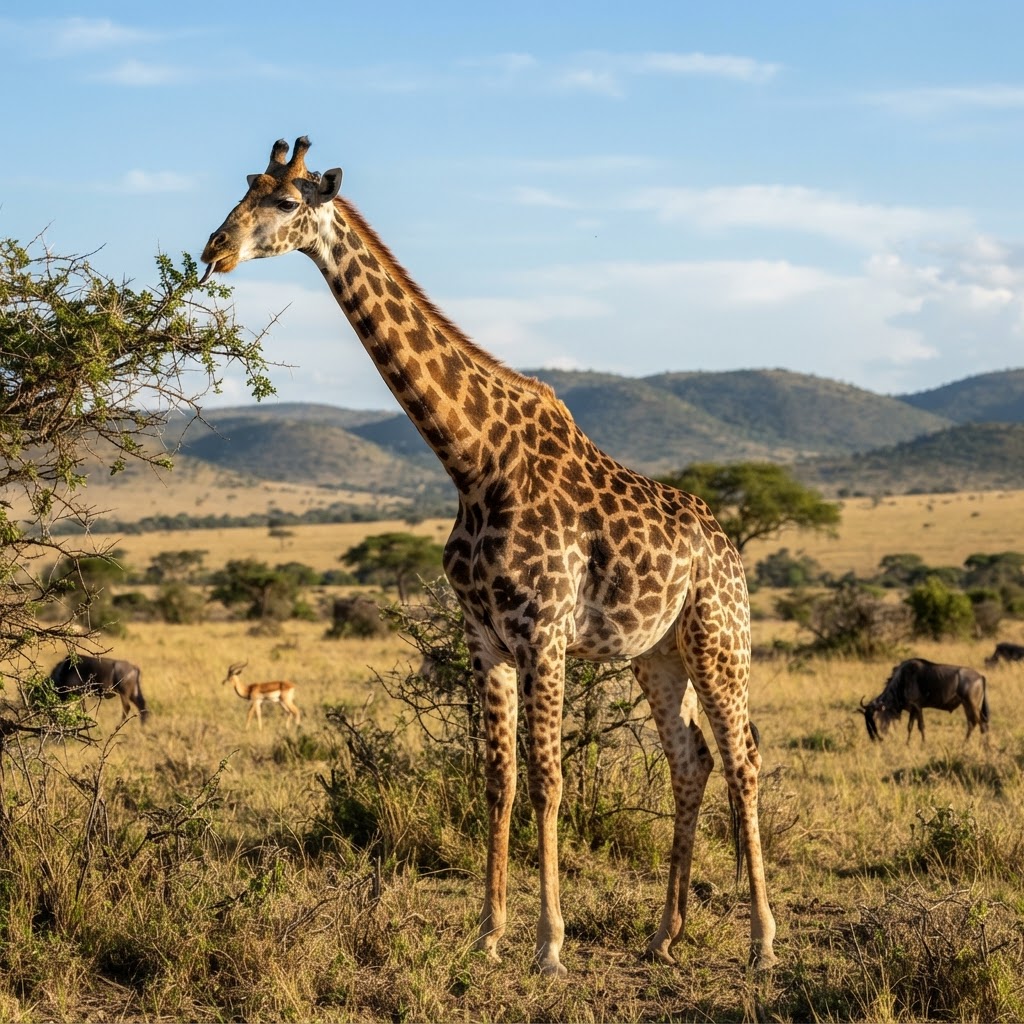
AI Generated
Giraffe
Giraffa camelopardalis
Giraffes are the tallest land mammals, unique for their long necks and legs. This species is native to various regions in Africa, primarily found in savannas and open woodlands.
Introduction
The Giraffe (Giraffa camelopardalis) is the tallest land mammal, easily recognized by its exceptionally long neck and legs. Native to Africa, giraffes inhabit a variety of landscapes, including savannas, grasslands, and open woodlands. Their unique adaptations allow them to thrive in environments where few other animals can reach food sources.
Description
Giraffes possess a distinctive physical appearance characterized by long legs and necks that can measure up to 2 meters in length. Their bodies can reach a height of 5 to 6 meters (16 to 20 feet) in males and around 4 to 5 meters (13 to 16 feet) in females. They have a unique coat pattern made up of patches that vary in color from brown to tan, which helps with camouflage in their natural habitat. The ossicones, or horn-like structures, on their heads are formed from ossified cartilage and covered with skin and hair.
Habitat & Range
Giraffes are predominantly located in the sub-Saharan regions of Africa. They are often found in savanna and woodland habitats where tree foliage, particularly acacia species, is abundant. The giraffe's range has significantly reduced over the years due to habitat loss, but they can still be found in countries like Kenya, Tanzania, South Africa, and Botswana. Generally, they prefer areas with abundant food sources and few natural predators.
Behavior
Giraffes are social animals, typically found in loose herds ranging from 10 to 20 individuals, although herds can be larger during certain times of the year. Their social structure is rather fluid, allowing them to form temporary associations based on availability of resources. Giraffes are non-territorial but engage in a behavior known as "necking," where males spar with their necks to establish dominance. They are most active during cooler parts of the day, such as early morning and late afternoon, allowing them to feed with less stress from heat.
Diet
Giraffes are herbivorous and primarily feed on leaves, flowers, and fruits from tall trees, with a preference for acacia. Their long necks give them access to food sources that many other herbivores cannot reach. Giraffes have a unique feeding mechanism that allows them to grasp branches with their long, prehensile tongues, which can reach about 45 cm (18 in) long. Their diet varies depending on the season and the specific flora available in their habitat.
Hunting & Identification Notes
Identifying giraffes in the wild is straightforward due to their unique height and body shape. Look for the distinct patchwork coat, which consists of light-colored spots set against a darker background. The giraffe's long neck is coupled with long legs, making it much taller than any other herbivore in its environment. Hunters in areas where giraffes are legal to hunt must ensure they have the proper permits and engage in ethical hunting practices, acknowledging the giraffe's status and role in the ecosystem. It is crucial to identify individual giraffes by their patterns, as no two giraffes have exactly the same coat design.
Conservation Status
The giraffe is currently classified as Vulnerable according to the International Union for Conservation of Nature (IUCN). Populations have been declining due to factors such as habitat destruction, poaching, and human-wildlife conflict. Conservation efforts are underway to protect these majestic creatures; they are included in various global and local initiatives aimed at habitat preservation and sustainable land management. Supporting such initiatives is vital for the survival of giraffe populations in the wild.
In conclusion, the Giraffe stands not only as a symbol of Africa’s wildlife but also represents the intricate balance of ecosystems where it lives. Understanding its behavior, diet, and conservation challenges will contribute to greater efforts in ensuring its survival for future generations.
Latest Trophies
