
AI Generated
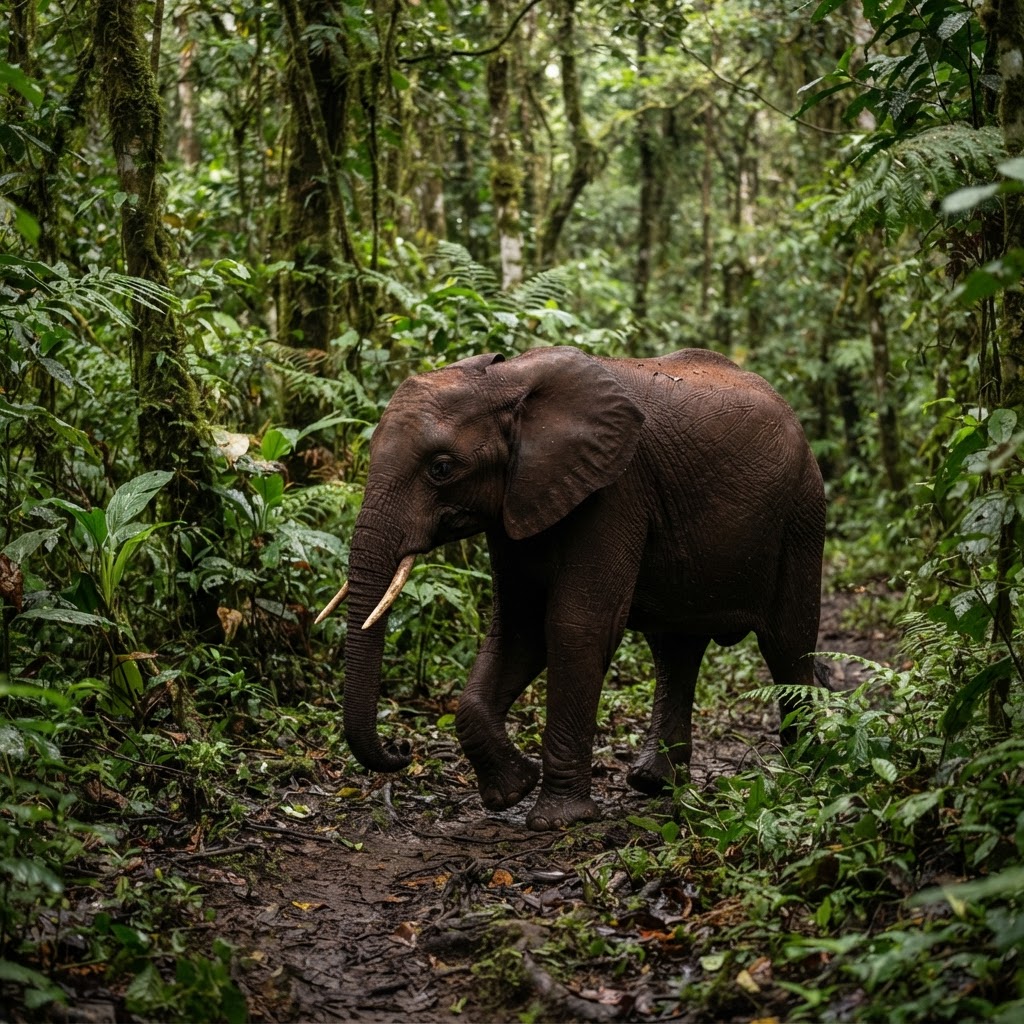
Forest Elephant
Loxodonta cyclotis
The Forest Elephant (Loxodonta cyclotis) is a smaller, forest-dwelling relative of the African Elephant. Found in Central and West Africa, it plays a crucial role in its ecosystem.
Introduction
The Forest Elephant (Loxodonta cyclotis) is a remarkable species known for its distinctive appearance and ecological significance in the tropical forests of Central and West Africa. Unlike its savanna-dwelling relatives, the Forest Elephant thrives in dense woodland environments, making it a pivotal player in the biodiversity of its ecosystem.
Description
The Forest Elephant is smaller than the African Savanna Elephant, typically standing between 2.5 to 3 meters (about 8 to 10 feet) tall at the shoulder and weighing between 2000 to 6000 kilograms (4,400 to 13,200 pounds). One of the most notable characteristics of the Forest Elephant is its long, slender tusks, which are more straight and grow parallel to the ground compared to the more curved tusks of the Savanna Elephant. The Forest Elephant's body is generally more compact with a rounder shape, and its ears are smaller than those of its savanna counterpart. Its skin is often a darker grey, and it has a more textured appearance, which helps it blend into the forest environment.
Habitat & Range
The Forest Elephant primarily inhabits the dense, humid forests of Central and West Africa. It is commonly found in countries such as Gabon, Cameroon, the Republic of the Congo, and the Democratic Republic of the Congo. These elephants prefer tropical rainforests, but they can also be found in secondary forests, swampy areas, and occasionally in savanna woodlands. Their habitat selection is closely tied to the availability of food resources and adequate cover from predators and environmental threats.
Behavior
Forest Elephants are known to exhibit a range of social behaviors, often forming small family groups consisting of matriarchs, their female offspring, and young males. Unlike Savanna Elephants, which can form larger herds, Forest Elephants tend to remain in smaller groups due to the dense forest habitat. Communication among Forest Elephants is primarily auditory, with a range of vocalizations, including low-frequency rumbles that can be heard over long distances. They are known for their intelligence and strong familial bonds, often displaying complex social interactions.
Diet
The diet of the Forest Elephant primarily consists of a variety of plant material that the dense forest offers. Their herbivorous diet includes leaves, bark, fruits, and grasses. Forest Elephants are considered keystone species because of their role in seed dispersal. They consume large quantities of fruit and help in the growth of various plant species by spreading seeds through their dung. Their feeding habits also shape the forest structure, as they are known to uproot trees and break branches, thereby creating openings that allow sunlight to reach the forest floor and encourage new growth.
Hunting & Identification Notes
From a hunting perspective, the Forest Elephant can be distinguished by its smaller stature, straight tusks, and proportionally larger feet, which are adapted for stability in its forest habitat. Hunters should note that Forest Elephants are highly elusive due to their preference for dense cover and foliage. Ethical considerations must also be taken into account, as this species is under significant threat due to poaching and habitat loss. Identification can be further aided by observing their footprints, which are notably smaller than those of the African Savanna Elephant and often leave prints in soft, muddy ground due to their wider foot structure.
Conservation Status
The conservation status of the Forest Elephant is currently listed as Critically Endangered by the International Union for Conservation of Nature (IUCN). The primary threats to their survival are poaching for ivory and habitat destruction caused by logging and agricultural expansion. Conservation efforts are ongoing, including anti-poaching initiatives and habitat protection measures, but the future of the Forest Elephant relies heavily on international cooperation and increased awareness of their ecological importance. Protecting this species is crucial not only for the biodiversity of the forests they inhabit but also for maintaining the health of the entire ecosystem.