
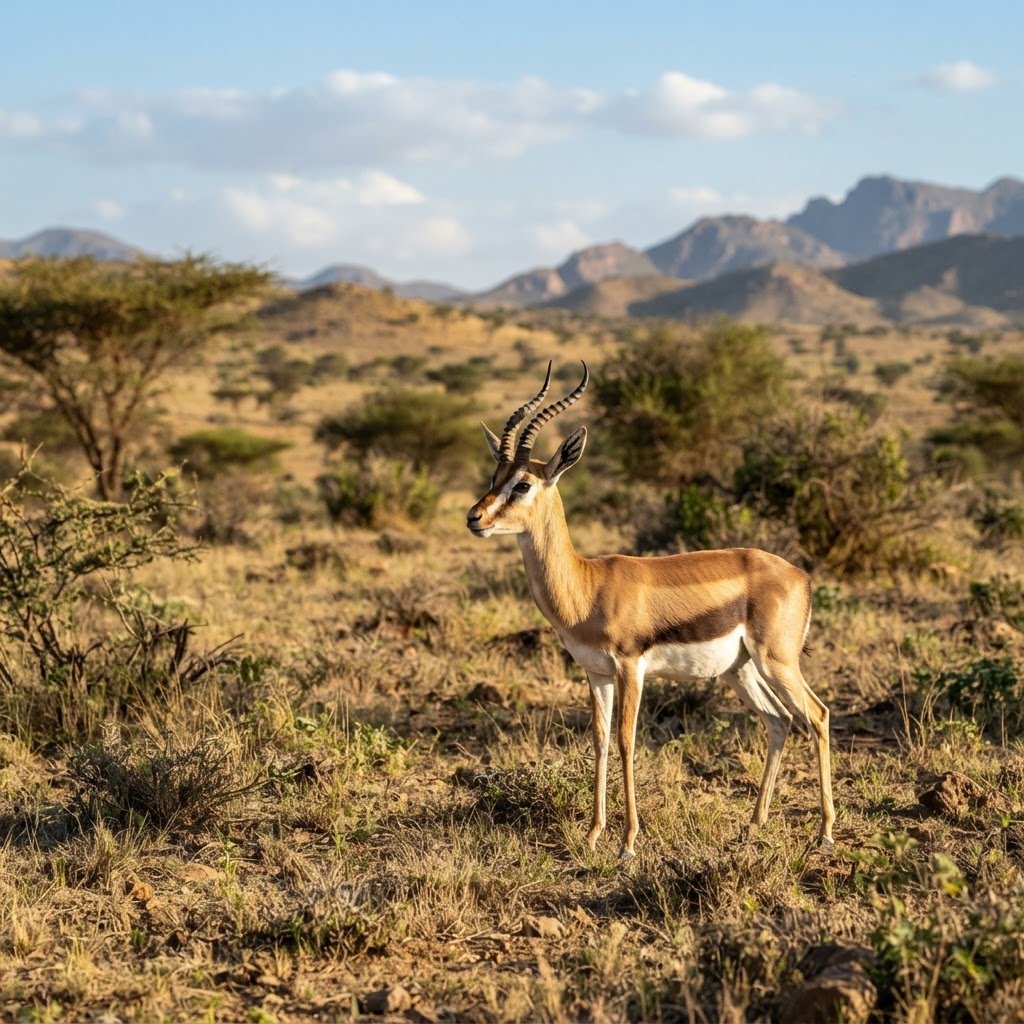
AI Generated
Eritrean Gazelle
Gazella dorcas
The Eritrean Gazelle (Gazella dorcas) is a small herbivore native to the arid regions of Eritrea, notable for its slender physique and graceful presence.
Introduction
The Eritrean Gazelle (Gazella dorcas) is a small and agile antelope found predominantly in the arid regions of Eritrea. Characterized by its gracefulness and adaptability to harsh environments, this species symbolizes the wildlife heritage of the Horn of Africa. The Eritrean Gazelle is also known for its resilience, having adapted to survive in one of the most challenging landscapes on the continent.
Description
The Eritrean Gazelle typically stands about 70 to 80 cm tall at the shoulder and weighs between 15 to 30 kg. It has a light brown to sandy coat with a white underbelly and distinctive white markings on the face, including a line extending from the eyes down to the nose. Males display long, slender horns that can reach lengths of up to 60 cm, while females are generally hornless. The gazelle's slender limbs and long legs enhance its speed, making it one of the swiftest animals in its habitat.
Habitat & Range
This gazelle prefers semi-arid to arid habitats, including scrublands and grasslands, often found in areas with sparse vegetation, rocky outcrops, and limited water sources. The Eritrean Gazelle's range primarily encompasses Eritrea, particularly in the central and western regions, extending into parts of Sudan. These areas are characterized by low annual rainfall, which significantly influences the species' adaptations and survival strategies.
Behavior
Eritrean Gazelles are primarily crepuscular, meaning they are most active during the early morning and late afternoon, avoiding the intense heat of midday. They are social animals that often form small herds, sometimes consisting of a few females and their young, while males tend to be solitary or form bachelor groups, especially during the breeding season. Their keen senses enable them to detect predators from a distance, facilitating rapid escapes when threatened.
Diet
As herbivores, Eritrean Gazelles primarily graze on grasses, leaves, and occasional shrubs. Their diet varies depending on seasonal availability and can include various dried plant materials during dryer months. These animals possess the ability to extract moisture from their food, allowing them to endure prolonged periods without direct water sources, a critical adaptation to their arid environment.
Hunting & Identification Notes
For hunters and researchers, identifying the Eritrean Gazelle can be straightforward due to its distinctive coloration and size. Key identification features include:
- Size: Smaller than many other gazelle species, usually weighing no more than 30 kg.
- Horns: Males possess long, slender horns that curve backward, while females are hornless.
- Markings: Look for the white facial lines and underbelly that distinguish it from similar species.
Hunters should be aware of the strict regulations surrounding the hunting of this species, as conservation efforts are in place to protect its populations. Accurate identification is crucial as misidentification can lead to legal implications, given the gazelle's vulnerable status.
Conservation Status
The Eritrean Gazelle is classified as Near Threatened by the International Union for Conservation of Nature (IUCN). The primary threats to its survival include habitat loss due to human encroachment, poaching, and competition with livestock for food resources. Conservation efforts are imperative to safeguard this species, which involves habitat restoration and legal protections from hunting.
Overall, understanding the ecology and behavior of the Eritrean Gazelle is vital for effective conservation and the sustainable management of wildlife in Eritrea. Researchers and conservationists aim to collaborate with local communities to raise awareness of the importance of this enigmatic gazelle and its role in the ecosystem.