
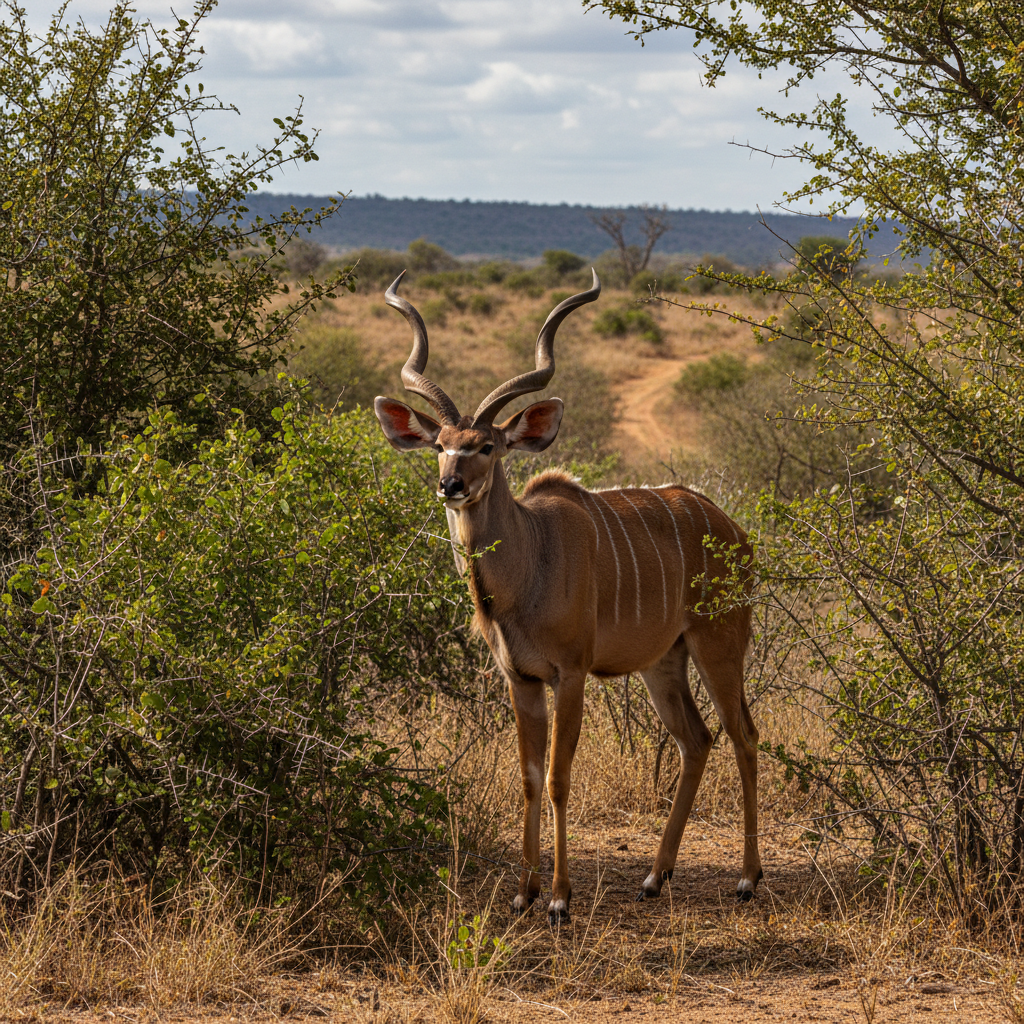
AI Generated
Eastern Cape Greater Kudu
Tragelaphus strepsiceros
The Eastern Cape Greater Kudu is a magnificent antelope found in the dense woodlands and bushveld of South Africa's Eastern Cape. Known for its impressive spiral horns and striped coat, it is a prominent species for hunters and wildlife enthusiasts.
Description
The Eastern Cape Greater Kudu (Tragelaphus strepsiceros) is a spectacular species of antelope native to the diverse landscapes of Eastern Cape, South Africa. It is a subspecies or regional variation of the Greater Kudu, distinguished by certain physical characteristics and a more localized distribution. These animals are large and powerfully built, with bulls typically weighing between 190-270 kg (420-600 lb) and standing about 1.5 meters (5 feet) at the shoulder. The most iconic feature of the male Kudu is its magnificent set of spiraling horns, which can grow up to 1.8 meters (6 feet) long and possess a distinctive corkscrew shape. Females are smaller and do not have horns. The Kudu's coat is generally a fawn to iron-grey color, adorned with 4 to 12 thin, vertical white stripes running along its flanks. These stripes, along with a light-colored mane that runs down the back, provide excellent camouflage within their preferred woodland and bushveld habitats. Bulls often have a darker coat and a more pronounced mane and beard than cows.
Habitat & Range
The Eastern Cape Greater Kudu is specifically found in the Eastern Cape province of South Africa. Its preferred habitat consists of dense woodlands, bushveld, and savanna regions, often in hilly or mountainous terrain. They are particularly drawn to areas with ample cover, such as thickets of acacia and other thorny vegetation, and usually stay within proximity to water sources. This preference for dense cover makes them elusive and challenging to spot, contributing to their reputation as a prized game animal. While the Greater Kudu species is found more broadly across Eastern and Southern Africa, the Eastern Cape variant is recognized for its specific ecological niche and potentially slightly smaller size and horn length compared to some other Greater Kudu populations.
Behavior
Eastern Cape Greater Kudus are known for being shy, elusive, and primarily crepuscular, meaning they are most active during the early morning and late afternoon hours. They spend much of the day resting in dense cover to avoid the heat and predators. When startled, they are capable of remarkable leaps, able to clear obstacles up to 2.5 meters (8 feet) high, and can reach speeds of up to 60 km/h (37 mph). They are typically solitary or found in small family groups, usually consisting of a female and her calves, or small herds of females and young. Adult males may roam alone or in small bachelor groups, only joining females during the mating season. They communicate through a variety of soft vocalizations, including barks, grunts, and whimpers, and rely heavily on their keen senses of hearing and smell to detect danger.
Diet
The Eastern Cape Greater Kudu is a browser, meaning its diet primarily consists of leaves, shoots, twigs, fruits, and flowers from various trees, shrubs, and vines. They have a diverse diet and are known to consume a wide array of vegetation, with a particular fondness for acacia leaves and pods. Their ability to browse on different plant parts allows them to adapt to varying environmental conditions and seasonal availability of food. They are particularly fond of succulent leaves and will often seek out plants with higher moisture content, especially during dry periods. They also supplement their diet with grasses and occasionally roots or tubers.
Hunting & Identification Notes
Identifying the Eastern Cape Greater Kudu involves observing its distinctive physical traits. The large, spiraling horns of the bull are unmistakable. The coat's greyish-brown color with vertical white stripes provides excellent camouflage, making them difficult to spot. Hunters often rely on expert trackers who understand the Kudu's habits and habitat. Distinguishing the Eastern Cape Kudu from other Greater Kudu subspecies can be subtle, with Eastern Cape bulls generally being slightly smaller with shorter but still impressive spiral horns. Their elusive nature means that patience and careful observation are key. When tracking, look for signs such as tracks, droppings, and browse marks on vegetation.
Conservation Status
The Greater Kudu species as a whole is currently listed as 'Least Concern' by the IUCN, indicating a relatively stable and widespread population. The Eastern Cape Greater Kudu, benefiting from this overall status, is also considered to be in a healthy state, particularly within its core range. Conservation efforts are largely focused on protecting their woodland and bushveld habitats from degradation and fragmentation, managing hunting sustainably, and mitigating human-wildlife conflict. Their presence on many private game reserves in the Eastern Cape plays a crucial role in their conservation, providing protected areas where populations can thrive.
Latest Trophies

