
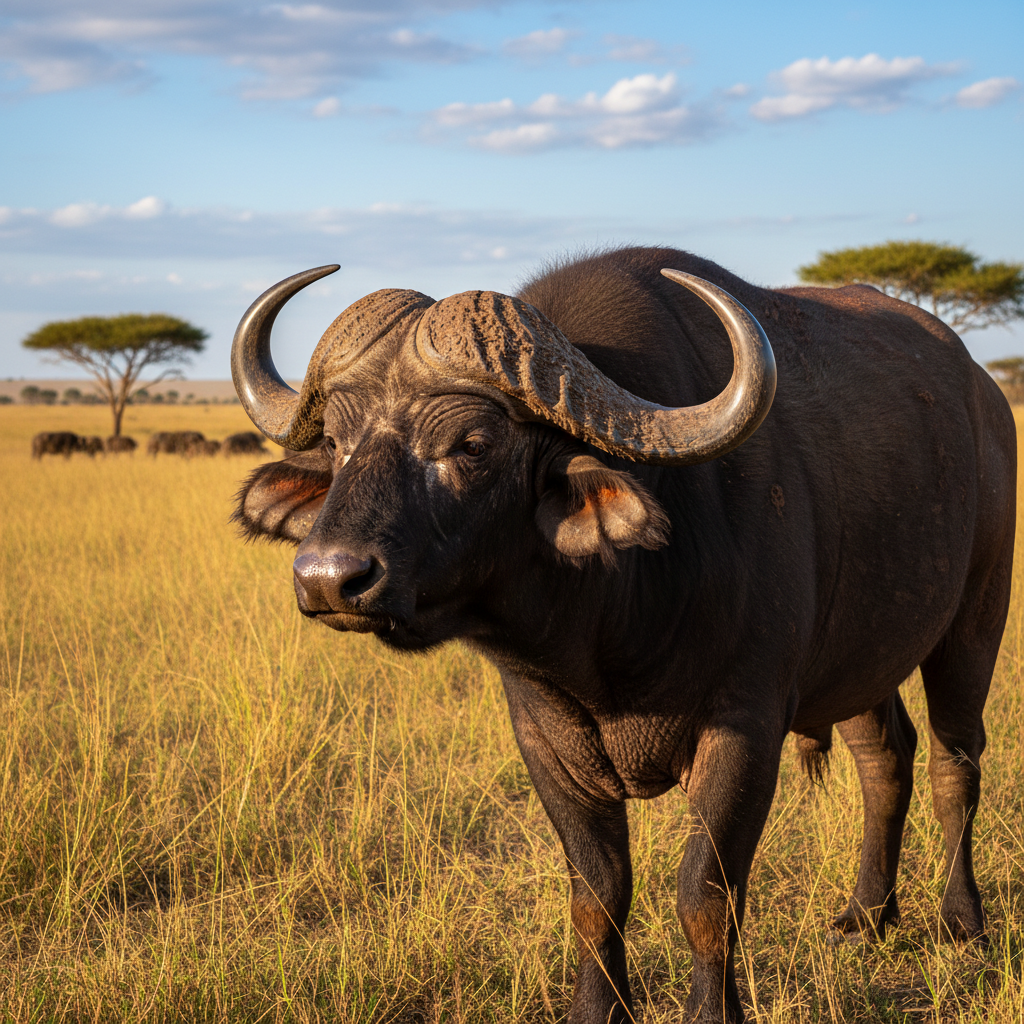
AI Generated
East African Savanna Buffalo
Syncerus caffer
The East African Savanna Buffalo is a large bovine found primarily in East African grasslands and woodlands, recognized for its impressive size and social behavior.
Introduction
The East African Savanna Buffalo (Syncerus caffer) is a large, robust herbivore native to the East African regions. Recognized for their impressive horns and social behavior, these buffalo primarily inhabit savannas and grasslands across countries like Kenya and Tanzania.
Description
East African Savanna Buffaloes are large, stocky animals with thickset bodies and sturdy legs. Adult males typically weigh between 700 to 1,200 pounds, with females being somewhat smaller. Both males and females possess characteristic horns, which curve outward and can span over three feet in width in mature males. Their coats are generally dark brown or black, and they have a distinctive shaggy appearance, particularly around the neck and shoulders.
Habitat & Range
The East African Savanna Buffalo prefers open savannas, floodplains, and woodlands where grass is abundant. They are commonly found in protected areas and reserves such as the Serengeti National Park and Masai Mara. This species thrives in regions with access to water sources, as they require regular hydration. Their range extends across various biomes, favoring areas where both grass and shade are readily available.
Behavior
East African Savanna Buffaloes are highly social animals, typically forming herds that can range from a few individuals to several hundred. These herds are often segregated by sex and age, with males frequently banding together to form bachelor groups. Buffalo exhibit strong social bonds and work cooperatively to protect the herd from predators. Their social structure is matriarchal, with females leading the herds and younger females staying with their maternal groups longer than males. These buffalo are also known for their strong herd mentality, which helps them deter threats from lions and other predators.
Diet
The diet of the East African Savanna Buffalo primarily consists of grasses, which they graze on in the savanna ecosystem. These animals are ruminants, meaning they have a specialized stomach that allows them to efficiently digest fibrous plant material. They are known to consume a variety of grass species, favoring young, nutritious growths, which they can find in ample supply during the rainy season. Buffalo are also known to browse on shrubs and trees when grass is scarce.
Hunting & Identification Notes
For hunters and wildlife enthusiasts, identifying the East African Savanna Buffalo is relatively straightforward due to their size and distinct horn shape. Mature bulls are larger, with a more massive and more pronounced horn structure. When hunting these buffalo, it's essential to recognize their protective nature and social behavior; they will aggressively defend their herd if threatened. Their dark coat can serve as camouflage in shaded areas, making them more challenging to spot in their natural habitat.
Conservation Status
The East African Savanna Buffalo is currently listed as Least Concern by the International Union for Conservation of Nature (IUCN). However, certain populations are threatened by habitat loss and poaching. Conservation efforts focus on maintaining large reserves and promoting coexistence strategies between local communities and wildlife. Awareness and education programs are vital to ensure the protection of this iconic species as part of the diverse East African ecosystem.
In summary, the East African Savanna Buffalo plays a crucial ecological role in its habitat, acting as a grazer and a prey species. Understanding their behavior, habitat, and dietary needs can assist researchers, hunters, and safari guides in appreciating and protecting this magnificent animal.