
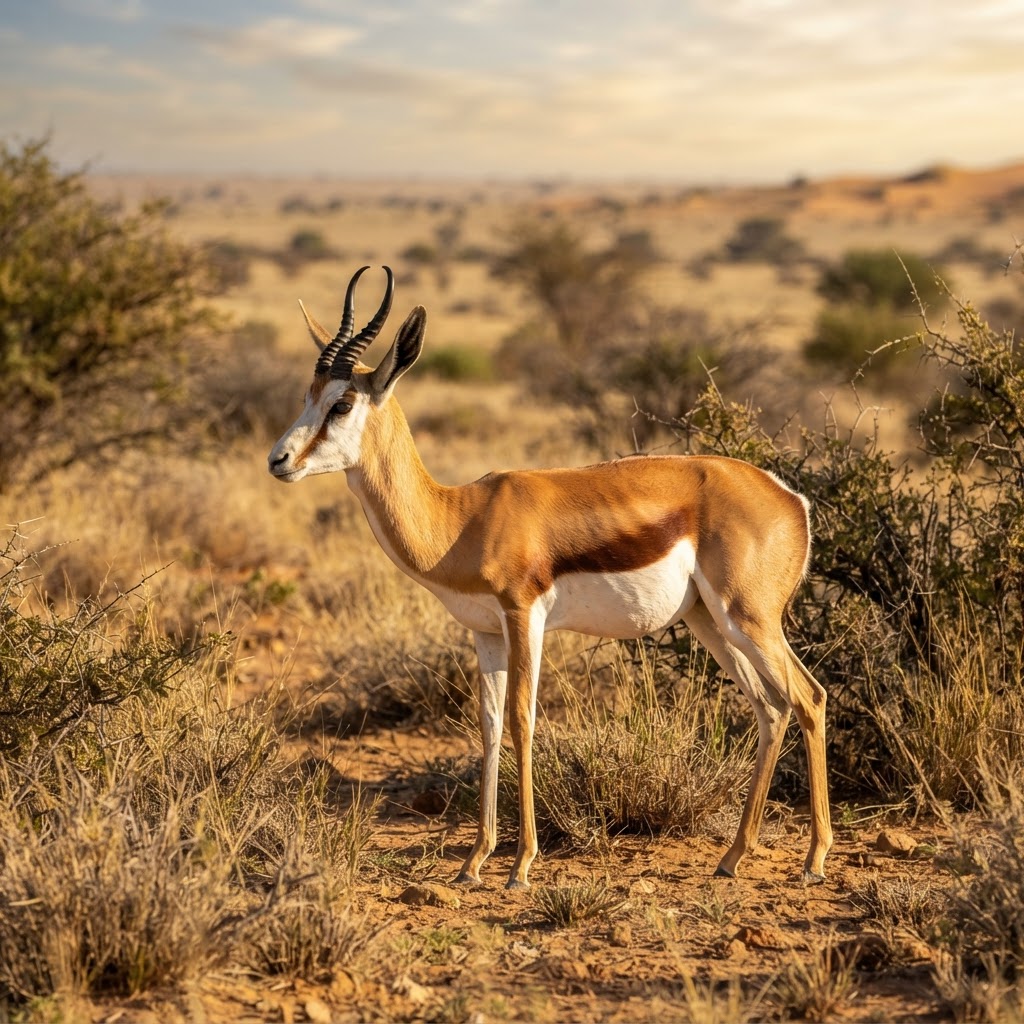
AI Generated
Copper Springbok
Antidorcas marsupialis
The Copper Springbok (Antidorcas marsupialis) is a unique antelope species known for its striking copper-colored coat, primarily found in southern Africa.
Introduction
The Copper Springbok (Antidorcas marsupialis) is a remarkable antelope species native to southern Africa. Renowned for its distinctive copper-colored fur, this agile herbivore inhabits various terrains where it exhibits unique behaviors and adaptations. Understanding this species is critical for researchers, hunters, and safari guides alike due to its ecological importance and conservation status.
Description
The Copper Springbok is a medium-sized antelope characterized by its striking copper to reddish-brown coloration on its back. The underbelly is typically white, creating a sharp contrast that enhances its visual appeal. Adult males weigh between 50 to 90 pounds and stand around 28 to 40 inches at the shoulder. Females are smaller, usually weighing 40 to 66 pounds and standing about 25 to 30 inches tall. One of the most remarkable traits of the Copper Springbok is its capability to leap up to 10 feet in the air, a display often exhibited during mating rituals or when startled. This species also has elongated hooves and slender legs, which facilitate swift movement across various terrains.
Habitat & Range
The Copper Springbok primarily inhabits the arid and semi-arid regions of southern Africa, including countries such as Namibia, Botswana, and parts of South Africa. These antelopes prefer grasslands, savannas, and scrublands where they can graze freely. They are highly adaptable and can survive in environments ranging from deserts to more temperate regions, provided that they have access to sufficient forage and water sources.
Behavior
Copper Springboks are social animals, commonly found in small herds that can range from a few individuals to larger groups during migration or breeding seasons. They are diurnal, being most active during the cooler parts of the day, such as early morning and late afternoon. Their social structure is matriarchal, with females leading the herd, while males often form bachelor groups. Spectacular displays of jumping and running, known as pronking, are part of their behavior and serve both as a means of communication and to ward off predators by showcasing their fitness and vitality.
Diet
As herbivores, Copper Springboks primarily feed on grasses, leaves, and occasional shrubs. Their diet is mainly composed of high-fiber vegetation, which they digest efficiently due to their specialized stomach structure. During dry seasons, they can survive with limited water resources as they glean moisture from their food. This adaptability ensures their survival in the challenging climates of their habitats.
Hunting & Identification Notes
Identifying a Copper Springbok in the wild can be straightforward due to its striking coloration and agile movements. When preparing for a hunting expedition, it's essential to recognize key features: look for the unique copper coloration on the back, white underbelly, and the sleek build. Additionally, their tendency to pronk when startled can be a defining characteristic to watch for when tracking the animal. Hunters should ensure they are knowledgeable about local regulations and conservation measures before pursuing this species, as responsible hunting practices are vital for maintaining ecological balance.
Conservation Status
The Copper Springbok is currently classified as Least Concern according to the International Union for Conservation of Nature (IUCN). Populations are stable in certain regions, thanks to their adaptability and the low levels of hunting pressure. However, habitat loss due to agricultural expansion and human encroachment poses potential threats. Conservation initiatives in some areas focus on habitat protection and promoting sustainable hunting practices to ensure the long-term viability of this iconic species.
In conclusion, the Copper Springbok serves as a fascinating subject for hunters, researchers, and safari guides. Its unique adaptations, social behaviors, and ecological significance highlight the importance of this species within its habitat. Understanding the Copper Springbok not only enriches our appreciation of wildlife but also underscores the need for ongoing conservation efforts.
Latest Trophies
