
AI Generated
Common Sable Antelope
Hippotragus niger
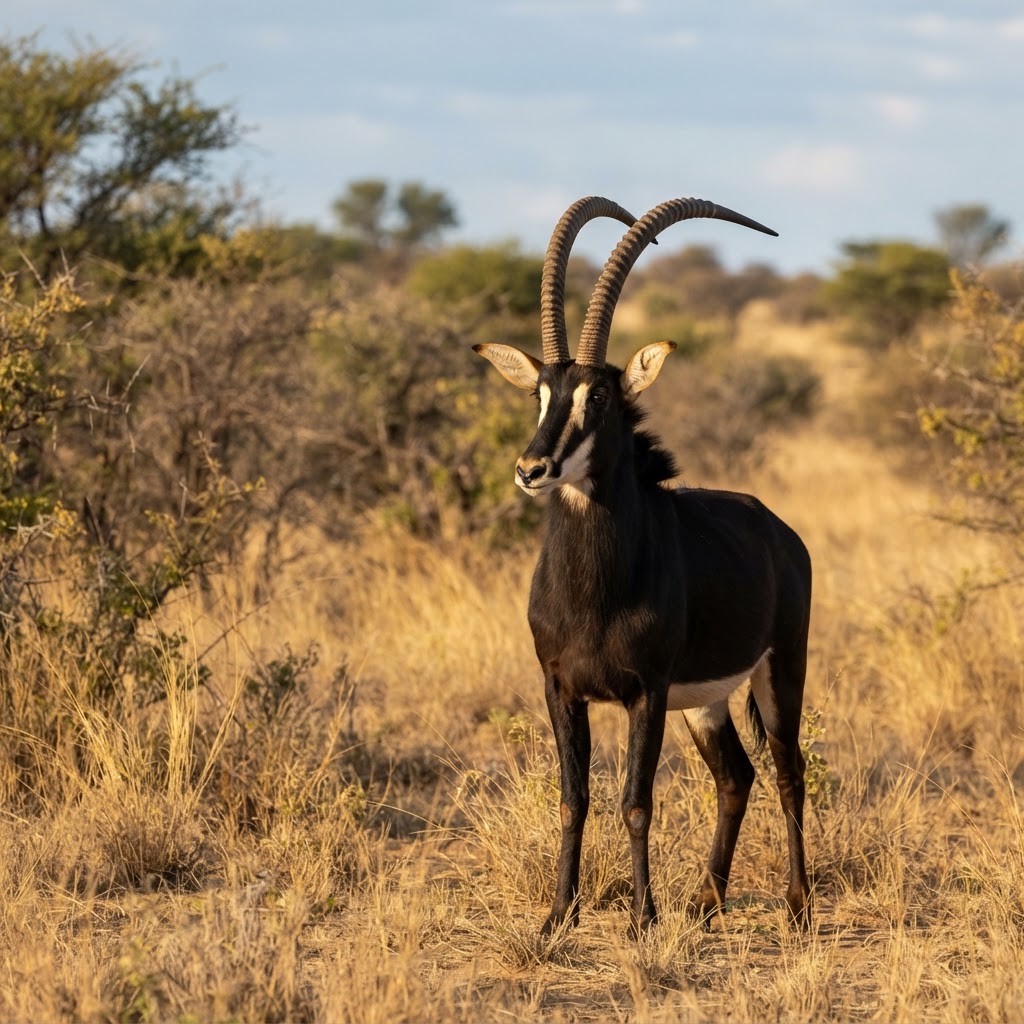
The Common Sable Antelope (Hippotragus niger) is a distinguished species native to southern Africa, known for its striking appearance and fascinating behavior.
Introduction
The Common Sable Antelope (Hippotragus niger) is a majestic species native to southern Africa, recognized for its elegant physique and impressive horns. This antelope primarily inhabits savannas and woodlands, where it thrives in diverse ecosystems ranging from grasslands to wooded areas.
Description
The Common Sable Antelope is characterized by its graceful build, with adult males displaying long, sweeping horns that can reach up to 90 cm (35 inches) in length. Both sexes have a distinctive coat, but males are notably darker, exhibiting a rich, chestnut to black coloration, while females tend to have a lighter, tawny appearance. Adults typically weigh between 90 to 120 kg (198 to 265 lbs) and stand about 90 to 120 cm (35 to 47 inches) at the shoulder. The eyes are prominently set on their heads, providing exceptional peripheral vision, which is crucial for spotting predators in their environment.
Habitat & Range
The Common Sable Antelope prefers the open grasslands and scattered woodlands of southern Africa, with a significant presence in countries like Zambia, Zimbabwe, Mozambique, and Botswana. They are often found in areas where grass is abundant but may also inhabit more dense scrub or wooded regions. Their habitat choice is influenced by the availability of water and food sources, leading them to migrate seasonally in search of sustenance.
Behavior
Common Sable Antelopes are social animals, typically living in small groups consisting of one dominant male and several females and young. Males are territorial, often engaging in displays of dominance through physical confrontations or by marking their territory with scent. They are most active during the early morning and late afternoon, when temperatures are cooler, and can often be seen grazing together. During the day, they may seek shade under trees or bushes to escape the heat.
Diet
As herbivores, the Common Sable Antelope primarily feeds on a variety of grasses, leaves, and shoots. They are selective grazers, preferring high-quality forage and often using their keen sense of sight to locate nutritious plants. During the dry season, when grass is less abundant, they may also consume browse from shrubs and trees, using their prehensile lips to reach high foliage. This adaptability in diet is crucial for their survival in changing climates and seasons.
Hunting & Identification Notes
For hunters and wildlife researchers, identifying the Common Sable Antelope can be straightforward. Look for the distinct horns of adult males, which are heavily curved and robust. The dark coat of males contrasts sharply with the lighter coloration of females. Observers can also note their elegant gait and alert demeanor, which are indicative of their vigilant nature. When hunting, it is essential to respect local regulations and ensure conservation practices are followed, as overhunting poses significant risks to their populations.
Conservation Status
The Common Sable Antelope is currently listed as Least Concern by the International Union for Conservation of Nature (IUCN), primarily due to its stable populations in many regions. However, habitat loss and poaching remain significant threats to specific populations. Conservation efforts include habitat preservation, controlled hunting, and anti-poaching measures. Engaging local communities in conservation efforts is crucial for ensuring the future of this iconic species in southern Africa.
Understanding the characteristics, behavior, and ecology of the Common Sable Antelope is vital for enthusiasts, researchers, and hunters alike, fostering a deeper appreciation for this remarkable species and the ecosystems they inhabit.