
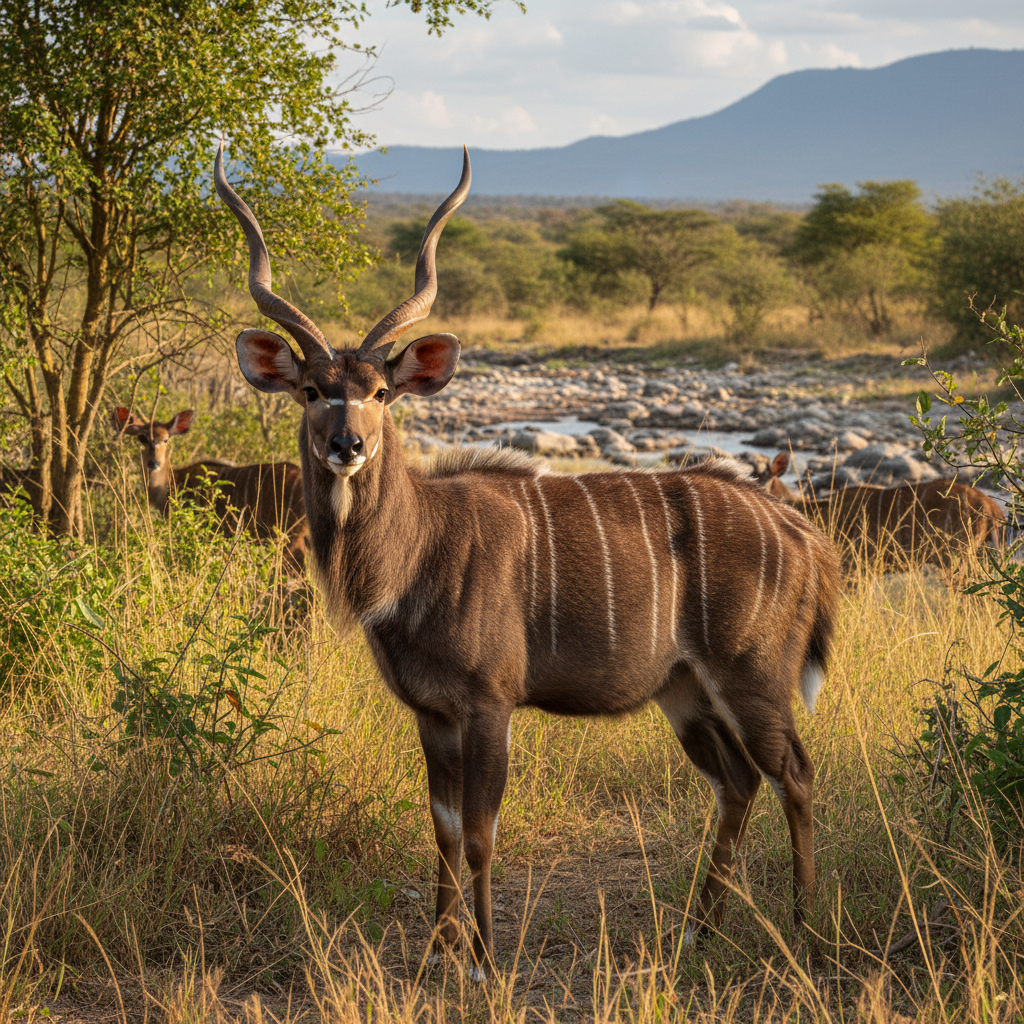
AI Generated
Common Nyala
Tragelaphus angasii
The Common Nyala is a medium-sized antelope native to southern Africa, known for its striking appearance and preferred habitats in wooded regions.
# Common Nyala (Tragelaphus angasii)
The Common Nyala, scientifically known as Tragelaphus angasii, is a medium-sized antelope species found primarily in southern Africa. Characterized by its distinctive coloration and sexual dimorphism, this species inhabits a variety of landscapes including grasslands and wooded areas, chiefly favoring thickets and bushland where cover is abundant.
Description
The Common Nyala is notable for its striking sexual dimorphism, where males and females exhibit significant differences in size and appearance. Males typically weigh between 100 to 125 kg (220 to 275 lbs) and stand about 90 to 100 cm (35 to 39 inches) at the shoulder, while females are smaller, weighing 50 to 80 kg (110 to 175 lbs) and measuring about 75 to 90 cm (30 to 35 inches).
Males possess a dark brown coat with white vertical stripes on the sides, a thick, shaggy mane that runs along the neck and back, and spiraled horns that can reach up to 90 cm (35 inches) in length. In contrast, females are a lighter, reddish-brown color and lack horns. Both sexes have white facial markings and a distinctive white patch on the rear, which is often visible when they are alarmed or fleeing. Their long, slender legs and large ears enhance their ability to escape predators in their natural environment.
Habitat & Range
The Common Nyala is predominantly found in southern Africa, with a range that includes countries such as South Africa, Mozambique, Zimbabwe, and parts of Swaziland and Namibia. These antelopes prefer habitats that offer dense cover for protection against predators, such as woodlands, thickets, and riverine forests. They are often found near water sources, as they require regular access to drinking water, and they may inhabit areas with varying vegetation density, adapting their lifestyle to different environmental conditions.
Behavior
Common Nyala are generally shy and secretive animals, exhibiting a tendency to avoid open spaces where they may be vulnerable to predation. They are most active during the early morning and late afternoon (crepuscular behavior) when they forage and move about in search of food. Throughout the day, they can often be found resting in dense foliage.
Socially, males are more solitary, often establishing a small territory that they patrol, while females and their young tend to form small, loose groups. During the breeding season, males will compete for access to females, engaging in displays of strength and dominance through imposing postures and vocalizations.
Diet
The diet of the Common Nyala consists mainly of leaves, fruits, flowers, and grasses. They are browsers and are particularly selective, often feeding on the most nutritious parts of plants. This selective feeding helps them maintain a high energy intake, enabling their active lifestyles. They are known to adapt their diet based on the season and food availability, taking advantage of abundant foliage during wet periods.
Hunting & Identification Notes
For hunters and wildlife enthusiasts, identifying the Common Nyala can be crucial for ethical hunting practices and wildlife observation. The males can be distinguished by their darker coat and long, spiraled horns, while females can be easily recognized by their lighter coloration and absence of horns.
The unique body structure of the Common Nyala, including its long legs and agile form, allows it to escape predators effectively. Their elusive nature can make spotting them challenging, often requiring patience and skill, especially in their preferred dense habitats. Knowledge of their behavior during different times of the day can increase the chances of successful observation.
Conservation Status
The IUCN Red List currently categorizes the Common Nyala as Near Threatened due to habitat loss and poaching pressures, particularly in areas where their habitats are converted for agriculture or urban development. Conservation efforts are in place to protect this species and its habitat, but continued awareness and improvement of management practices are essential to ensure the future of the Common Nyala in the wild.
In conclusion, the Common Nyala is a remarkable and photogenic species of antelope, adapted to life in the subtropical habitats of southern Africa. Knowledge of their behavior, diet, and habitat preferences is essential for conservation and recreational pursuits in their respective ecosystems.