
AI Generated
Common Lechwe
Kobus leche
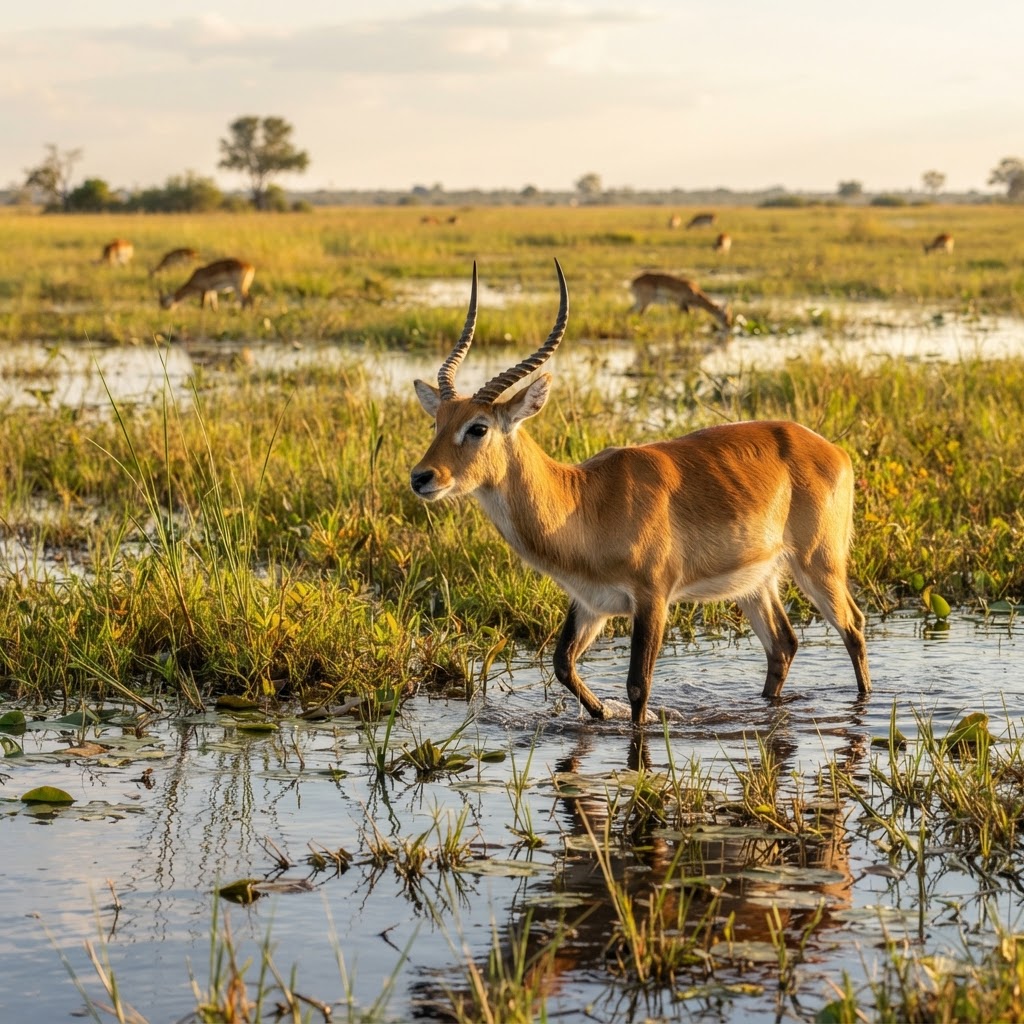
The Common Lechwe, or Kobus leche, is an antelope found in the wetlands of southern Africa. Known for their elongated limbs, they thrive in marshy environments.
Introduction
The Common Lechwe (Kobus leche) is a medium-sized antelope found primarily in the wetlands of southern Africa. This distinctive species is well adapted to its aquatic environment and is primarily found in areas such as Botswana, Namibia, Zambia, and Angola, where it thrives in the floodplains and marshlands.
Description
Common Lechwe possess unique physical features that enable them to navigate their wetland habitats effectively. Adult males stand about 90-100 cm tall at the shoulder and weigh approximately 70-90 kg, while females are slightly smaller, measuring 80-95 cm and weighing around 50-70 kg. They have long, slender limbs and elongated hooves that provide excellent support in muddy conditions. The coat is generally a reddish-brown color, with a lighter underside and distinctive white markings on the face, legs, and tail. Males exhibit long, curved horns that can reach up to 90 cm in length, while females lack these horns.
Habitat & Range
Common Lechwe are uniquely adapted to their specific habitats, which include wetlands, swamps, and riverine forests. They are commonly found in areas with slow-moving water and abundant vegetation. Their range extends from the Okavango Delta in Botswana through the Zambezi Delta and into the southern regions of Angola and Zambia. Lechwe populations are usually concentrated in regions that experience seasonal flooding, which provides the necessary sustenance and cover from predators.
Behavior
Natural adaptations define the behavior of the Common Lechwe. They are known for their semi-aquatic lifestyle; they often wade into the water to escape predators like lions and crocodiles. Common Lechwe are social animals and often form herds that can range from a few individuals to over a hundred, particularly during the dry season when water is scarce. Males are known for their territorial displays, which involve vocalizations and marking their territory with urine.
Diet
The Common Lechwe primarily feeds on a herbivorous diet consisting of grasses and aquatic plants. Their preference for tender shoots and leaves makes them well-suited to their wetland habitats, where they can find ample grazing material. They tend to graze in the early morning and late afternoon to avoid the heat of the day, allowing them to stay hydrated and healthy.
Hunting & Identification Notes
For those interested in hunting or observing the Common Lechwe, understanding their identification features is crucial. Look for their long legs, water-shedding coats, and distinctive facial markings, which can help differentiate them from other antelope species. Males can be identified by their impressive horns, while females will lack these. The Common Lechwe's habitat choices also serve as identifying markers; their association with marshy areas is a strong indicator of their presence.
When hunting, it's important to be aware of ethical practices in wildlife management, particularly given the delicate nature of their wetland ecosystem.
Conservation Status
The International Union for Conservation of Nature (IUCN) categorizes the Common Lechwe as Least Concern, primarily due to its stable populations across protected areas. However, habitat loss due to agriculture, urban development, and poaching poses ongoing threats. Conservation efforts are crucial in maintaining its wetland habitats and ensuring sustainable populations. Collaborative efforts between local communities and conservation organizations play a pivotal role in protecting the lechwe and its environment.
In summary, the Common Lechwe stands out as a remarkable species endemic to the wetlands of southern Africa. Its unique adaptations, social behavior, and ecological importance make it a critical focus for researchers and conservationists alike.
Latest Trophies
