
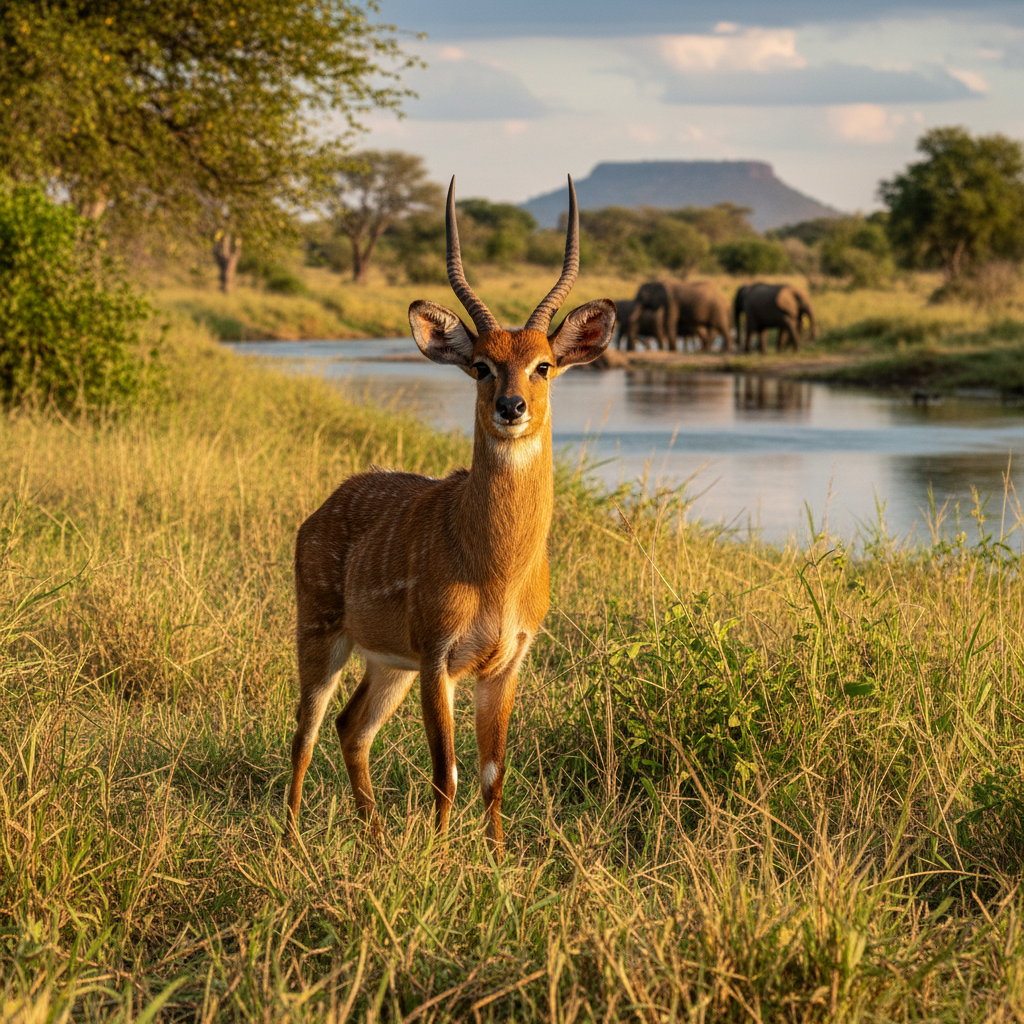
AI Generated
Chobe Bushbuck
Tragelaphus scriptus ornatus
Explore the elusive Chobe Bushbuck, a subspecies known for its distinctive coat patterns and secretive nature in the dense riparian habitats of Southern Africa. Learn about its behavior and conservation.
Description
The Chobe Bushbuck (Tragelaphus scriptus ornatus) is a beautiful and elusive subspecies of Bushbuck, a medium-sized antelope native to the riparian and dense bushland habitats of central and southern Africa. Recognized for its striking coloration and markings, the Chobe Bushbuck typically has a reddish-brown to dark brown coat, adorned with a series of distinct white spots and vertical stripes along its flanks. These patterns are highly variable among individuals but are generally more pronounced than in some other bushbuck subspecies. Males are usually larger and darker than females, weighing between 40-80 kg (88-176 lbs) and standing about 70-90 cm (28-35 inches) at the shoulder. Females are lighter in color and generally weigh 25-60 kg (55-132 lbs). Only males possess horns, which are short, sharp, and spiraled once or twice, growing up to 25-35 cm (10-14 inches) long. A characteristic feature of both sexes is the white spots on the ears, chin, legs, and tail, along with a white stripe down the throat and chest.
Habitat & Range
The Chobe Bushbuck is primarily found along the Chobe and Zambezi river systems, extending its range into Botswana, Namibia, Zambia, Malawi, Mozambique, and Zimbabwe. Its preferred habitat consists of dense riverine bush, thickets, swamps, and woodland fringes, often close to permanent water sources. This subspecies is particularly adapted to areas with dense vegetation that provides excellent cover from predators and abundant browse. Their secretive nature means they rarely venture far from protective cover, making them challenging to observe in the wild. The Chobe region of Botswana, from which it derives its name, is a stronghold for this subspecies.
Behavior
Chobe Bushbucks are largely solitary and highly secretive animals. Unlike many other antelopes that form herds, bushbucks are typically found alone or in small, loose family groups consisting of a female and her latest offspring. Males are territorial and will actively defend their patches of suitable habitat from rival males. They are most active during the cooler parts of the day – early morning, late afternoon, and often into the night – emerging from dense cover to feed. When alarmed, a bushbuck will often freeze, relying on its camouflage, or emit a sharp, barking alarm call before crashing into dense vegetation to escape. They are known to be excellent swimmers, capable of crossing rivers and streams, which allows them to utilize diverse riverine habitats and escape predators.
Diet
As browsers, Chobe Bushbucks have a varied diet consisting of leaves, shoots, flowers, and fruits from a wide range of trees, shrubs, and herbaceous plants. They are selective feeders, choosing the most nutritious parts of the vegetation available. Their diet is highly adaptable to seasonal changes and local availability. Occasionally, they may also consume some grasses. Proximity to water sources is crucial, as they regularly drink, especially when their diet is low in moisture content. This browsing behavior plays an important role in shaping the vegetation structure of their habitats.
Hunting & Identification Notes
Identifying the Chobe Bushbuck in the field requires patience and keen observation due to their secretive nature and preference for dense cover. Key identifiers include their medium size, the distinct white spots and stripes on their reddish-brown coat (which vary individually), and the short, spiraled horns of the males. The white markings on the lower legs and around the face are also characteristic. Trophy evaluation for hunting focuses on horn length and mass, ensuring the animal is mature. Hunting bushbuck is considered challenging due to their wariness and tendency to remain hidden, often requiring experienced trackers to locate them within their dense habitats. Ethical hunting practices emphasize a careful approach to avoid disturbing other wildlife and ensure a clean harvest.
Conservation Status
The Bushbuck species (Tragelaphus scriptus) as a whole is classified as 'Least Concern' by the IUCN Red List, reflecting its widespread distribution and adaptable nature. The Chobe Bushbuck subspecies, while having a more restricted range, generally benefits from the overall stable population of the species. However, like all wildlife, local populations can face threats from habitat loss and fragmentation due to human encroachment, agricultural expansion, and unsustainable hunting. Protected areas within its range, such as Chobe National Park, play a crucial role in safeguarding its populations. Sustainable management practices, including regulated hunting in some areas, contribute to providing incentives for habitat preservation and ensure the long-term viability of the Chobe Bushbuck.