
AI Generated
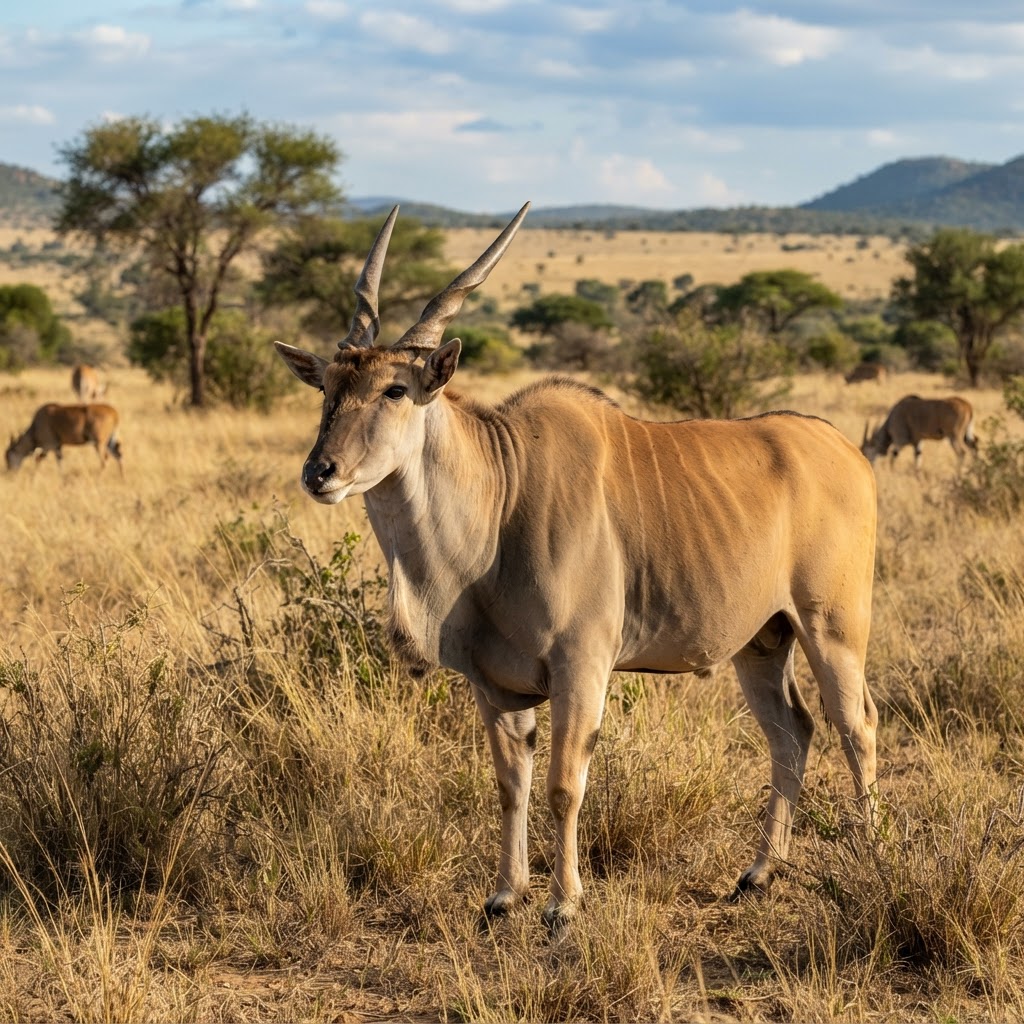
Cape Eland
Tragelaphus oryx
The Cape Eland is a large antelope native to southern Africa, recognized for its impressive size and adaptations to grassland habitats. Ideal for hunters and researchers alike.
Introduction
The Cape Eland (Tragelaphus oryx) is a notable species of antelope indigenous to southern Africa. Characterized by its impressive size, this herbivore thrives in a variety of open habitats, showing remarkable adaptability to grasslands and savannas across the region.
Description
The Cape Eland is among the largest antelope species, with males typically weighing between 700 to 1,000 pounds (320 to 450 kg) and standing about 4 to 6 feet (1.2 to 1.8 meters) at the shoulder. Females are generally smaller, weighing between 400 to 500 pounds (180 to 225 kg). Their bodies exhibit a sturdy, robust build, contributing to their majestic presence in the wild.
One of the most striking features of Cape Eland is their long, spiral-shaped horns, which can reach lengths of up to 3 feet (90 cm) in mature males. The hair on their bodies is short and coarse, ranging in color from light tan to brown, with several vertical white stripes on the sides that provide natural camouflage in their environment. Both sexes possess a dewlap, a flap of skin that hangs beneath their throat, which becomes more pronounced in males, enhancing their vulnerability during social interactions.
Habitat & Range
Cape Elands are primarily found in the southern regions of Africa, notably in countries like South Africa, Namibia, Botswana, and Zimbabwe. They favor open habitats, typically residing in savannas, grasslands, and lightly wooded areas where they can graze on available vegetation. These antelopes are flexible regarding their habitat preferences, exhibiting seasonal movements to follow water availability and food sources.
Behavior
Cape Elands are social animals that typically form herds, although they often display a loose social structure that varies in size, usually consisting of 10 to 100 individuals. They exhibit a unique behavior of mixing with other herbivores such as zebra or wildebeest, a practice that helps enhance their protection against predators. During mating seasons, males will engage in elaborate courtship displays, showcasing their horns and trying to establish dominance.
These antelopes are known for their distinctive “silent” communication. While they may not produce loud sounds, they can communicate through body language, ear movements, and subtle gestures. When alarmed, Cape Elands can bolt at astonishing speeds, capable of reaching up to 40 miles per hour (64 km/h) to evade threats, such as lions or hyenas.
Diet
As herbivores, Cape Elands primarily consume grasses, leaves, and shrubs. They possess a unique digestive system that allows them to derive nutrients from a high-fiber diet efficiently. The Cape Eland’s forage preferences can vary based on the season; during the rainy season, they prefer tender green shoots and forbs, while in dry months, their diet may include tougher grasses and shrubs.
Foraging Habits
These adaptively opportunistic feeders also engage in selective grazing, often choosing to eat plants that are high in protein and water content. Their grazing habits contribute to seed dispersal in their habitats, playing an essential role in ecosystem health.
Hunting & Identification Notes
For hunters, identifying a Cape Eland involves recognizing both its size and coloration. The males' distinctive large horns and the pronounced features of their bodies make them relatively easy to spot from a distance. When approaching, paying attention to their locomotion can help; they often exhibit a unique, slow, and deliberate gait.
Hunters seeking to harvest a Cape Eland should be aware of local regulations and ethical hunting practices, ensuring they select mature individuals that contribute to the genetic diversity of the population. A typical hunting approach involves skilled tracking, often in a group, to communicate effectively about the animal's movements.
Conservation Status
The Cape Eland is currently listed as Least Concern by the International Union for Conservation of Nature (IUCN). While their populations remain stable in some areas, habitat loss due to agricultural expansion, poaching, and human-wildlife conflicts remain primary threats. Conservation efforts are underway to ensure sustainable populations, including establishing protected areas and promoting ecotourism, which benefits local communities and wildlife conservation.
In summary, the Cape Eland is an exemplary species embodying the rich biodiversity of southern Africa. Its impressive size, adaptable behavior, and social structures make it a focal point for both ecologists and wildlife enthusiasts, while responsibly managed hunting can contribute positively to conservation efforts.