
AI Generated
Cape Bushbuck
Tragelaphus sylvaticus
Discover the Cape Bushbuck, a secretive and adaptable antelope found in Southern Africa's dense bushlands. Learn about its striking markings, solitary nature, and role in its ecosystem.
Description
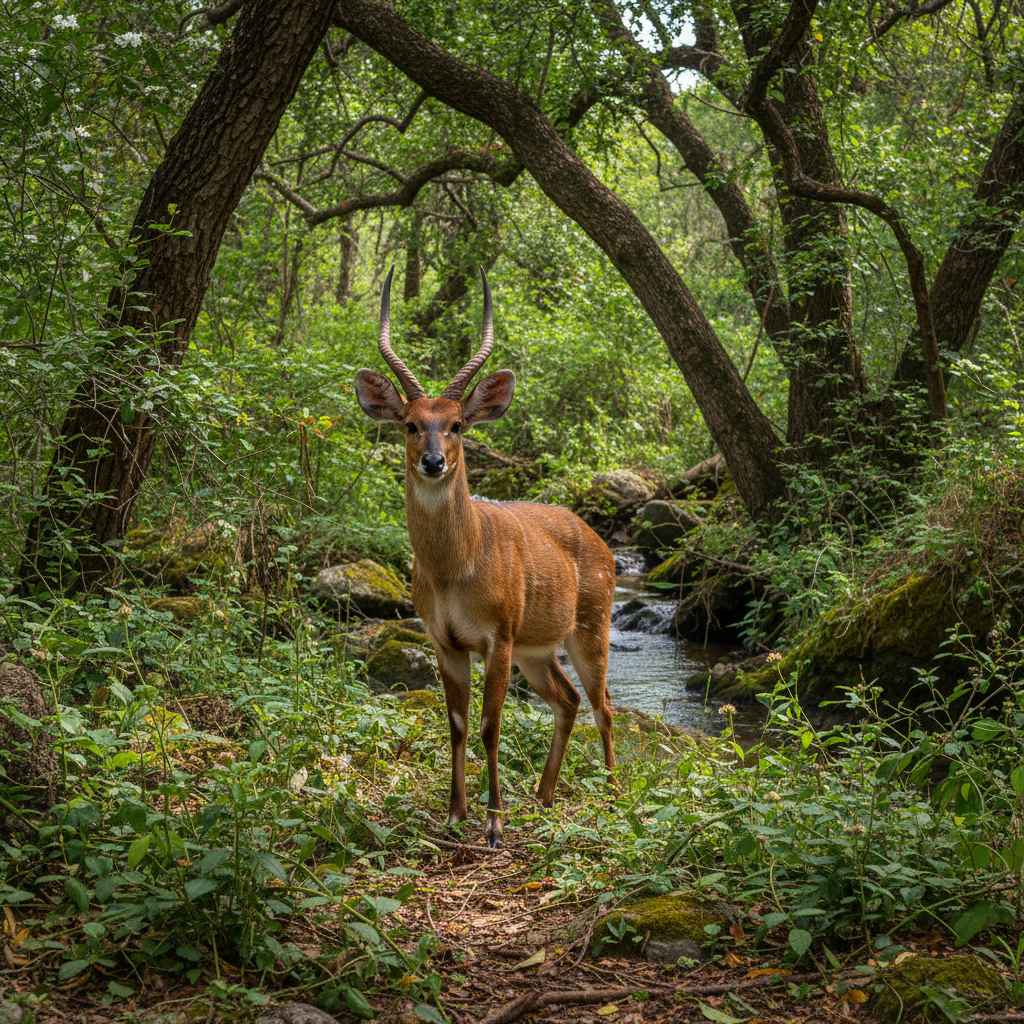
The Cape Bushbuck (Tragelaphus sylvaticus), also known as the Southern Bushbuck or Imbabala, is a medium-sized and highly adaptable antelope species native to a significant portion of Southern Africa. Often considered one of the most widespread ungulates on the continent, its appearance can vary significantly across its range, leading to several recognized subspecies. Generally, the Cape Bushbuck exhibits a rich reddish-brown to dark brown coat, with adult males often being darker, sometimes appearing almost black in older individuals. Both sexes typically display a series of distinctive white spots and occasional vertical stripes along their flanks, although these markings tend to be less pronounced than in some other bushbuck subspecies, like the Chobe Bushbuck. White patches on the ears, chin, throat, and legs are characteristic. Males are robustly built, standing about 70-90 cm (28-35 inches) at the shoulder and weighing between 45-80 kg (99-176 lbs). Females are smaller, usually weighing 25-60 kg (55-132 lbs). Only males possess short, sharp, and spiraled horns, typically growing to lengths of 25-35 cm (10-14 inches), which are used in territorial disputes.
Habitat & Range
The Cape Bushbuck inhabits a wide variety of dense habitats across Southern Africa, from the Cape provinces of South Africa northward into Angola, Zambia, and parts of Zimbabwe and Mozambique. Its preferred environments include thick bushland, dense woodlands, riverine forests, mountain forests, and even encroaching agricultural areas, as long as sufficient cover is available. They are rarely found far from water sources and dense vegetation, which provides essential camouflage and protection from predators. Their adaptability allows them to thrive in fragmented habitats, often coexisting near human settlements, as long as pockets of dense cover persist.
Behavior
Cape Bushbucks are predominantly solitary and highly secretive animals, renowned for their elusive nature. They are primarily nocturnal or crepuscular, becoming most active at dawn, dusk, and throughout the night, when they emerge from their dense daytime hiding spots to feed. During the day, they lie concealed in thickets. When disturbed, a bushbuck will often freeze, relying on its excellent camouflage, or emit a surprisingly loud, dog-like bark before crashing away into the nearest cover. Males are territorial and will fiercely defend their small home ranges, often engaging in aggressive displays or horn-to-horn combat with intruders. Though solitary, they are not entirely anti-social; a female may be accompanied by her last offspring, and sometimes small, temporary feeding aggregations can occur in areas with abundant food. They are also known to be excellent swimmers, capable of crossing rivers and waterbodies.
Diet
As browsers, the Cape Bushbuck has a highly diverse diet, consisting mainly of leaves, shoots, buds, flowers, and fruits from a wide array of trees, shrubs, and herbaceous plants. They are selective feeders, choosing the most palatable and nutritious parts of the vegetation. This dietary flexibility allows them to adapt to different seasonal changes and available flora within their varied habitats. They will occasionally consume some grasses, especially new growth, but this is not their primary food source. Bushbucks require regular access to water, particularly when their diet consists of drier plant material, and they are typically found within a reasonable distance of permanent water sources.
Hunting & Identification Notes
Identifying the Cape Bushbuck in the wild can be challenging due to its secretive habits and preference for dense cover. Key identification features include its medium size, often dark reddish-brown to nearly black coat, and the presence of white spots and sometimes faded stripes on its flanks. The male's short, spiraled horns are distinctive. When compared to other bushbuck subspecies, the Cape Bushbuck is often noted for its darker overall coloration and less prominent white markings, though this can vary. Hunters consider the Cape Bushbuck a prized trophy due to its elusiveness and the challenge it presents. Success typically requires extreme patience, stealth, and intimate knowledge of its preferred habitats and movements. Ethical hunting practices focus on careful shot placement and respect for the animal's habitat.
Conservation Status
The Cape Bushbuck (Tragelaphus sylvaticus) is classified as 'Least Concern' by the IUCN Red List of Threatened Species. This designation is primarily due to its widespread distribution across sub-Saharan Africa, its adaptability to various habitats, and its ability to persist in areas with some human activity. While the species as a whole is stable, local populations can face threats from habitat loss and fragmentation caused by agricultural expansion, deforestation, and human settlements. Poaching can also pose a localized threat. However, their secretive nature and preference for dense cover provide them with some protection. The presence of Cape Bushbucks in numerous national parks, game reserves, and private conservancies contributes significantly to their ongoing conservation and ensures the long-term viability of the subspecies.