
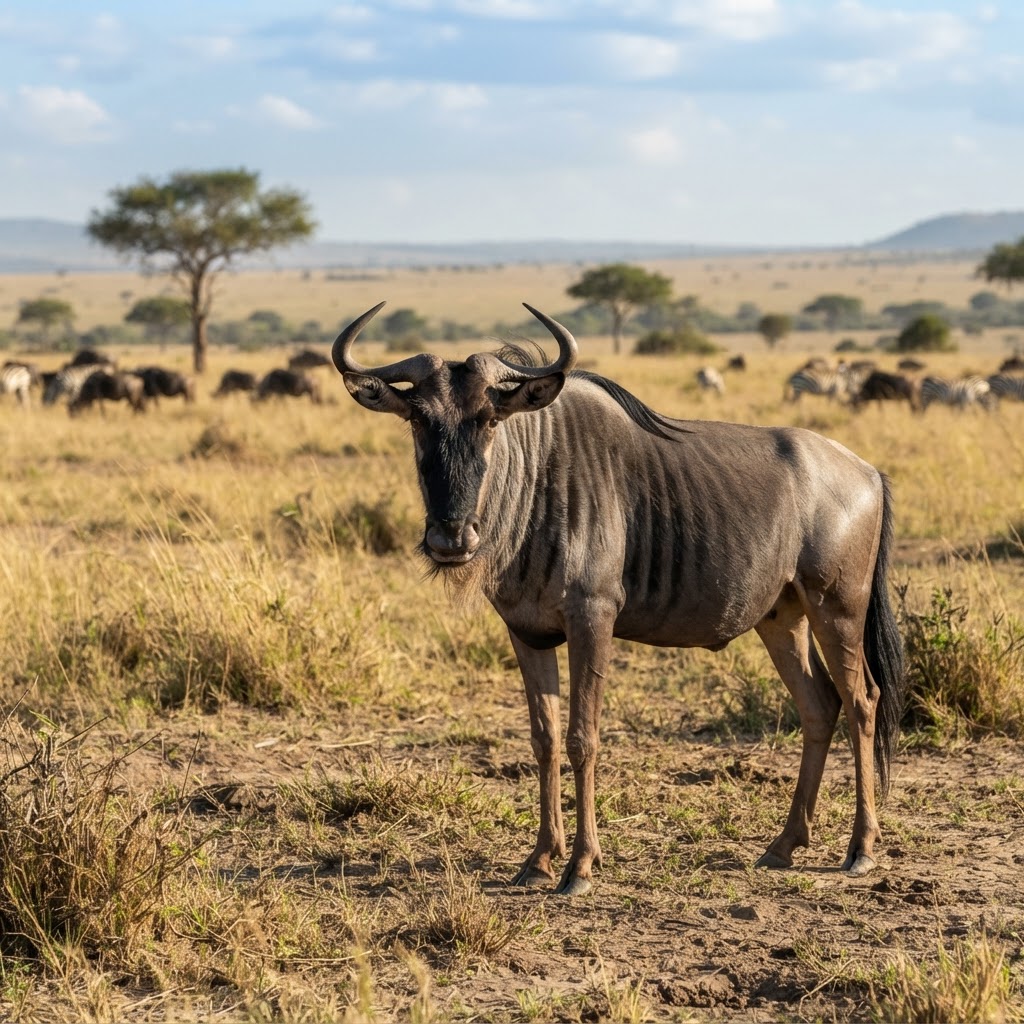
AI Generated
Blue Wildebeest
Connochaetes taurinus
The Blue Wildebeest, or Connochaetes taurinus, is a large antelope native to Southern Africa. Known for their distinct coloration and social behavior, they inhabit grasslands and open savannas.
Introduction
The Blue Wildebeest (scientific name: Connochaetes taurinus) is a large species of antelope predominantly found in Southern Africa. Extensively recognized for its distinctive coloration and social structures, the Blue Wildebeest plays a crucial ecological role in the savanna ecosystems it inhabits.
Description
Blue Wildebeests are robust animals characterized by their muscular build and long legs. They typically weigh between 120 to 250 kg (about 265 to 550 lbs) and stand approximately 1.2 meters (4 ft) tall at the shoulder. Their fur is short, bristly, and predominantly bluish-grey to dark brown, adorned with darker stripes along their body. The species is easily identified by its spiraled horns, which are distinctive in males, forming sharp, wide arcs that can span up to 80 cm (31 inches) between tips.
Males are generally larger than females, and both sexes display a prominent beard on their throats, along with a tuft of hair on their tails. The overall appearance of the Blue Wildebeest exudes robustness, enabling them to navigate their often harsh grazing environments.
Habitat & Range
Blue Wildebeests thrive in a range of habitats, most notably open grasslands, savannas, and plains with easy access to water sources. They are commonly found in national parks and wildlife reserves across countries like South Africa, Botswana, Namibia, and Tanzania. While they prefer areas with short to medium-length grass, they also inhabit regions that provide coverage from predators, such as scattered bushes or woodlands. The migratory habits of Blue Wildebeests often lead them to traverse vast distances in search of seasonal grazing or better water conditions.
Behavior
These animals are social creatures that form large herds, ranging from a few individuals to thousands during migration. The herd structure is matriarchal, typically led by a dominant female, while males may form bachelor groups until the breeding season. Blue Wildebeests are also known for their keen senses, particularly sight and hearing, which help them detect predators such as lions and hyenas.
One of the remarkable aspects of the Blue Wildebeest's behavior is its migratory patterns. The Great Migration, often showcasing the movement of large herds across the Serengeti ecosystem, includes Blue Wildebeests moving in search of fresh grazing and water. This migration is not only significant for the species but also attracts various predators, contributing to a dynamic ecosystem.
Diet
The diet of the Blue Wildebeest primarily consists of grasses, particularly those that are young and nutritious. They are considered grazers, preferring to feed on the softer shoots of grass, and can adapt their diet based on seasonal availability. During the dry season, when grass becomes scarce, they may also consume herbaceous plants and leaves. Their digestive system is adapted to process a high-fiber diet efficiently, allowing them to extract necessary nutrients while expelling fibrous materials.
Hunting & Identification Notes
For hunters and wildlife enthusiasts, identifying a Blue Wildebeest in the field can be done through a combination of physical characteristics and behavior. Look for their distinctive color patterns and the prominent horns of males. Unlike other antelopes, Blue Wildebeests have a unique way of moving in herds, often displaying strong flight responses to perceived threats.
When hunting Blue Wildebeests, it is crucial to understand local regulations and ethical hunting practices. Being aware of their habitat, migration patterns, and social behaviors can enhance the chances of successful identification and observation.
Conservation Status
The Blue Wildebeest is categorized by the International Union for Conservation of Nature (IUCN) as Least Concern, mainly due to its stable population in several protected areas. However, habitat loss and poaching remain significant threats in certain regions. Maintaining and enforcing protected areas will be essential to ensure that Blue Wildebeests can thrive in their natural habitats. Conservation efforts involve habitat protection, anti-poaching initiatives, and creating wildlife corridors to facilitate their migratory movements.
Overall, the Blue Wildebeest is an integral part of the African savanna ecosystem. Understanding and appreciating their role can help promote conservation efforts while providing insights for those involved in hunting or wildlife research.