
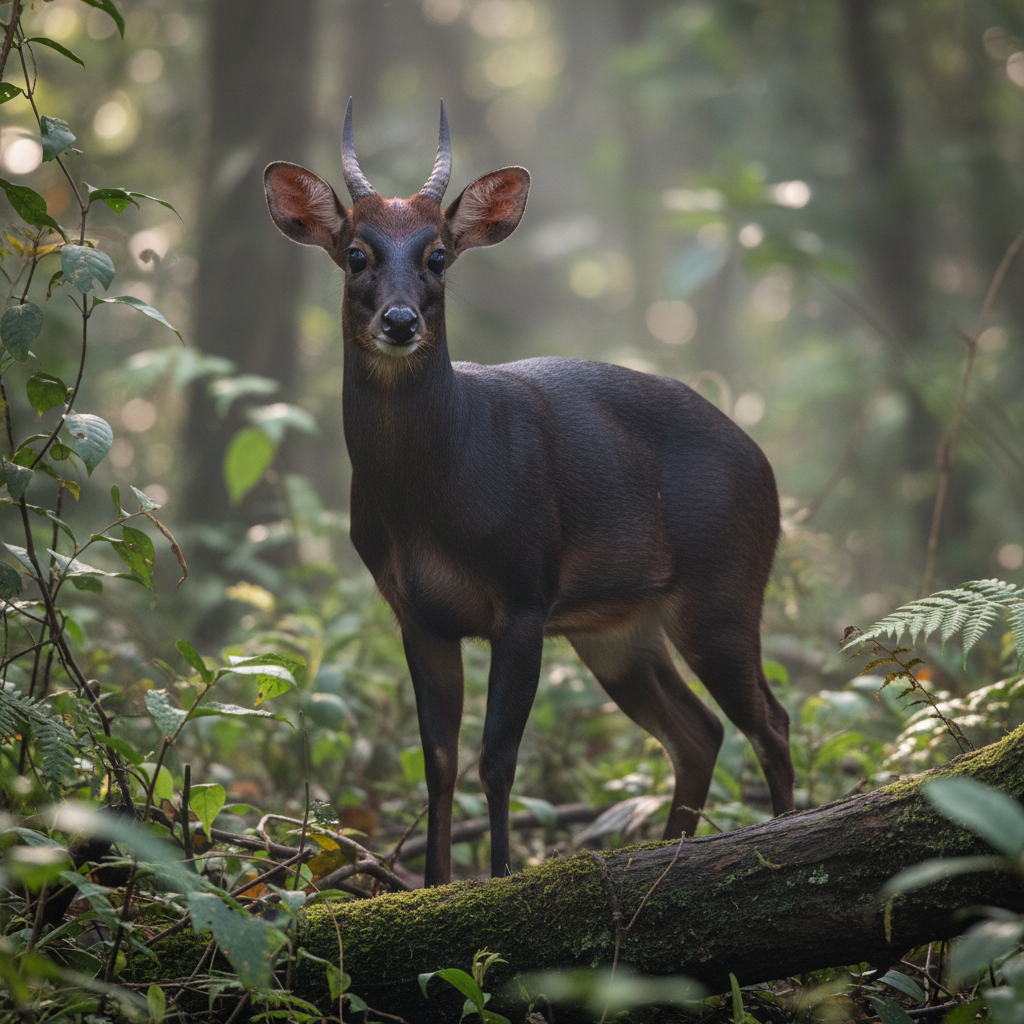
AI Generated
Blue Duiker
Philantomba monticola
The Black Duiker, scientifically known as Philantomba monticola, is a small antelope found in dense forests across central and western Africa. Known for its elusive behavior, it inhabits various terrains and plays a vital role in the ecosystem.
Introduction
The Black Duiker, scientifically known as Philantomba monticola, is a small antelope recognized for its shy nature and distinct dark coloration. This species is predominantly found in the dense forests of central and western Africa, thriving in both mountainous regions and lowland forests.
Description
The Black Duiker is characterized by its compact body, reaching a height of about 60 to 75 cm (24 to 30 inches) at the shoulder. Its coat is typically a dark brown to black hue, which provides excellent camouflage within its forested habitat. The duiker has small, pointed horns that can grow up to 20 cm (8 inches) long in males. Female duikers, on the other hand, are usually hornless.
Moreover, this species has large, expressive eyes adapted for low-light conditions, along with a characteristic white patch on each cheek that can be seen during flight. Their size and dark coloration make them relatively easy to identify among similar small forest antelopes.
Habitat & Range
Black Duikers primarily inhabit tropical rainforests, but they are also found in various types of forested environments, such as montane, swamp, and secondary forests. Their range extends across several countries in west and central Africa, including Côte d'Ivoire, Ghana, Cameroon, and the Democratic Republic of the Congo.
These antelopes prefer thick undergrowth where they can easily hide from predators, which helps them avoid detection and ensures safe feeding grounds. As a response to habitat degradation, Black Duikers have been observed to adapt by utilizing fragmented forests, though this often comes with increased vulnerability to threats.
Behavior
Black Duikers are primarily nocturnal and crepuscular, being most active during dawn and dusk. This behavior limits their exposure to predators and human disturbances. They are solitary animals, but they may occasionally be seen in pairs, particularly during the mating season.
These duikers communicate through a variety of vocalizations, including whistles and grunts, primarily used to signal danger or attract a mate. When startled, a Black Duiker will usually make a sharp dash and leap into thick cover, a behavior characteristic of this species.
Diet
The diet of the Black Duiker consists mainly of leaves, fruits, and flowers, which they forage from the forest floor and from low branches. They are herbivores and play a crucial role in their ecosystem by aiding in seed dispersal through their eating habits. Their preference for a variety of plant material allows them to adapt to different types of forest resources.
During certain seasons, they may also consume fungi and occasionally small invertebrates, showcasing a degree of dietary flexibility that is beneficial for survival, especially in changing environments.
Hunting & Identification Notes
When hunting or observing the Black Duiker, it is essential to remain discreet due to their skittish nature. Skilled hunters or guides can identify the presence of Black Duikers through tracks, droppings, and their characteristic chewed plant materials.
They are often hunted for their meat, which is considered a delicacy in many local cultures. Being mindful of local regulations and the conservation status of this species is vital for sustainable practices.
Identification of the Black Duiker can be aided by noting its size, dark coloration, and the distinctive white facial markings. Observers should also pay attention to their behavior, notably their movement patterns and alarm calls, which can be clues to their whereabouts.
Conservation Status
The Black Duiker is currently listed as Least Concern by the International Union for Conservation of Nature (IUCN). However, their populations are affected by habitat loss due to logging and agricultural expansion, along with hunting pressures. In certain regions, particularly where human encroachment is significant, their numbers are declining.
Conservation efforts are underway to protect their habitats and ensure sustainable hunting practices. Monitoring populations and preserving dense forest areas are critical steps in safeguarding the future of the Black Duiker.