
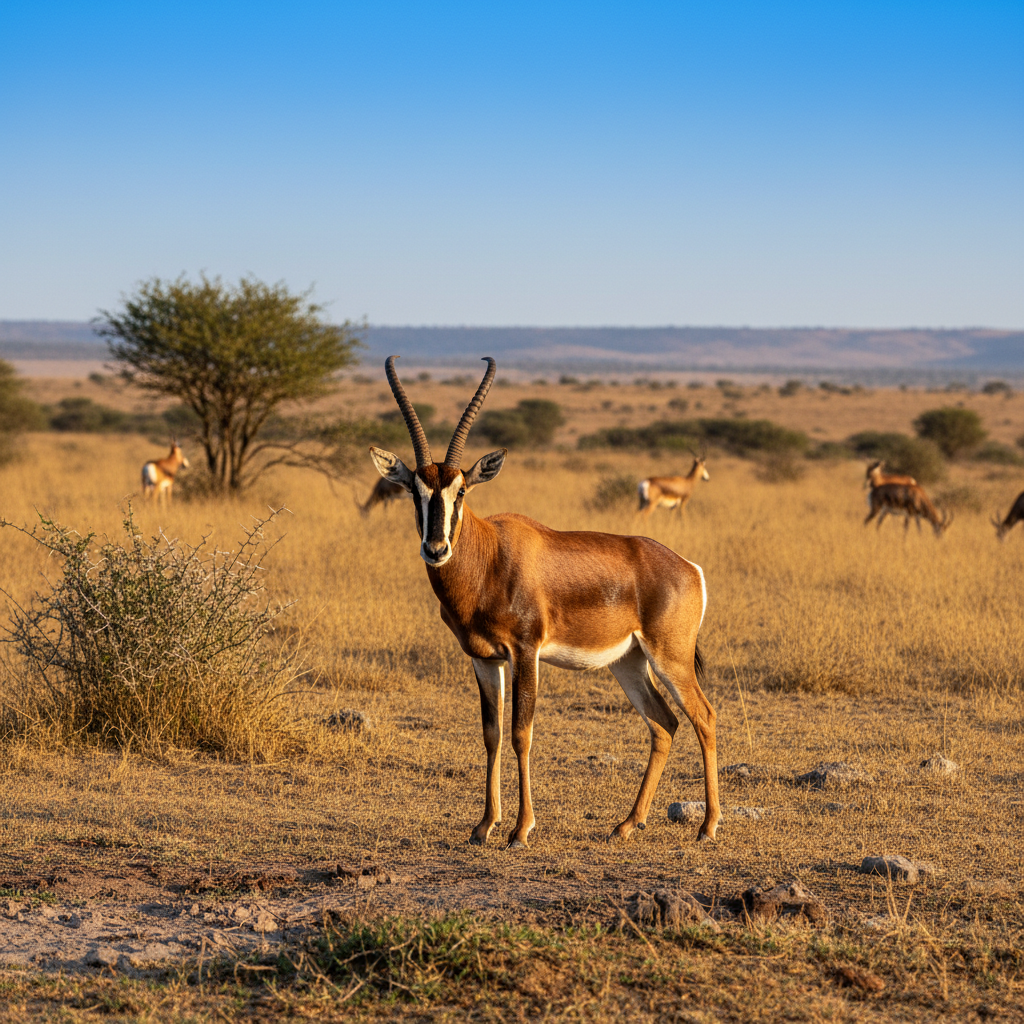
AI Generated
Blesbok
Damaliscus pygargus phillipsi
The Blesbok (Damaliscus pygargus phillipsi) is a distinctive antelope found in southern Africa, notable for its striking coloration and social behavior.
# Blesbok (Damaliscus pygargus phillipsi)
The Blesbok is a medium-sized antelope scientifically known as Damaliscus pygargus phillipsi. Native to the grasslands and plains of southern Africa, these distinctively colored animals are recognized for their striking features and social nature.
Description
The Blesbok is characterized by its slender, elongated body and long legs, standing around 90-100 cm (35-39 inches) at the shoulder. Males typically weigh between 75-90 kg (165-198 lbs), while females are slightly lighter, averaging 50-70 kg (110-154 lbs).
Their most distinguishing feature is the white facial marking, often referred to as a "bles" (meaning "blush" in Dutch), which extends from their eyes to their nose. Their coat is generally a rich reddish-brown, with darker brown and white patterns on the face, legs, and underside. Males possess long, curved horns that can grow up to 80 cm (31 inches), whereas females have shorter, thinner horns.
Habitat & Range
Blesboks are primarily found in South Africa, specifically in the grasslands of the Highveld, but can also be spotted in parts of Lesotho and Zimbabwe. They thrive in open savannahs, grasslands, and floodplains, favoring areas with short to medium-length grass that provide both cover and grazing opportunities. Declines in their habitat due to agricultural expansion have influenced their range, making conservation efforts crucial for their survival.
Behavior
Blesboks are social animals, typically forming small herds ranging from 10 to 40 individuals. These herds consist mainly of females and their young, while adult males are often solitary or found in small bachelor groups. Males are territorial and will engage in displays of strength, such as horn clashing, to assert dominance and establish breeding rights within a herd.
Their behavior is characterized by a high degree of vigilance. They frequently graze while keeping a close watch for predators. When alarmed, they exhibit specific alarm calls and retreat in a zigzag pattern, which helps them evade danger from predators like lions, hyenas, and leopards.
Diet
Blesboks are primarily herbivores that feed on grasses, particularly favoring young, green shoots. Their grazing habits enable them to play an essential role in maintaining the health of their grassland ecosystems. While predominantly grazing during the day, they may also feed during the cooler hours of the morning and late afternoon, particularly in hot weather conditions.
In terms of water requirements, Blesboks are quite adaptable. They can survive in areas with limited freshwater but will seek out watering holes as needed. Their dietary habits contribute to the ecological balance, as they help control the growth of grass and facilitate seed dispersal.
Hunting & Identification Notes
When identifying Blesbok in the field, look for the distinctive white facial marking that gives them their name and the characteristic blood-red coat. Adults can easily be recognized by their curved horns and robust body shape. Since these antelopes typically inhabit open grasslands, hunters and researchers should approach their territory quietly to avoid alerting the herd.
Ethical hunters usually adhere to the principles of fair chase. As they are renowned for their striking appearance, reflections on Blesbok hunting often discuss the balance between sustainable practices and the preservation of their habitat. Seasonal hunting regulations may apply, and hunters should be familiar with local laws concerning Blesbok hunting.
Conservation Status
The Blesbok is currently classified as Least Concern by the IUCN Red List, but this status does not imply that conservation efforts are any less important. Over the years, their populations have fluctuated due to habitat loss and hunting pressure. Conservation programs have been put in place to bolster populations, including game ranching and legal hunting, which supports local economies while promoting responsible wildlife management.
Though Blesboks have recovered considerably since their near extinction in the early 20th century, ongoing threats from habitat encroachment and climate change necessitate continuous monitoring and management to ensure they thrive in their natural environments.
In conclusion, the Blesbok is not only a strikingly beautiful animal but also plays a crucial role in the grassland ecosystem of southern Africa. Its conservation is vital not only for its species but also for the complex interdependencies that characterize its habitat.