
AI Generated
Black Wildebeest
Connochaetes gnou
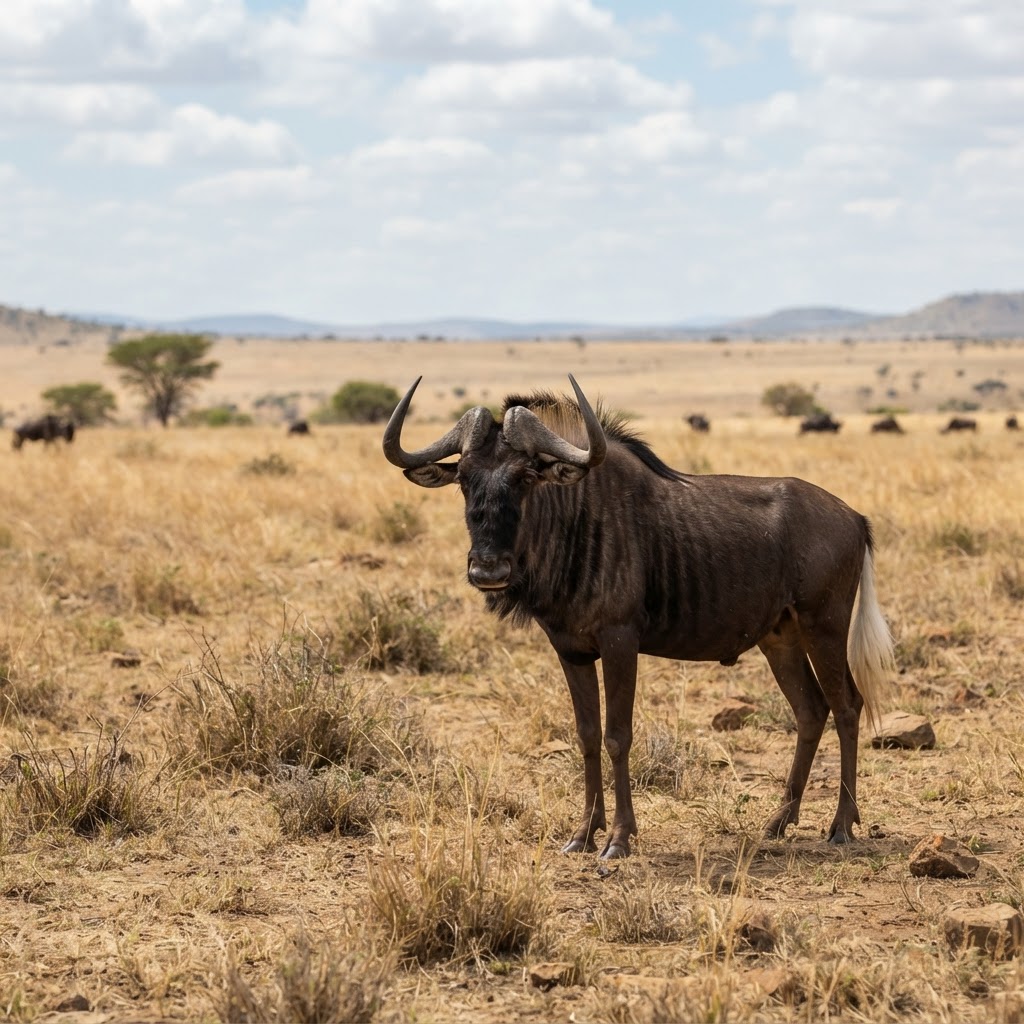
The Black Wildebeest (Connochaetes gnou) is a robust antelope native to Southern Africa, known for its distinctive dark coloration and curved horns.
Description
The Black Wildebeest, scientifically known as Connochaetes gnou, is a large antelope species native to Southern Africa. It is particularly recognized for its dark coloration and distinctive curved horns, which can reach lengths of up to 80 cm. Adult males typically weigh between 130-180 kg, while females range from 85-120 kg. Their shaggy black coat is complemented by a white stripe on their face, white-tipped tail, and white markings on their flanks and legs. This species is also known for its unique, clown-like appearance, with a broad forehead and a long, slender physique.
Habitat & Range
The Black Wildebeest primarily inhabits open grassland and savanna environments in Southern Africa. Historically, it roamed vast areas across the region, including parts of South Africa, Zimbabwe, and Botswana. However, due to habitat loss and hunting, populations have become restricted primarily to conservation areas such as the Karoo and certain national parks. These antelopes are adapted to thrive in dry, arid landscapes and can often be seen grazing in herds on plains, where their dark coat contrasts with the surrounding vegetation.
Behavior
Black Wildebeest are known for their gregarious nature, typically forming small herds consisting of females and their young, while adult males may either join these groups or roam independently. Herd dynamics can shift significantly, especially during mating seasons, when males compete vigorously for access to females. Communication among these animals involves a range of vocalizations, primarily grunts and snorts, as well as visual cues such as posturing and tail movements. They are mostly diurnal, showing increased activity during cooler parts of the day.
Diet
As herbivores, Black Wildebeest primarily feed on grasses and forbs. Their diet is adapted to grazing on short grass in their natural habitats, particularly favoring new growth. They have a ruminating digestive system, which enhances their ability to extract nutrients from fibrous plant material. During the rainy season, their feeding habits may vary as they exploit the abundance of vegetation, whereas drought conditions necessitate foraging along water sources.
Hunting & Identification Notes
For hunters and safari guides, recognizing the Black Wildebeest can be critical for successful tracking. Their most noticeable traits include the curved horns of males, their distinctive coloration, and their habitat preferences. Hunters should note that mature males can be significantly heavier and larger than females. When pursuing the Black Wildebeest, hunters should approach with care due to their keen eyesight and sense of smell, enabling them to detect potential danger quickly. A successful hunt entails in-depth knowledge of their behavior patterns, especially during the rutting season when males become more aggressive and easier to locate.
Conservation Status
The Black Wildebeest is currently classified as Least Concern by the IUCN Red List, thanks to ongoing conservation efforts and the establishment of protected areas. However, habitat loss, agriculture expansion, and poaching remain threats to their population dynamics. While numbers have rebounded in some regions due to successful breeding programs, continuous monitoring and habitat protection are essential to ensure the species' long-term viability. As a species that plays an important role in its ecosystem, the conservation of the Black Wildebeest also supports biodiversity in Southern Africa’s grassland habitats.