
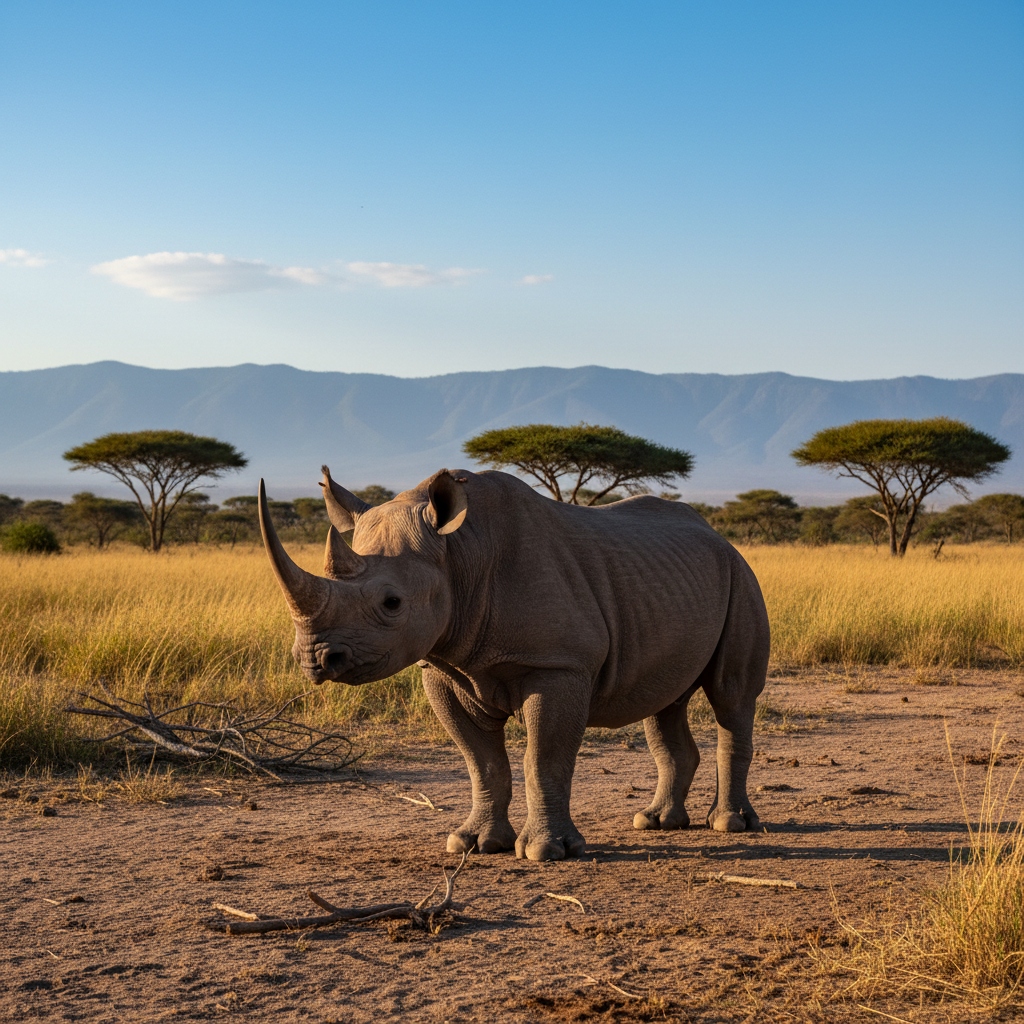
AI Generated
Black Rhinoceros
Diceros bicornis
The Black Rhinoceros, scientifically known as Diceros bicornis, is a critically endangered species native to eastern and southern Africa. This species is renowned for its distinct physical traits and significant ecological role.
Description
The Black Rhinoceros, scientifically known as Diceros bicornis, is a distinctive large herbivore found primarily in eastern and southern Africa. This species is known for its two horns, the front horn being larger and the most prominent feature of its anatomy. The Black Rhinoceros has a smaller, more compact body compared to its close relatives, the White Rhinoceros. Their skin is thick and grayish in color, often appearing different shades depending on the local environment and mud wallows they frequent. Adult Black Rhinos typically weigh between 800 to 1,400 kilograms (1,800 to 3,100 pounds) and reach heights of 1.5 to 1.8 meters (5 to 6 feet) at the shoulder.
Habitat & Range
Black Rhinoceroses inhabit a variety of environments, including savannas, scrublands, and, to some extent, mountainous areas. They are predominantly found in southern African countries such as Namibia, South Africa, and Zimbabwe, as well as in eastern territories like Kenya and Tanzania. Their habitats are characterized by dense bush and thicket habitats where they can easily access foliage while providing them cover from potential threats.
Behavior
Black Rhinoceroses are primarily solitary animals, although they may form temporary associations with a mother and calf. They are more active during the cooler parts of the day, particularly early mornings and late afternoons. Their spatial behavior is defined by a territory that they will defend against other rhinos of the same sex. Communication among Black Rhinos is achieved through vocalizations, body language, and scent markings.
These rhinos have good eyesight but poor hearing, relying on their sense of smell and eyesight to detect predators and threats. They are known to be more aggressive than their White rhinoceros counterparts, often displaying defensiveness when approached by humans or perceived dangers.
Diet
The Black Rhinoceros predominantly feeds on a variety of vegetation types. Their diet consists of browse from shrubs, trees, and bushes. They prefer to eat leaves, shoots, and fruits from thorny plants, which they can often reach due to their agile and flexible lips. The species' ability to consume a diverse range of plant types helps them adapt to different habitats and find food sources, especially in regions where vegetation may be sparse. On average, they can consume around 50 kg (110 lbs) of food per day.
Hunting & Identification Notes
Identifying a Black Rhinoceros in the wild can be achieved through noticeable physical traits. They are smaller and more compact than the White Rhinoceros, with a more pointed, hooked upper lip that is adapted for grasping leaves and twigs. The two horns, varied in size and shape, are another distinguishing feature. The front horn can reach lengths of over 1 meter (3.3 feet).
Regarding coloration, their skin appears more wrinkled and less flat compared to the White Rhinoceros. Black Rhinos are generally smaller and possess a more agile demeanor than the larger counterparts, allowing them to maneuver through dense vegetation effectively.
For hunters or safari guides, emphasizing ethical practices is crucial due to the Black Rhinoceros being a critically endangered species. Observers should maintain a safe distance in their natural habitat to avoid stressing the animals and to respect the conservation efforts in place.
Conservation Status
The Black Rhinoceros is categorized as Critically Endangered by the International Union for Conservation of Nature (IUCN). The drastic decline in population over the past few decades is mainly attributed to poaching driven by the demand for rhino horns on the black market and habitat loss due to human encroachment.
Conservation efforts are actively in place to protect the remaining populations, including anti-poaching patrols, habitat restoration, and translocation initiatives aimed at boosting population numbers in protected areas. Coordinated efforts among governments, wildlife organizations, and local communities are essential for securing the future of this magnificent species and its ecological role in the African environment.