
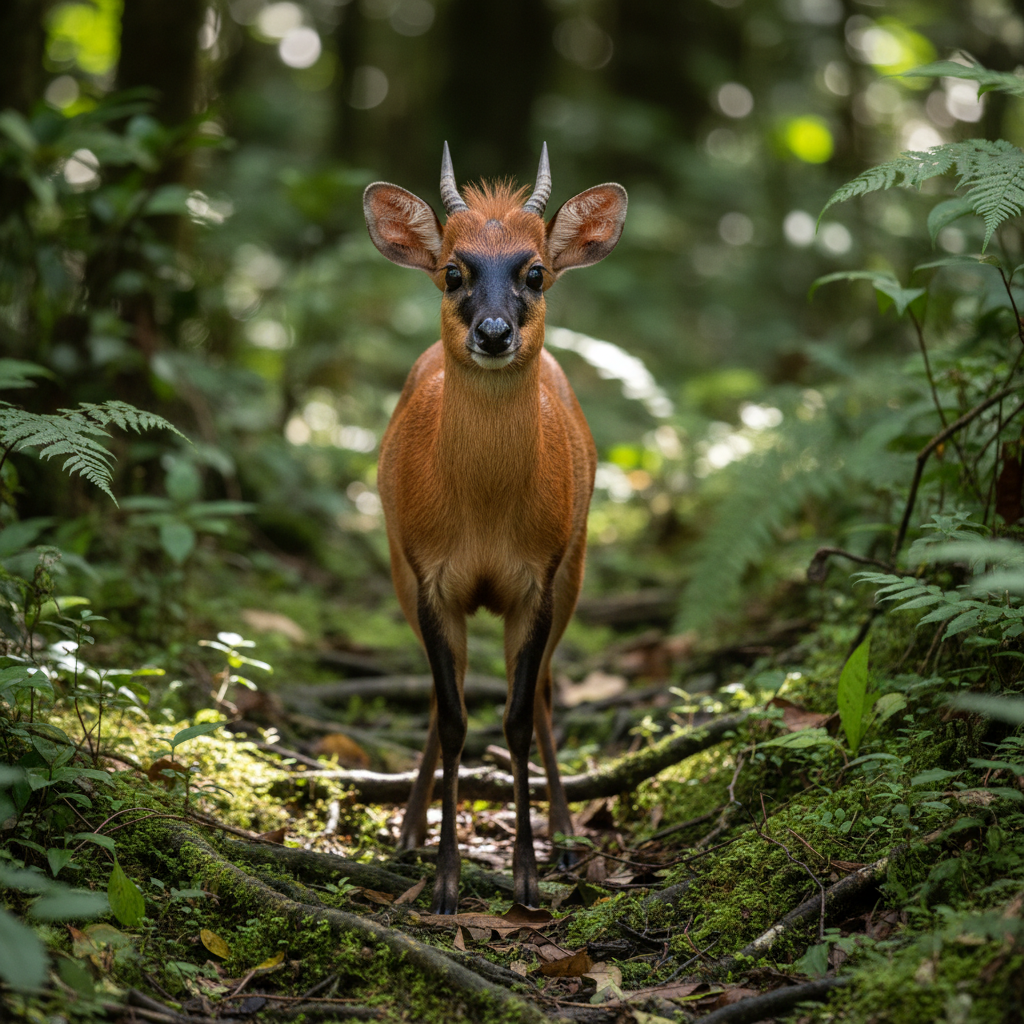
AI Generated
Black-fronted Duiker
Sylvicapra grimmia
The Black-fronted Duiker is a small antelope native to the dense forests and bushlands of Central and West Africa, known for its distinctive facial markings and habitat preferences.
Introduction
The Black-fronted Duiker (scientific name: Sylvicapra grimmia) is a small antelope indigenous to the dense forests and bushlands of Central and West Africa. Notable for its unique black facial markings, this elusive creature has adapted well to its environment, making it a significant species for research and conservation studies in the region.
Description
The Black-fronted Duiker is characterized by its slender body, short legs, and distinctive black stripe that runs from the muzzle over the forehead. Adults typically weigh between 20 to 30 kg (44 to 66 lbs) and stand around 70 to 85 cm (28 to 33 inches) at the shoulder. The general coat color is a reddish-brown; however, some individuals may appear more grayish. Both sexes possess short and pointed horns, with males generally having more pronounced and larger horns than females. The duiker's large, expressive eyes and keen sense of hearing help it evade predators in its natural habitat.
Habitat & Range
The Black-fronted Duiker primarily inhabits dense forests, thickets, and bushy areas, favoring regions with plenty of cover for shelter and foraging. Its range spans parts of Central and West Africa, including countries such as Gabon, Cameroon, the Democratic Republic of Congo, and parts of Nigeria. This species is known to be highly adaptable, capable of thriving in both primary and secondary forests as well as agricultural areas that provide suitable food sources.
Behavior
Known for their solitary nature, Black-fronted Duikers are primarily crepuscular, being most active during dawn and dusk. They often use dense underbrush for cover while moving through their habitats and are known to be remarkably silent, which helps them avoid predators like leopards and hyenas. Communication is subtle, relying mainly on body language and vocalizations such as soft grunts or whistles. Males establish territories and may engage in marking behavior using scent glands, while females may be seen foraging close to cover.
Diet
The diet of the Black-fronted Duiker mainly consists of leaves, fruits, and shoots, with a particular preference for young foliage from shrubs and trees. This herbivorous diet is complemented by various plant materials available in their habitats, including grasses, which they consume more readily during the rainy season. Their feeding behavior contributes to the ecological dynamics of their environment, aiding in seed dispersal and promoting plant diversity.
Hunting & Identification Notes
For hunters, identifying the Black-fronted Duiker can be challenging due to its elusive behavior and preference for dense cover. Key identification features include the distinctive black facial stripe and the relatively small size, especially compared to larger antelope species. Hunters should also be aware of their behavior; duikers tend to freeze in place when they sense danger, making it crucial to approach slowly and with caution. It is advisable to focus on areas where food sources are plentiful, such as edges of forests or near water bodies, as these are common foraging spots.
Conservation Status
As of current assessments, the Black-fronted Duiker is classified as Least Concern by the IUCN Red List. However, like many species in the region, it is threatened by habitat loss due to deforestation, agricultural expansion, and hunting pressures. Ongoing conservation efforts aim to protect their habitats and maintain ecological balance in the areas where they live. Continued research and monitoring are essential to ensure the long-term survival of the Black-fronted Duiker in the wild.