
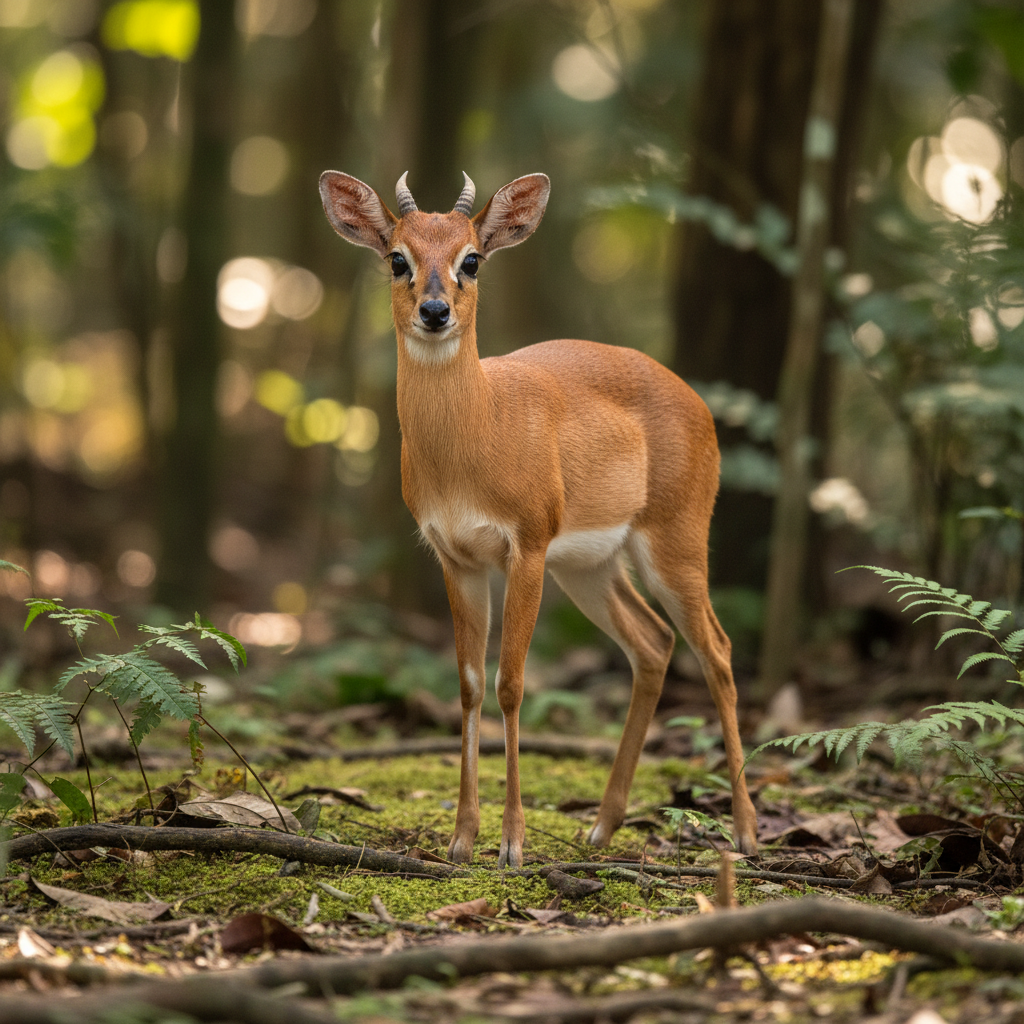
AI Generated
Bates Pygmy Antelope
Neotragus batesi
The Bates Pygmy Antelope, scientifically known as Neotragus batesi, is a small forest-dwelling antelope found in Central and West Africa, notable for its shy behavior and elusive nature.
Introduction
The Bates Pygmy Antelope, scientifically known as Neotragus batesi, is a diminutive antelope species endemic to the dense forests of Central and West Africa. This elusive and quiet creature is often overlooked due to its small size and secretive behavior, making it a topic of interest for researchers, safari guides, and wildlife enthusiasts alike.
Description
The Bates Pygmy Antelope is one of the smallest antelope species in the world, with males standing about 30-40 cm at the shoulder and weighing between 6-9 kg. Females are slightly smaller but share a similar physique. They exhibit a distinctive reddish-brown coat, adorned with white underparts and facial markings, which aids in camouflage within their forest habitat. Their horns, present in males, are straight, slender, and can grow up to 7.5 cm long. These antelopes also possess large, expressive eyes and typically a short, slender build, contributing to their agile movement through thick underbrush.
Habitat & Range
The Bates Pygmy Antelope primarily inhabits the tropical rainforests of the Democratic Republic of the Congo (DRC) and surrounding regions. They prefer dense, humid environments with plenty of cover, which provides them with protection from predators and aids in their foraging activities. The species is often found in areas with a rich understory, characterized by dense shrubbery and low vegetation, which offers both food sources and shelter.
Behavior
Bates Pygmy Antelopes are primarily solitary or found in small groups, often consisting of a female and her offspring. This behavior is attributed to their shy and elusive nature; they tend to avoid open areas and remain close to the cover of foliage. These antelopes are crepuscular, being most active during dawn and dusk, which allows them to forage when temperatures are cooler and minimizes exposure to potential predators.
Due to their secretive nature, Bates Pygmy Antelopes communicate through a combination of visual signals and sounds, including soft bleats and grunts. They are also known to be territorial, with males establishing and defending their domain against others.
Diet
As grazers, Bates Pygmy Antelopes primarily feed on a variety of plant material, including tender leaves, fruits, and herbaceous plants found in their forest environment. Their diet is composed of low-hanging vegetation, which they can access easily due to their small size. They have a ruminant digestive system, allowing them to efficiently process their food and derive maximum nutrients from their diet, essential for their survival in nutrient-rich but competitive habitats.
Hunting & Identification Notes
For hunters and wildlife enthusiasts seeking to identify the Bates Pygmy Antelope, look for their distinct reddish-brown pelage and small stature. Their elusive nature and preference for dense cover can make spotting them tricky, but signs of their presence include flattened vegetation from feeding and droppings on the forest floor. Because of their protected status and the vital role they play in the local ecosystem, hunting of Bates Pygmy Antelopes is discouraged and often illegal.
When observing these antelopes in the wild, it's vital to maintain a respectful distance to avoid causing them stress or disturbance, particularly due to their sensitive nature. Using binoculars or long-range lenses can provide better viewing opportunities without intruding on their space.
Conservation Status
The Bates Pygmy Antelope is currently listed as a vulnerable species according to the International Union for Conservation of Nature (IUCN). Deforestation, habitat loss due to agricultural expansion, and poaching pose significant threats to their population. Conservation efforts are focused on habitat protection and restoring forest areas in their native range to ensure the survival of this unique species.
To aid in their protection, various wildlife organizations are working towards raising awareness about the importance of forest ecosystems and the role of species like the Bates Pygmy Antelope within those ecosystems.
In conclusion, the Bates Pygmy Antelope represents a fascinating component of Central and West Africa’s biodiversity. Understanding its habits, habitat, and conservation needs is crucial for ensuring its survival in a rapidly changing world.