
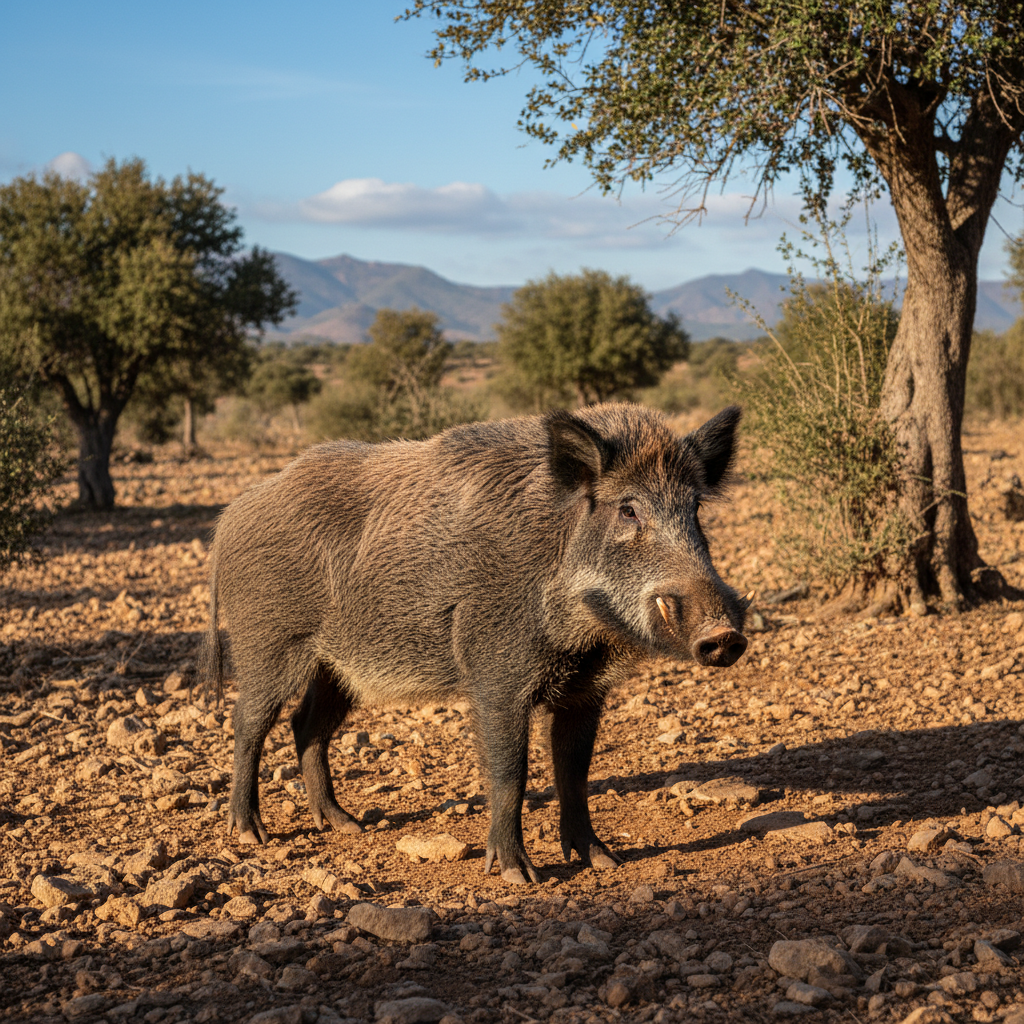
AI Generated
Barbary Wild Boar
Sus scrofa
The Barbary Wild Boar (Sus scrofa) is a wild suid native to North Africa and parts of Europe, notable for its distinctive physical characteristics and behavior.
Introduction
The Barbary Wild Boar (Sus scrofa) is a distinct subspecies of the wild boar native to North Africa, particularly found in Algeria, Tunisia, and Morocco, as well as certain parts of Southern Europe. This species is characterized by its unique physical traits and adaptability to various environments, making it a significant species among wildlife enthusiasts, researchers, and hunters alike.
Description
Barbary Wild Boars are robust animals, distinguished by their elongated heads, large bodies, and relatively short legs. Adult males can weigh between 80 to 150 kg (175 to 330 pounds), while females tend to weigh slightly less. The fur of the Barbary Wild Boar is coarse, typically a brown or black color, with lighter stripes or spots present on young boars. Males are equipped with large tusks that can protrude significantly from their jaws, serving as both weaponry and tools for foraging.
Barbary Wild Boars possess a formidable build, with a body length ranging from 100 to 180 cm (39 to 71 inches) and a height at the shoulder of approximately 70 to 90 cm (28 to 35 inches). Their ears are floppy and slightly pointed, which enhances their ability to hear potential threats in their environment.
Habitat & Range
The Barbary Wild Boar inhabits a variety of environments, including forests, grasslands, and mountainous regions. They are commonly found in hilly terrains with abundant vegetation, which provides them with cover and food sources. Their range is primarily concentrated in North Africa, notably in the Atlas Mountains, but they can also be found in certain areas of Southern Europe, including parts of Spain and Italy, where they have been introduced.
These boars are highly adaptable and can thrive in diverse habitats, from arid regions to temperate forests, which has allowed them to occupy various ecological niches in their native range. The availability of water sources and food plays a crucial role in their habitat selection.
Behavior
Barbary Wild Boars are mainly crepuscular, being most active during dawn and dusk. They are social animals, often found in small family groups or sounders consisting of females and their young. Males tend to be more solitary, especially outside of the breeding season. Within these groups, females display a strong matriarchal behavior, leading the group to foraging sites and potential shelter.
These boars are known for their intelligence and problem-solving abilities, which are essential for their survival in the wild. They communicate through a series of grunts and squeals, which help maintain social interactions within groups or warn of danger. When threatened, Barbary Wild Boars often rely on their speed and agility to escape predators, which include large carnivores and humans.
Diet
As omnivores, Barbary Wild Boars have a varied diet that includes roots, tubers, fruits, nuts, and small animals or carrion. They are particularly adept at foraging and rooting through the ground, which allows them to find underground vegetation and seeds. Their strong snouts are well-adapted to dig for food, making them significant contributors to their ecosystems as they help in seed dispersal and soil aeration.
During different seasons, their diet may change based on food availability, with a greater emphasis on plant matter in the warmer months and a broader range of food sources during harsher winters. This flexibility in diet is one of the key factors contributing to their survival in varying climates.
Hunting & Identification Notes
For hunters and wildlife enthusiasts, identifying Barbary Wild Boars in the field can be straightforward once you know what to look for. Key identification features include their robust build, large heads, and protruding tusks in males. Additionally, observing their social structures can provide insights; females are often seen in family groups, while males are typically solitary or observed in small groups during the rutting season.
When hunting, it is crucial to adhere to local regulations and obtain the necessary permits, as hunting practices can vary significantly between regions. Awareness of their behavior, such as their crepuscular activity patterns and their tendency to return to the same feeding grounds, can provide advantages in hunting scenarios.
Conservation Status
The Barbary Wild Boar faces mounting pressures from habitat destruction, hunting, and competition with domestic pigs. While they are currently classified as a species of least concern by the IUCN, their populations in certain areas are declining, prompting the need for conservation efforts. Measures to protect their habitats and regulate hunting practices are vital to ensure the survival of this significant species.
In summary, the Barbary Wild Boar is a prominent species with unique characteristics and behaviors, contributing to the biodiversity of its environment. Whether for research, hunting, or ecological studies, understanding this species' ecology, behavior, and conservation status is essential for those engaged in wildlife management and conservation efforts.