
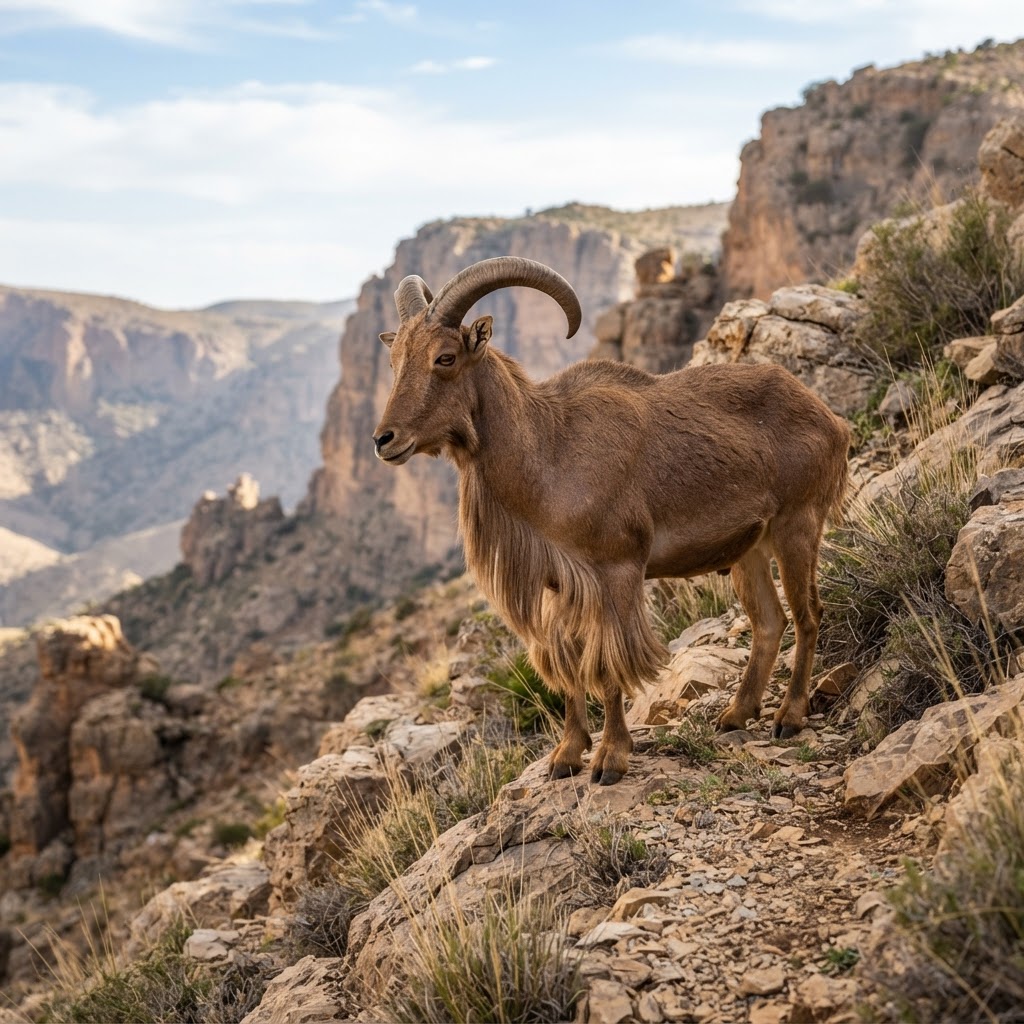
AI Generated
Barbary Sheep
Ammotragus lervia
The Barbary sheep, or Ammotragus lervia, is a robust, shaggy wild sheep found in North Africa, particularly in the Sahara region. Characterized by its distinctive curved horns, this species is both elusive and captivating to observe.
Introduction
The Barbary sheep, or Ammotragus lervia, is a large, charismatic ungulate native to North Africa, specifically recognized for its impressive curved horns and muscular build. Found mainly in the mountainous regions of the Sahara, this remarkable species has adapted to survive in some of the harshest environments on the continent.
Description
Barbary sheep are medium to large sized animals, standing approximately 75 to 100 cm (30 to 39 inches) at the shoulder and weighing between 75 to 140 kg (165 to 310 lbs). Their distinctive features include a long, shaggy coat of reddish-brown to light tan fur, which offers camouflage in their rocky habitats. One of the most striking characteristics of the Barbary sheep is their spiraled horns; males possess long, thick horns that can measure up to 90 cm (35 inches) while females have shorter, more slender ones. In addition to their impressive horns, both sexes exhibit a beard under the chin and a tail that can be kept held high while moving.
Habitat & Range
Barbary sheep inhabit a range of rugged mountainous regions across North Africa, particularly in Morocco, Algeria, Tunisia, and Libya. They thrive in arid and semi-arid environments characterized by rocky outcrops, steep cliffs, and sparse vegetation. These sheep are particularly adept at making use of the available resources, often found in elevations between 1,000 and 3,000 meters (3,300 to 9,800 feet). Their ability to navigate difficult terrains enables them to evade predators and access grazing areas that may be less frequented by other wildlife.
Behavior
Barbary sheep are social animals, typically forming small herds of 10 to 30 individuals consisting of females, their young, and a few dominant males. These herds are matriarchal, with females leading the group. Barbary sheep are crepuscular, meaning they are most active during dawn and dusk. They utilize their keen eyesight to detect potential threats from predators such as leopards and humans. During the day, they often seek shade and rest to conserve energy, engaging in grooming and social interactions when conditions are less conducive to foraging.
Diet
The diet of the Barbary sheep primarily consists of grasses, leaves, shrubs, and other vegetation that is available in their arid habitats. They are classified as herbivores and are known for their selective feeding habits, often grazing on preferred plant species while avoiding less palatable options. Barbary sheep are also known to be able to travel long distances in search of food and water, showcasing their adaptability to the scarce resources of their environment.
Hunting & Identification Notes
For hunters and wildlife enthusiasts, identifying Barbary sheep can be both rewarding and challenging due to their elusive nature. The males are noticeably larger and possess the prominent curled horns, which serve as a primary identification feature. When spotting these animals in the wild, it is crucial to note their characteristic gait and habitat. The fluffy, shaggy fur helps them blend into their rocky surroundings, so keen observation skills are necessary. Legal hunting of Barbary sheep varies by region and is typically regulated to maintain healthy populations. Hunters should always ensure compliance with local laws and obtain the necessary permits.
Conservation Status
As of the most recent assessments, the Barbary sheep is classified as Near Threatened by the International Union for Conservation of Nature (IUCN) due to habitat loss and hunting pressures. While they inhabit remote areas, their populations are threatened by overexploitation for their meat and horns, as well as by competition with livestock for food resources. Conservation efforts focus on habitat protection, sustainable hunting practices, and awareness-raising initiatives within local communities. Protecting the Barbary sheep ensures the preservation of biodiversity within their unique ecosystems, making this species a significant component of North Africa's natural heritage.