
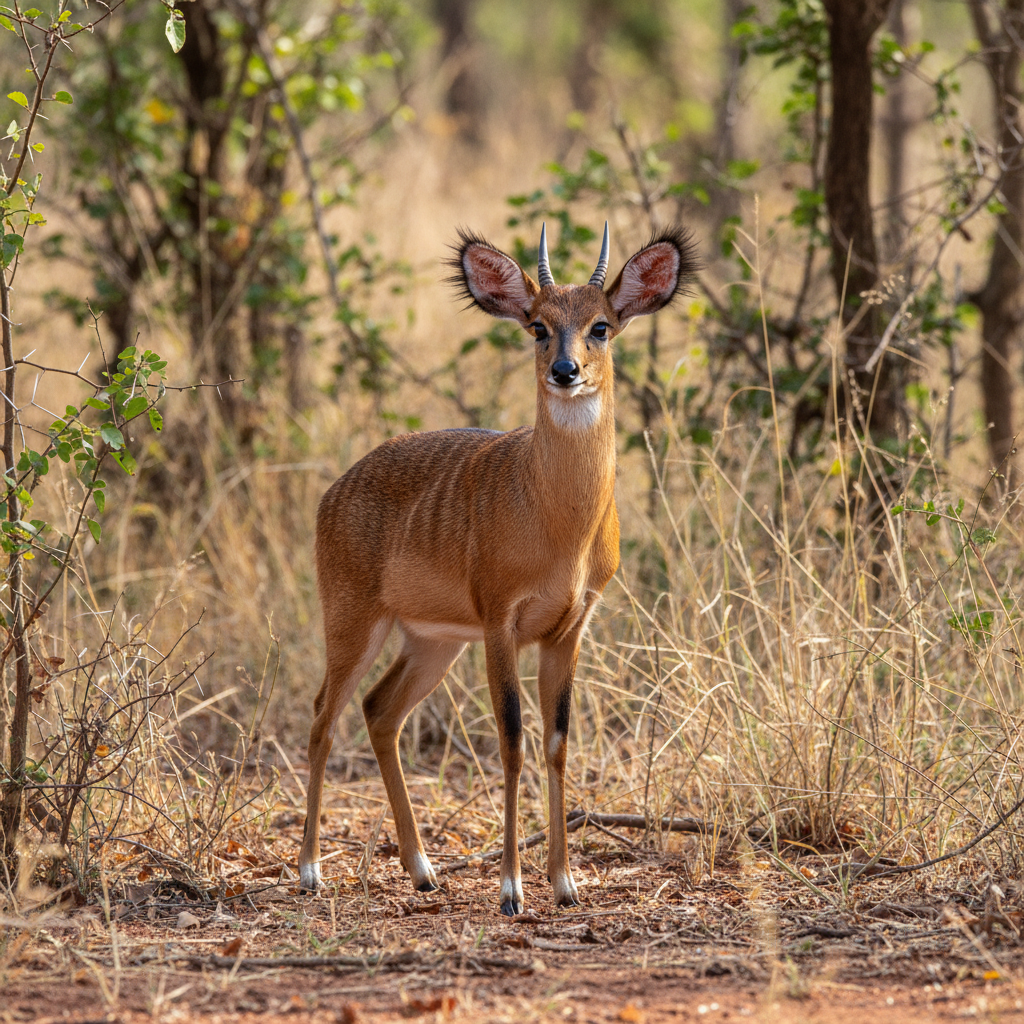
AI Generated
Angolan Bush Duiker
Sylvicapra grimmia
The Angolan Bush Duiker, or Sylvicapra grimmia, is a small antelope native to the forests and savannas of Angola and surrounding regions. This profile details its characteristics, behavior, and conservation status.
Introduction
The Angolan Bush Duiker (scientific name: Sylvicapra grimmia) is a small species of antelope belonging to the Bovidae family. Found primarily in Angola and parts of its neighboring countries, it thrives in wooded areas and savanna regions, adapting well to its environment. This profile offers an in-depth look at the Angolan Bush Duiker, covering its characteristics, habitat, behavior, diet, hunting identification notes, and conservation status.
Description
The Angolan Bush Duiker is characterized by its compact body and relatively short legs. Adult individuals typically weigh between 20 to 30 kilograms (44 to 66 pounds) and have a height at the shoulder of about 70 to 90 centimeters (27 to 35 inches). Their fur is generally a reddish-brown to gray color, providing effective camouflage among the foliage of their habitat. Both males and females lack significant differences in size, but males possess small, pointed horns that can reach lengths of up to 15 centimeters (6 inches).
Their eyes are large and dark with a keen sense of sight, while their ears are also quite prominent, aiding in detecting potential predators in their surroundings. The Angolan Bush Duiker has a distinctively slender build, which allows it to navigate through dense underbrush with agility.
Habitat & Range
The Angolan Bush Duiker primarily inhabits the lush woodlands and dense thickets of Angola, particularly in regions that combine forest streams with open savannas. They are also found in parts of Namibia and the Democratic Republic of the Congo. This species thrives in areas with ample cover where they can hide from predators while foraging for food.
The ideal habitat for Angolan Bush Duikers includes areas with tall grass, shrubs, and occasional trees, allowing them to utilize their herbaceous diet effectively. They can often be spotted in the early morning or late afternoon, when they are most active.
Behavior
Angolan Bush Duikers are mostly solitary or found in pairs, with males occasionally seen establishing dominance over smaller males in their home range. They are known to be highly secretive and elusive, relying on their natural camouflage to avoid detection. When alarmed, they tend to freeze or blend into their surroundings, making them hard to spot.
Their social structure is relatively flexible, and communication occurs through vocalizations, mostly consisting of soft grunts. They mark their territory using scent glands located on their feet and through droppings, which are often deposited at strategic locations in their environment.
Diet
The Angolan Bush Duiker is herbivorous, primarily feeding on a variety of foliage, fruits, and berries. Their diet consists of leaves, shoots, and tender grass, which they find abundant in their densely vegetated habitats. This species is particularly known for browsing on young saplings and shrubs, making it an important player in its ecological system by aiding in plant diversity and regeneration.
Due to their size, the Angolan Bush Duiker has to compete with larger herbivores for food resources, yet their diet gives them an advantage in terms of foraging in areas that larger animals cannot access. They are also known to be cautious feeders, often grazing for short periods before retreating into cover or shifting to different patches of vegetation.
Hunting & Identification Notes
For hunters and wildlife observers, recognizing the Angolan Bush Duiker is important for ethical pursuits and biodiversity studies. Their reddish-brown coat helps them blend into the forest environment, making them challenging to identify. Look for their slender body, large eyes, and short, pointed horns in males. Silent movement and alertness are also key indicators of their presence.
The best time for spotting Angolan Bush Duikers is during dawn and dusk, when they are most active. They often leave behind distinct feeding trails characterized by grazing marks on greenery, footprints, and droppings that resemble small pellets.
Since Angolan Bush Duikers are elusive by nature, it is recommended to use quiet spotting techniques and maintain distance to avoid scaring them away. Utilizing binoculars can enhance viewing opportunities without disturbing their habitat.
Conservation Status
The conservation status of the Angolan Bush Duiker is currently classified as of Least Concern by the IUCN Red List, although they still face threats from habitat loss and hunting pressures in certain regions. Deforestation and agricultural expansion continue to encroach on their natural habitats, leading to fragmentation and reduced population sizes.
Conservation efforts focusing on habitat preservation and sustainable hunting practices are essential to maintaining healthy populations of Angolan Bush Duikers. Increased awareness and responsible wildlife management can help assure that this elusive antelope remains a part of Angola's rich biodiversity. Monitoring populations and protecting critical habitats are key for the future survival of this unique species.