
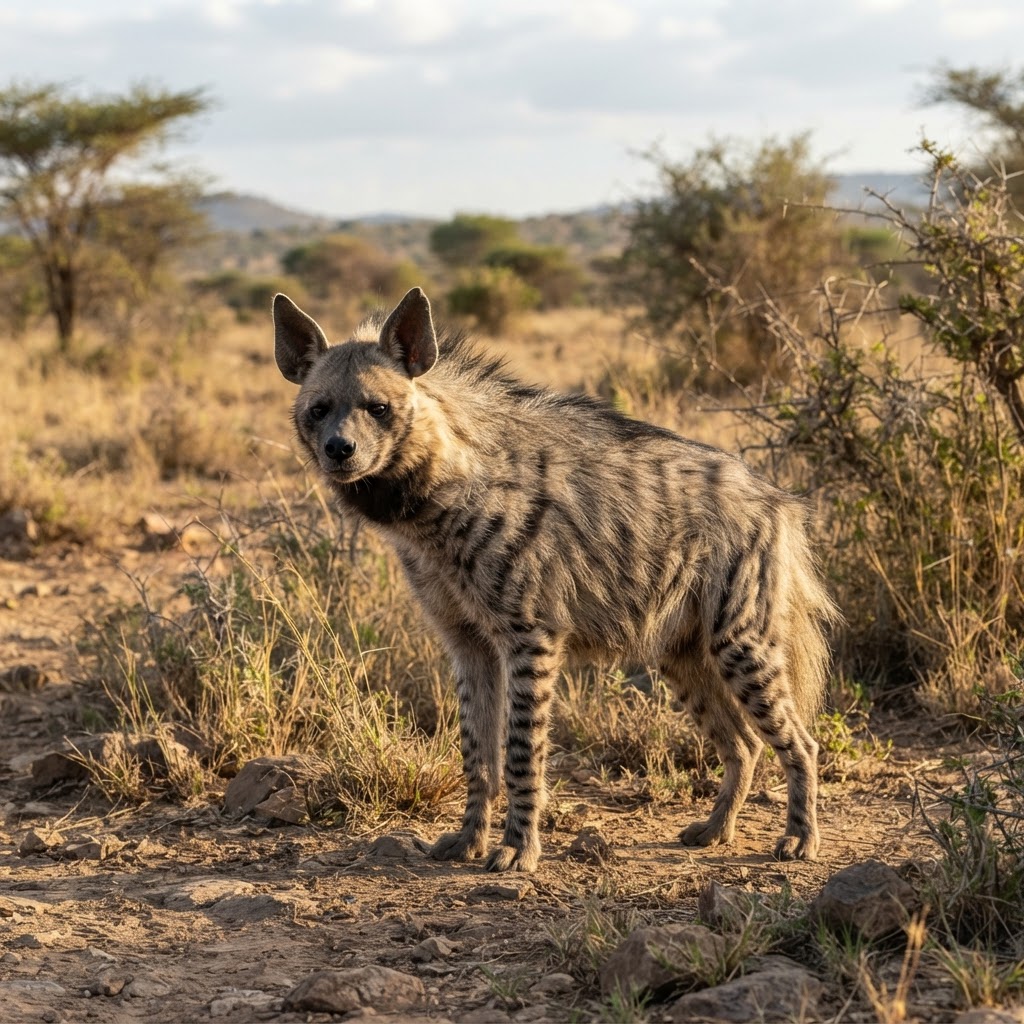
AI Generated
African Striped Hyena
Hyaena hyaena
The African Striped Hyena is a unique carnivore known for its distinctive striped coat. Predominantly found in North and East Africa, it plays a crucial role in its ecosystem.
Description
The African Striped Hyena (Hyaena hyaena) is a medium-sized carnivore characterized by its distinctive striped pelage, elongated body, and large ears. This hyena species possesses a unique waddle-like gait, which sets it apart from other members of the family Hyaenidae. With a body length ranging from 90 to 120 cm (35 to 47 inches) and a height at the shoulder of about 60 to 70 cm (24 to 28 inches), it typically weighs between 25 and 50 kg (55 to 110 lbs). The coat color varies from light gray to brown, marked with numerous vertical black stripes, which provide effective camouflage amidst the rocky terrains of its habitat. Moreover, the African Striped Hyena exhibits sexual dimorphism, with males generally larger than females.
Habitat & Range
The African Striped Hyena thrives in arid and semi-arid regions, including savannas, scrublands, and rocky hills. Its range spans across several countries in North and East Africa, including Morocco, Algeria, Tunisia, Egypt, and extending down to Ethiopia and Kenya. While predominantly terrestrial, they can also be found in areas with sparse vegetation. The species has adapted to living in proximity to human settlements, often scavenging near villages and agricultural areas, although this can lead to conflicts with humans.
Behavior
Marked by its nocturnal nature, the African Striped Hyena is most active during the night and at dusk. Unlike its spotted counterpart, the Striped Hyena is generally more solitary or found in small family groups. Their social structure is less hierarchical, allowing them a degree of flexibility in resource acquisition. Vocalizations include whoops, cackles, and growls, with distinct sounds serving different social functions, including mating calls and territorial announcements. The African Striped Hyena is known for its strong scent-marking behavior, utilizing urine and feces to establish territory boundaries.
Diet
As opportunistic scavengers, African Striped Hyenas primarily feed on carrion, but they are also capable hunters. Their diet includes small to medium-sized mammals, birds, and the occasional fruit. When hunting, they use their acute senses to locate prey, typically relying on a strategy of endurance to chase down weaker or injured animals. Unlike some other hyena species, they display a preference for smaller carcasses they can consume alone, which reduces competition.
Hunting & Identification Notes
To identify an African Striped Hyena in the wild, look for its distinctive body shape and markings. The stripes on its body are a key feature, as well as its large, rounded ears and relatively thin legs. Observers in the field may notice their unique gait, as they tend to move with a slight waddle. During dusk or nighttime excursions, their haunting vocalizations echo across the landscape, marking their presence. When tracking, pay attention to their claw marks in the ground and their latrine sites, as they frequently use the same areas for defecation.
Conservation Status
The African Striped Hyena is currently classified as Near Threatened on the IUCN Red List. The primary threats to its population include habitat loss due to human encroachment, poisoning, and hunting. Their scavenging lifestyle often puts them in conflict with livestock owners who may resort to extermination methods to protect their herds. Conservation efforts are critical to safeguard their habitat and promote coexistence with local communities. Awareness campaigns and the implementation of protected areas can aid in preserving this unique species for future generations.