
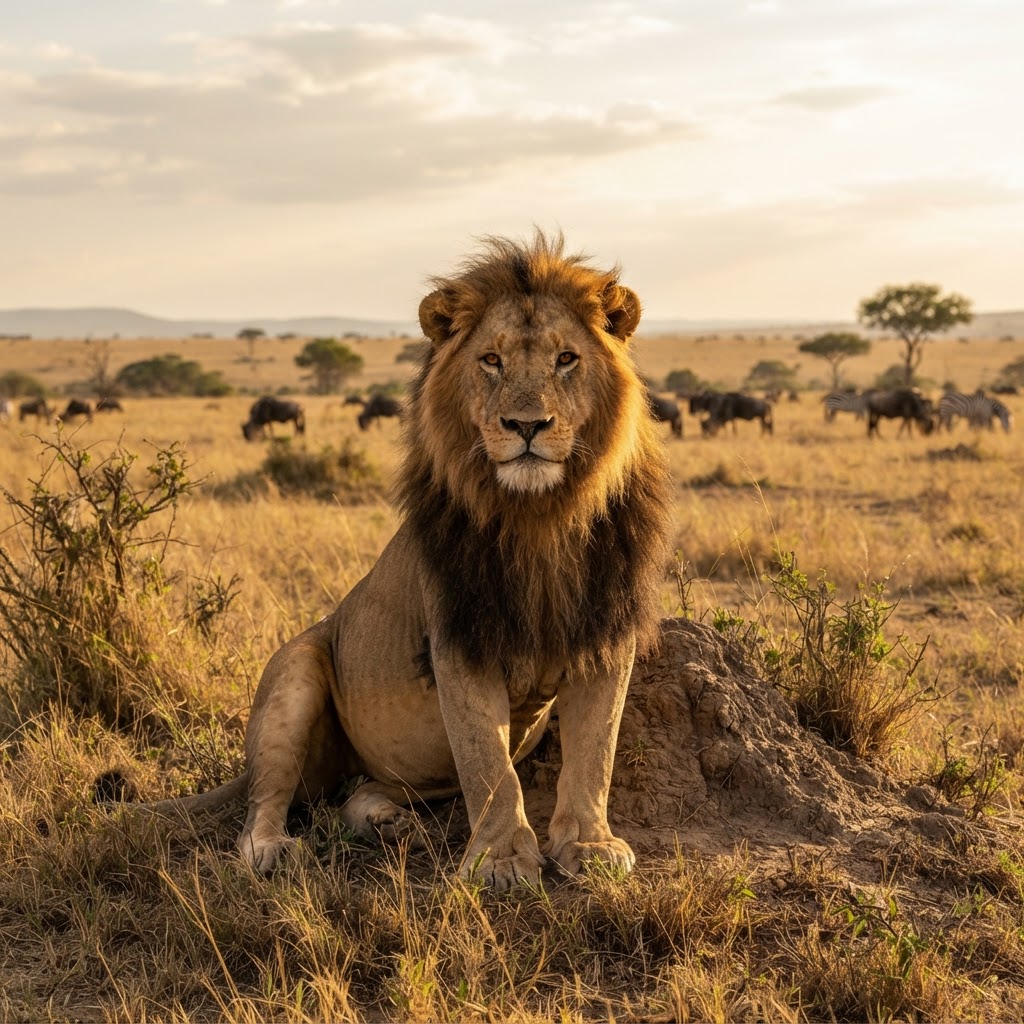
AI Generated
African Lion
Panthera leo
The African Lion (Panthera leo), an apex predator of sub-Saharan Africa, is known for its strength, regal appearance, and unique social prides. Learn about its habitat, hunting, and conservation status.
Description
The African Lion (Panthera leo) is a majestic apex predator native to sub-Saharan Africa. Renowned for its strength, regal appearance, and complex social structures, it plays a crucial role in maintaining the balance of its ecosystem. Lions possess a muscular, deep-chested body, a large, rounded head, and powerful limbs equipped with retractable claws, perfectly adapted for hunting. Adult males typically weigh between 150-250 kg (330-550 lbs) and stand about 1.2 meters (4 feet) at the shoulder. Their most distinguishing feature is the magnificent mane, which varies in color from blond to black, and serves as a visual indicator of health, age, and dominance, also providing protection during conflicts. Females, generally smaller, weigh 120-182 kg (265-400 lbs) and lack manes. The lion's coat is typically a tawny yellow-gold, providing excellent camouflage within their grassland and savanna habitats. Juveniles often have light spots that fade with age.
Habitat & Range
African Lions predominantly inhabit a variety of environments across sub-Saharan Africa, including savannas, grasslands, and open woodlands. Historically, their range was far more extensive, stretching across much of Africa, parts of Europe, and Asia. Today, their populations are largely fragmented and concentrated in protected areas and national parks within countries such as Tanzania, Kenya, Botswana, South Africa, and Zambia. They require habitats with sufficient prey density, access to water, and cover for hunting and resting. A pride's territory can vary significantly in size, from 20 to 400 square kilometers (7.7 to 154 square miles), depending on the availability of resources and prey. These territories are fiercely defended against other prides.
Behavior
African Lions are unique among the large cat species for their highly social nature. They live in structured groups called prides, typically comprising several related adult females, their offspring, and a coalition of one to four adult males. Pride sizes can range from 3 to 30 individuals, though an average pride consists of about 10-15 lions. Females form the stable core of the pride, cooperatively raising cubs and hunting. Males, often brothers or cousins, protect the pride's territory and mating rights. Communication within a pride involves a range of vocalizations, including roars that can be heard up to 8 km (5 miles) away, growls, snarls, purrs, and meows. Body language, such as tail movements, head rubs, and facial expressions, also plays a vital role in social cohesion. Lions are primarily crepuscular and nocturnal hunters, becoming most active at dawn and dusk, and throughout the night. During the day, they spend 16 to 20 hours resting and sleeping to conserve energy, often seeking shade under trees or on rocky outcrops.
Diet
As obligate carnivores, African Lions are apex predators that primarily hunt large and medium-sized ungulates. Their diet consists mainly of wildebeest, zebras, buffalo, antelope, and warthogs. They are opportunistic hunters and will also prey on smaller animals when larger game is scarce, including birds, reptiles, and rodents. Scavenging is also a significant part of their diet, and they will readily steal kills from other predators like hyenas, or consume carrion. Hunting is often a cooperative effort, especially for larger prey, with females typically doing the majority of the hunting. They employ ambush tactics, using their powerful build and keen senses to stalk and then overpower their prey, often targeting the weakest or slowest individuals in a herd.
Hunting & Identification Notes
For hunters and researchers, identifying African Lions in the wild involves observing their distinctive physical characteristics and behaviors. Males are easily identified by their prominent manes, which vary in color and density. Females are smaller and lack manes. Look for their tawny coloration, powerful build, and the characteristic tuft at the end of their tails. Lion tracks are large, typically 10-12 cm (4-5 inches) wide, showing four toes and often no claw marks unless on soft ground, as their claws are retractable. When encountering lions, observe their social interactions; the presence of a pride, communal resting, and cooperative hunting behaviors are key identifiers. It's crucial to distinguish between different lion populations (e.g., East African, Southern African) as there can be subtle variations in size and mane characteristics. Ethical observation and hunting practices, adhering to local regulations and conservation guidelines, are paramount to ensure the well-being of the species.
Conservation Status
The African Lion is currently classified as 'Vulnerable' on the IUCN Red List of Threatened Species. This designation reflects a significant decline in their populations across much of their historical range, with estimates suggesting fewer than 20,000 mature individuals remaining in the wild. The primary threats to African Lions include habitat loss and fragmentation due to human population growth and agricultural expansion, depletion of their prey base, human-wildlife conflict (retaliatory killings for livestock depredation), and illegal poaching for their body parts. Diseases also pose a threat to isolated populations. Conservation efforts are focused on several key strategies: establishing and expanding protected areas, implementing anti-poaching measures, mitigating human-lion conflict through community engagement and education, and reintroduction programs. Effective conservation requires collaborative efforts between governments, local communities, and international organizations to secure a future for these iconic big cats.