
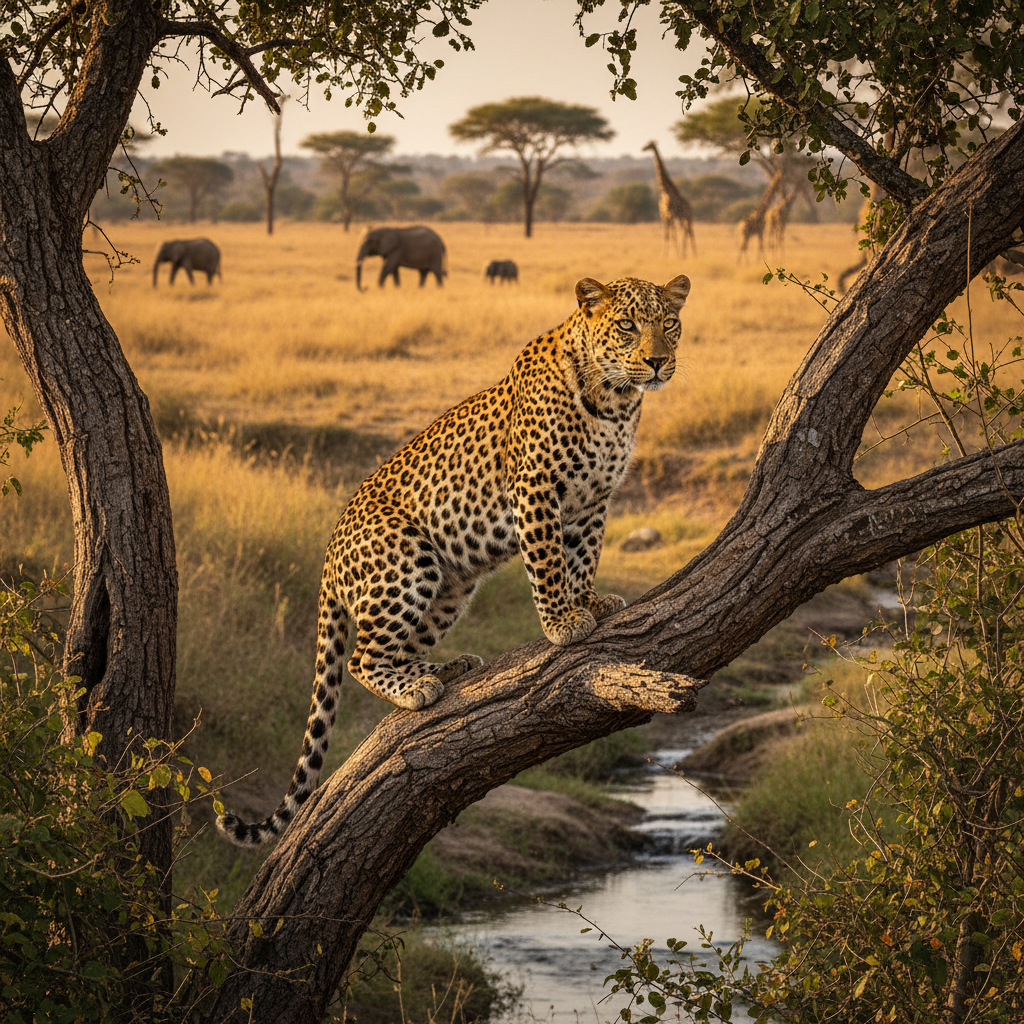
AI Generated
African Leopard
Panthera pardus
The African Leopard is a solitary big cat renowned for its adaptability and stealth, primarily found in Sub-Saharan Africa. It is an apex predator with a varied diet.
Introduction
The African Leopard (Panthera pardus) is an elusive and solitary big cat that inhabits various biomes across Sub-Saharan Africa, known for its remarkable adaptability and stealth. This apex predator can thrive in diverse environments, from savannas and grasslands to forests and mountainous areas.
Description
The African Leopard is characterized by its beautiful, rosette-patterned coat, which provides excellent camouflage in its natural habitat. Adult leopards typically weigh between 90 to 200 pounds (40 to 90 kg), with males being larger than females. They possess a long body, short legs, and a long tail that helps them balance while navigating trees and rugged terrain. Their fur ranges in color from a light yellow to a deep gold, with distinctive black rosettes that vary in size and shape across different subspecies.
Habitat & Range
African Leopards are highly adaptable and occupy a range of habitats including savannas, open grasslands, forests, and even mountainous regions. They are found predominantly in various countries across Sub-Saharan Africa, with significant populations in national parks and reserves. Major habitats include the Serengeti in Tanzania, Kruger National Park in South Africa, and the Maasai Mara in Kenya. Their adaptability to different environments is a key factor in their wide distribution across the continent.
Behavior
As solitary animals, African Leopards typically prefer a lifestyle of stealth and avoidance. They are primarily nocturnal, becoming active at twilight and during the night. Leopards are agile climbers and spend a significant amount of time in trees, where they store their prey away from scavengers. Each leopard has a defined territory that it patrols and marks with scent markings. Males usually have larger territories that may overlap with the territories of several females.
Diet
African Leopards are carnivorous and have a varied diet consisting mainly of ungulates such as impala, gazelle, and bushbuck. They are opportunistic feeders capable of adapting to prey availability, which may include smaller mammals, birds, reptiles, and even fish. Their hunting strategy involves stalking their prey silently before launching a quick ambush. Leopards often carry their kills up trees to protect them from scavengers like hyenas and lions.
Hunting & Identification Notes
Identifying the African Leopard can be accomplished through several key features. Look for its distinctive rosetted fur pattern, which aids in camouflage. Observing the behavior of these big cats can also provide clues; they are known for their agility both on the ground and in trees. The leopard's characteristic hunting technique involves stealth and strength, making it one of the most skilled hunters in the cat family. They also possess a unique vocal range, producing sounds like growls, roars, and cough-like calls that can carry over considerable distances.
Conservation Status
The African Leopard is currently listed as Near Threatened by the International Union for Conservation of Nature (IUCN). Major threats to their survival include habitat loss due to human encroachment, poaching, and conflicts with local livestock farmers. Conservation efforts are underway in many regions to protect their habitats and implement community-based strategies to reduce conflicts and promote coexistence with humans. Conservation programs often involve anti-poaching measures, habitat protection, and education to raise awareness about the importance of leopards in ecosystem balance.
In summary, the African Leopard is a resilient and adaptable predator, playing a crucial role in its ecosystem. Understanding its behavior, diet, and conservation needs is essential for preserving this iconic species for future generations.