
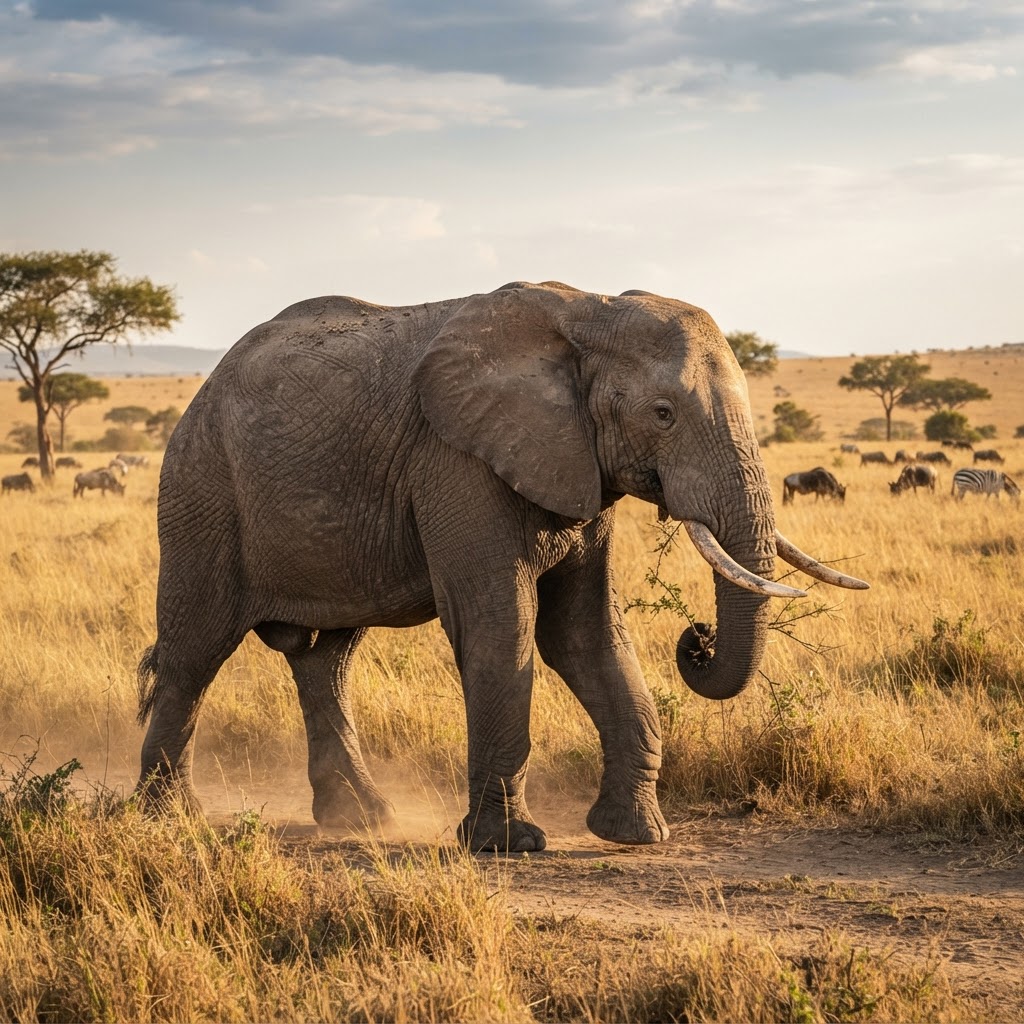
AI Generated
African Elephant
Loxodonta africana
The African Elephant, scientifically known as Loxodonta africana, is the largest terrestrial mammal, found across sub-Saharan Africa's diverse habitats.
Introduction
The African Elephant, scientifically known as Loxodonta africana, is the largest terrestrial mammal and a keystone species, primarily found across the diverse habitats of sub-Saharan Africa. Known for their intelligence and complex social structures, African Elephants play a significant role in their ecosystems.
Description
African Elephants can be easily distinguished by their large ears, which help regulate body temperature, and their long trunks, which are essential for feeding, drinking, and social interactions. Males, or bulls, can weigh between 4,500 to 6,800 kg (10,000 to 15,000 lbs) and can stand up to 3.3 meters (10.8 feet) tall at the shoulder, while females are generally smaller.
These elephants have two subspecies: the African Bush Elephant and the African Forest Elephant. The Bush Elephant is larger and has a more prominent presence in savanna habitats, while the Forest Elephant is smaller with straighter tusks adapted to forest environments.
Both subspecies exhibit a grey coloration, which can vary between individuals due to environmental factors such as mud and dust exposure.
Habitat & Range
African Elephants inhabit a wide range of environments, including savannas, forests, and wetlands across sub-Saharan Africa. They are highly adaptable, residing in areas from the dense rainforests of the Congo Basin to the open savannas of East and Southern Africa.
Historically, their range included much of the African continent; however, due to habitat loss and human encroachment, their populations have become fragmented and restricted. Major populations can currently be found in countries like Botswana, Tanzania, Zimbabwe, and South Africa.
Behavior
African Elephants are known for their complex social structures. They live in matriarchal herds led by the oldest female, which is typically responsible for making decisions regarding the herd's movement and feeding. Herds often consist of related females and their young. Males leave the herd upon reaching adolescence, preferring to live solitary lives or form loose bachelor groups.
These elephants are highly communicative, utilizing vocalizations, body language, and infrasound—low-frequency sounds that can travel long distances. Their strong emotional capacity is evident in their interactions, displaying empathy, mourning behaviors for deceased companions, and strong family bonds.
Diet
As herbivores, African Elephants primarily feed on grasses, leaves, bark, and fruits—consuming up to 150 kg (330 lbs) of food per day. They are known as ecological engineers because their feeding habits can dramatically impact their habitat. For example, their tree-barking activities promote forest succession, while their foraging can open up dense vegetation, allowing other species easier access to food sources.
Their diet varies seasonally, with a preference for softer grasses during the wet season and tougher vegetation, like bark, during dry periods. Access to water is crucial, and they can travel long distances (up to 50 km or 31 miles) to find it, further showcasing their crucial role in the ecosystem.
Hunting & Identification Notes
The African Elephant is often sought after in regulated hunting and photographic safaris. To identify them, look for their large ears, which are shaped like the African continent, and their long trunks that can also grasp small objects. Males possess larger tusks, while females often have smaller or sometimes absent tusks (particularly in the Forest Elephant).
When tracking, observe signs such as large footprints (up to 30 cm or 12 inches in diameter), chew marks on trees, and droppings—usually a good indicator of their feeding habits. Always exercise caution, as while they are generally peaceful, they can become aggressive if threatened, particularly if young are present.
Conservation Status
The IUCN Red List classifies the African Elephant as vulnerable, with significant population declines driven by poaching for ivory and habitat loss due to human expansion. Legal protections and conservation efforts have been initiated in various countries; however, conflicts with human populations pose ongoing challenges.
Conservation strategies include habitat preservation, anti-poaching initiatives, and community engagement programs promoting coexistence between humans and elephants. Continuous research and monitoring are vital for the long-term survival of this iconic species.