
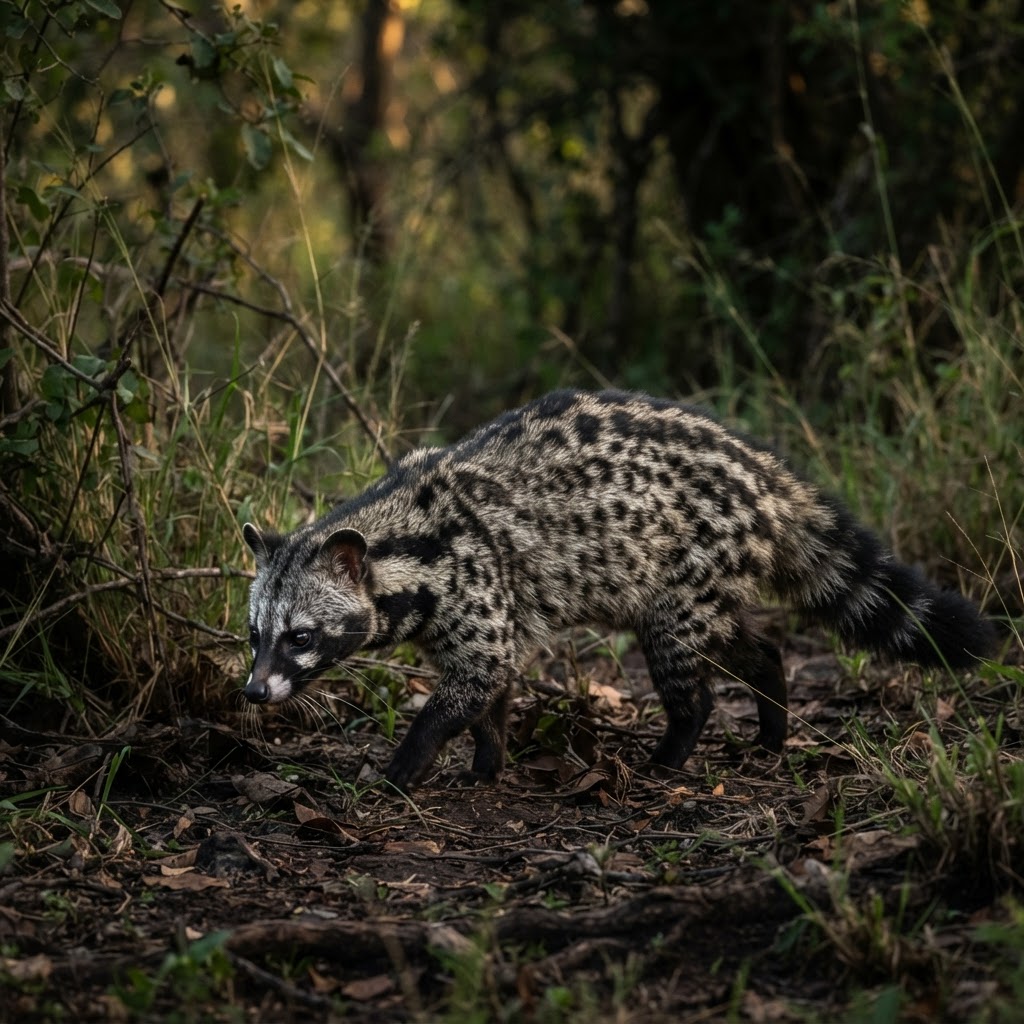
AI Generated
African Civet
Civettictis civetta
The African Civet is a nocturnal mammal native to savanna and forest areas of Africa, known for its distinctive black and white markings.
The African Civet (Civettictis civetta) is a medium-sized nocturnal carnivore found across much of sub-Saharan Africa. It is easily recognized by its coarse spotted coat, black facial mask, raised dorsal crest and distinctive black-and-white markings.
Adult African Civets have a long body, relatively short legs and a broad head with rounded ears. Their coat varies from grey to yellowish-brown and is covered with dark spots, bands and irregular markings. A prominent mane runs along the back and can be raised when the animal is threatened or excited.
Habitat & Range
The African Civet is widely distributed across sub-Saharan Africa, from Senegal and Guinea in the west to Ethiopia and Somalia in the east, extending south through central and parts of southern Africa.
It occupies a wide variety of habitats, including woodland, savanna, forest margins, grassland and agricultural landscapes. African Civets are usually associated with areas that provide dense cover and access to water.
Behavior
African Civets are primarily nocturnal and spend much of the day resting in dense vegetation, burrows or other sheltered areas.
They are generally solitary and territorial, using scent marking to communicate with other civets. When threatened, an African Civet may raise the long hair along its back, making itself appear larger.
Diet
The African Civet is an opportunistic omnivore. Its diet includes insects, rodents, reptiles, birds, eggs, carrion, fruits and other plant material.
It is also capable of eating prey or food items that many other predators avoid, including some toxic or foul-tasting species.
Hunting & Identification Notes
The African Civet is distinguished from genets and other small African carnivores by its heavier build, bold black-and-white markings and pronounced dorsal crest.
Because it is mainly nocturnal, most sightings occur during night drives or in the early morning. Its tracks resemble those of a small dog or cat but show five toes and relatively prominent claw marks.
Where hunting is permitted, local regulations should always be checked, as legal status and hunting seasons vary considerably between countries.
Conservation Status
The African Civet is currently classified as Least Concern by the IUCN. It remains widespread across much of its range and is able to adapt to a variety of habitats.
Local populations may nevertheless be affected by habitat loss, persecution, road mortality and hunting for meat or traditional uses.
Sources
Mammal Diversity Database — Civettictis civetta
https://www.mammaldiversity.org/taxon/1006134/
Animal Diversity Web — Civettictis civetta
https://animaldiversity.org/accounts/Civettictis_civetta/
IUCN Red List — African Civet